
Lo splendore. L’infanzia di Hans
di Di Mino, Pier Paolo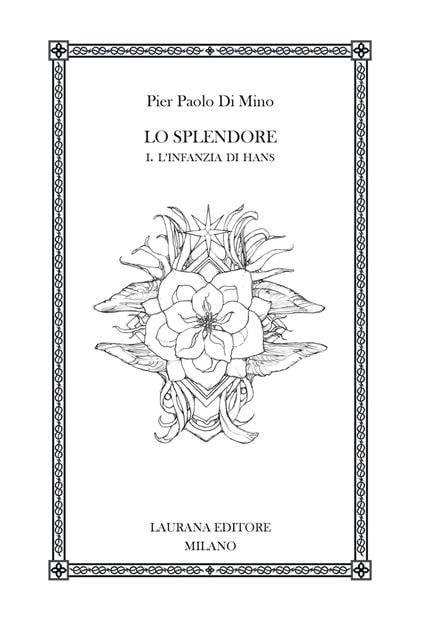
Lo splendore. L'infanzia di Hans
Che cosa sappiamo della realtà? La realtà dell’esperienza ci è nota: conosciamo fatti, eventi, cause, luoghi, individui. Ma nel cuore dell’esperienza è nascosta una trama simbolica: la realtà reale. Nell’Ottocento, mentre grazie alla rivoluzione industriale la tecnica si affermava come lo strumento principe per la conoscenza e il dominio del mondo, i romanzieri – da Balzac a Flaubert – tentarono di rappresentare scientificamente la realtà dell’esperienza; ma nel passaggio al Novecento ci si accorse che il realismo non riusciva a soddisfare il bisogno di senso, che l’esperienza risultava frammentata e dispersa, che la realtà reale sfuggiva alla presa. Joyce, Proust, Döblin, Mann, Broch, Musil, Hesse, Canetti e altri tentarono un romanzo nuovo, vorace, spirituale, strabordante dalle forme canoniche. Lo splendore di Pier Paolo Di Mino si colloca in questa tradizione modernista; ma ficca le sue radici molto più nel profondo, nelle grandi narrazioni bibliche e prebibliche, nella sapienza cabalistica e alchemica – il titolo è un omaggio allo Zohar –, nel romanzo comico e parodistico di Cervantes e Sterne. E al tempo stesso è una rocambolesca e talvolta granguignolesca epopea popolare, avvincente come un romanzo di Dumas. Lo splendore. L’infanzia di Hans racconta l’infanzia di Hans Doré, nato nel 1911 in un sobborgo di Berlino e destinato a diventare il «vero re», colui che – senza saperlo – potrà salvare il mondo dalla macchina della necessità; ma è soprattutto il racconto della sua genealogia diretta e indiretta, nella quale si affollano personaggi memorabili – la curatrice ambulante Hermine, la piissima Clea, il brutale Gustav, il fervente socialista Joseph –, ciascuno con il proprio compito all’interno della sottile trama che regge le sorti dell’umanità. Le loro vite sono contese da due fazioni contrapposte, che sembrano muoversi con agilità nello spazio e nel tempo: da una parte l’abeliano Hubel e il cainita Ginzburg, dall’altra il prete Kircher e un misterioso libraio. Saranno questi ultimi che, per mezzo di un visionario libro azzurro fatto di sole immagini, tenteranno di guidare Hermine, Clea, Gustav, Joseph e lo stesso Hans verso lo splendore.
“Quello di Di Mino è un grande progetto narrativo sulla predestinazione. […] C’è questo tono epico, comico, picaresco, sapienziale, che mi ha ricordato soprattutto – sarà anche la suggestione dell’ambientazione berlinese – i libri di Alfred Döblin, di Günter Grass. […] Questa era la grande letteratura, una volta, e io voglio salutare – e non voglio essere per niente limitante – questo esempio di “anacronismo”. Emanuele Trevi, premio Sila
“Scritto sotto il magistero di opere misteriose come lo Zohar e la Hypnerotomachia Poliphili, Lo splendore sembra un sogno junghiano e, come un romanzo di Musil o Broch, ha l’ambizione di contenere tutto: nelle sue pagine si parla di fede, guerra, amore, violenza, socialismo, si svelano profezie e si adottano simboli; ma è anche un grande romanzo d’avventura e di viaggi e una riflessione sulla scrittura […].” Andrea Tarabbia, Tuttolibri
“Ora, su un romanzo del genere si possono scrivere i saggi più sofisticati ed eruditi, ma non si coglierebbe il cuore del libro. Ciò che occorre segnalare subito è invece il piacere della lettura, il brusio accogliente della lingua, il respiro avvincente dell’affabulazione che ci trascina dentro molteplici destini. […] Come se l’autore avesse digerito l’intero catalogo Adelphi! […] Suggerisco di leggerlo, contro le apparenze, come romanzo ‘realistico’. Nessuno può definire, in modo soddisfacente, cosa sia ‘realtà’. Però Di Mino ci ricorda che il diorama della letteratura è uno dei dispositivi più ‘efficienti’ per trasmetterci una – ben reale – vibrazione.” Filippo La Porta, Robinson
“Credo che sostenere e leggere L’infanzia di Hans sia doveroso.” Vanni Santoni, Linus
“Un romanzo di simboli […]. una sorta di ‘lingua chimerica e filosofica’, alchemica […]. Una ricchezza […] di soluzioni stilistiche, dal dibattito argomentativo al racconto d’un sogno, dal dialogo alla preghiera, dalla narrazione commossa […] alle ricostruzioni biografiche ora più piane e ora frenetiche […]. Ermanno Paccagnini, la Lettura
Pier Paolo Di Mino è nato a Roma nel 1973. Ha diretto la rivista «Erre!». Fra le sue opere: Il re operaio e Visiorama (La scimmia edizioni) e Storia Aurea (Edilet). È coautore del film Fine pena mai (regia di Lorenzo Conte e Davide Barletti, con Claudio Santamaria e Valentina Cervi), del romanzo Fiume di tenebra (Castelvecchi), e dei saggi romanzati Il libretto rosso di Garibaldi e Il libretto rosso di Pertini (Purple Press). Ha partecipato alle antologie Biglietto, prego (Zero 91), Overlook Loop e Club Silencio (Arcoiris). Da molti anni scrive il romanzo Lo splendore, del quale L’infanzia di Hans costituisce il primo volume, e porta avanti il progetto artistico e letterario «Il libro azzurro» la cui cura iconografica, in un serrato dialogo fra immagini, idee e parole, è affidata all’arte di Veronica Leffe.
The Splendor. Hans’s Childhood
How much do we truly know about reality? While we are well-acquainted with the reality of experience—facts, events, causes, and places—hidden at the heart of that experience lies a deeper, symbolic weave: the real reality. In the nineteenth century, as the Industrial Revolution established technology as the ultimate tool for mastering the world, novelists from Balzac to Flaubert sought to represent experience with scientific precision. Yet, at the dawn of the twentieth century, it became clear that realism could no longer satisfy the hunger for meaning. Experience felt fragmented; «real reality» remained elusive. It was then that Joyce, Proust, Mann, Musil, and others forged a new kind of novel: voracious, spiritual, and overflowing the boundaries of canonical form. Pier Paolo Di Mino’s Lo splendore stands firmly within this great Modernist tradition. However, its roots strike even deeper—reaching into biblical and pre-biblical narratives, Kabbalistic wisdom, and alchemical lore (the title itself is an homage to the Zohar), as well as the comic and parodic genius of Cervantes and Sterne. Simultaneously, it is a swashbuckling, at times Grand Guignol, popular epic—as gripping as a masterpiece by Alexandre Dumas. The Splendor. Hans’s Childhood chronicles the early years of Hans Doré, born in 1911 in a Berlin suburb. Hans is destined to become the “true king,” the one who—unbeknownst to himself—can save the world from the “machine of necessity.” Above all, it is the story of his direct and indirect genealogy, a tapestry of unforgettable characters: Hermine, the traveling healer; the devout Clea; the brutal Gustav; and Joseph, the fervent socialist. Each has a role to play in the delicate weave that governs the fate of humanity. Their lives are a battleground for two opposing factions that move effortlessly through space and time: on one side, the Abelian Hubel and the Cainite Ginzburg; on the other, Father Kircher and a mysterious bookseller. It is the latter duo who, through a visionary «blue book» made entirely of images, attempt to guide this chorus of characters—and Hans himself—toward the Splendor.
“Di Mino’s work is a magnificent narrative project on predestination… an epic, comic, picaresque, and sapiential tone that reminds me—perhaps due to its Berlin setting—of Alfred Döblin and Günter Grass. I see echoes of The Tin Drum here… This is what Great Literature once was, and I welcome this example of ‘anachronism’: a total independence from the fleeting dictates of fashion. Even if enjoyed as a standalone, this is a profound gift to the reader.” — Emanuele Trevi (Premio Strega winner), Premio Sila
“Written under the influence of mystical works like the Zohar, The Splendor feels like a Jungian dream. Much like the masterpieces of Musil or Broch, it possesses the ambition to contain everything: faith, war, love, violence, and prophecy. Yet, it remains a gripping novel of adventure and travel.” — Andrea Tarabbia (Premio Campiello winner), Tuttolibri – La Stampa
“One might write the most erudite essays on such a novel, yet still miss its beating heart: the sheer pleasure of the reading experience, the welcoming hum of the language, and the captivating breath of a storytelling that drags us into multiple destinies… It is as if the author had digested the entire Adelphi catalog! The Splendor is a narrative magma—dark, fairy-tale-like, and vibrantly real.” — Filippo La Porta, Robinson – la Repubblica
“A novel of symbols… a ‘chimeric and philosophical language,’ both alchemical and rich. It offers a vast wealth of stylistic solutions, from argumentative debate to the narration of dreams, from moving prose to frantic biographical reconstructions.” — Ermanno Paccagnini, la Lettura – Corriere della Sera
“Supporting and reading Hans’s Childhood is a moral duty.” — Vanni Santoni, Linus
Pier Paolo Di Mino (b. 1973, Rome) is an author, screenwriter, and scholar whose work defies easy categorization, blending literary depth with a visionary, myth-making sensibility. A former editor of the influential magazine Erre!, his previous publications include the novels Il re operaio and Visiorama, and the historical-lyrical work Storia Aurea. Di Mino’s creative reach extends into cinema and narrative non-fiction. He co-wrote the critically acclaimed film Fine pena mai (directed by Lorenzo Conte and Davide Barletti) and authored the historical thriller Fiume di tenebra. His versatile output also includes the «fictionalized essays» Il libretto rosso di Garibaldi and Il libretto rosso di Pertini, alongside contributions to several prestigious literary anthologies. For over a decade, Di Mino has been dedicated to his most ambitious project to date: the monumental novel cycle Lo splendore, of which L’infanzia di Hans (Hans’s Childhood marks the first volume. This literary endeavor is inextricably linked to The Blue Book (Il libro azzurro), a unique interdisciplinary art project created in a dense, visionary dialogue between Di Mino’s prose and the iconographic art of Veronica Leffe. Together, they have forged a world where image, word, and philosophy converge, establishing Di Mino as one of the most singular and profound voices in contemporary Italian literature.
-
Casa editrice PublisherLaurana
-
Anno di pubblicazione Year of publication2024
-
Numero di pagine Number of pages680
-
ISBN9791280845504
-
Prezzo Price22€
-
Responsabile dei diritti
Copyright Manager
Oblique Studio - Leonardo G. Luccone redazione@oblique.it
-

Testo campione
Visualizza PDF
- SHARE ON:
-

-

-

-

