Rocco Scotellaro in other languages
Author: Giulia Dell'Aquila, University of Bari Aldo Moro
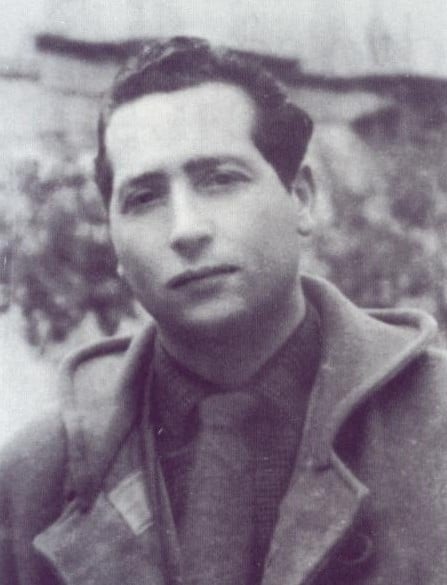
The number of foreign-language translations of Rocco Scotellaro’s poetry and prose has always been a sign of the deep and wide-ranging interest shown in him by critics and readers, from the final months of the Lucanian author’s life right up to the most recent initiatives, which have confirmed the enduring relevance of his message across the globe.
In a special issue of the American journal Forum Italicum entitled Lucania within us: Carlo Levi and Rocco Scotellaro (edited by Giulia Dell’Aquila, Sebastiano Martelli and Franco Vitelli, vol. 50, no. 2, 2016, pp. 833–864), translations of no fewer than thirty-six poems were published, with the novelty of venturing into linguistically more distant and less familiar territories, such as Arabic, Russian and Finnish.
The excellent response to this initiative from overseas prompted the translation into twenty-two languages of the poem La mia bella Patria alone, chosen as the emblem for the celebrations marking the centenary of Scotellaro’s birth organised by the Basilicata Region: a text particularly suited to demonstrating just how far the seed sown by this author and the truth of the Lucanias of the world can bear fruit. Thanks to the diligent empathy shown even by translators unfamiliar with Scotellaro’s work, and with a further expansion beyond the standard languages, translations have been produced in Chinese, Korean, Japanese, Hebrew, Georgian, Dutch, Albanian, Bulgarian, Ukrainian, Polish, Modern Greek, Romanian, Hungarian, Danish and Swedish.
The two recent initiatives just mentioned have confirmed the difficulties that had already emerged from the earliest attempts to translate Scotellaro’s work, each time resolved through different approaches. Diego Zancani (2006) is right to point out that, on the whole, the translated poems bear witness to Scotellaro’s quest for harmony between ‘the past, his own and that of his people’, ‘the present of the years straddling the war and the immediate post-war period’ and ‘a desired future’ for himself and for the whole of southern Italy.
Even from a strictly technical point of view, the rendering into other languages of terms belonging to the rural world and of expressions characteristic of the ‘language of the semi-educated’ (F. Bruni, 1984) has made the translators’ work difficult; they have adopted solutions that adhere more or less closely to the text (D. Zancani, 2006; P. Guida, 2016), as can already be seen from a comparison of the titles of the poems: the same poem, translated into the same language, already reveals significantly different choices in its title – that is, at the threshold of transition between the text and the reader (G. Genette, 1987) – confirming the expressive complexity of Scotellaro’s work even when subjected to interlinguistic transposition, which in this case too manages to ‘say almost the same thing’ (U. Eco, 2003).
Despite the difficulties mentioned, the overview presented here reveals the immediate interest in Scotellaro shown by translators who have worked on world-renowned poets, as well as the willingness of the editorial boards of international journals to include him in extensive and prestigious surveys dedicated to mid-twentieth-century poetry in Italy and abroad. Specifically, translators’ interest in Scotellaro has, on various occasions, taken root in cultural spheres nourished by values and perspectives clearly in line with the thinking of the Lucanian writer-mayor.
For the French public, Scotellaro has, since the mid-1950s, represented the embodiment of the engagé intellectual as proposed, for example, by the journal Les Temps Modernes, his virtuous identity further reinforced by his friendship with Carlo Levi. It was again through Levi’s mediation that Scotellaro’s encounter with German culture took place: the publication of Christ Stopped at Eboli sparked great interest in the conditions of southern Italy. Through this mediation, there was initially a predominantly sociological and political curiosity regarding Scotellaro, with a focus on those of his works that demonstrated his commitment to the emancipation of the peasants of southern Italy and the burden of belonging to a deprived society; over the years, certain reservations regarding the strictly literary merit of his work have been dispelled, and this merit has been fully recognised, as evidenced by the firm establishment of his name within the rich literary historiography produced in Germany and dedicated to 20th-century Italian literature. Spanish culture has welcomed Scotellaro’s work and figure with deep interest, owing to the striking similarities between the rural reality of southern Italy and that of various regions of southern Spain; very recently, the medium of the Spanish language and the resonance of universal themes – such as the demands of farm labourers, large estates, the scourge of emigration, and the ancestral nature of peasant culture – have also enabled Scotellaro’s poetry to reach readers in South America.
In the very same year that marked the end of Scotellaro’s life and intellectual career, he made his debut on the American publishing scene with the publication of two of his poems, translated by William Weaver, in Harvard University’s magazine (Wake, no. 12, 1953, p. 34).
In keeping with the firm intention to present an international literary scene – declared from the very inception of the journal by its principal editors – six years later Scotellaro was featured in a special issue of the journal The Literary Review (no. 3, Autumn 1959), edited by Charles Guenther and Eric Sellin, dedicated to Contemporary Italian Poets. The issue features a brief profile of the poet and several poems without the Italian text alongside them (only the title is given in Italian as well), a choice also made in other instances, probably due to space constraints, but which nevertheless results in greater autonomy for the translated text.
September 1961 saw another anthological initiative (issue 10 of the New York quarterly Chelsea), which included Scotellaro’s name alongside those of Saba, Cardarelli, Ungaretti, Sinisgalli, Gatto, Caproni and Sereni, translated by Thomas G. Bergin. Bergin was also responsible for the inclusion of three of Scotellaro’s poems in the anthology entitled Italian Sampler: An Anthology of Italian Verse (Montreal, Mario Casalini, 1964): here too, Scotellaro appears alongside authors such as Michelstaedter, Saba, Govoni, Bodini, Cardarelli, Gatto, Montale, Palazzeschi, Pasolini, Pavese, Quasimodo and Sbarbaro, representing ‘a nation that is, after a long time, opening up to new ideas and new concepts’ (P. Guida, 2016).
Between these two initiatives by Bergin lies that of the American poet Cid Corman, who translated twenty-four poems for the magazine Origin, of which he was the founder, thereby broadening the thematic scope of Scotellaro’s verse (no. 7, October 1962). The initiative serves as a tribute to the poet from Tricarico, whom Corman came to know through the recollections of friends (Mario Trufelli, Rocco Mazzarone and Franco Palumbo) whilst staying in Matera on a Fulbright scholarship. Despite the indirect nature of their acquaintance, the impression Scotellaro made on Corman was such as to inspire the composition of a poem entitled Rocco Scotellaro, which was included in the collection Sun Rock Man (Kyoto, Origin Press, 1962; New York, New Directions Books, 1970), a collection that serves as a poetic synthesis of his time in Basilicata, as also attested by the poem dedicated to Tricarico, Casbah, and the one dedicated to Trufelli, The Rider. With a very clear reference to the verses of La mia bella Patria and to the power of Scotellaro’s thought to spread even amidst the stony aridity of southern Italy, Corman writes: ‘where a leaf of grass/ transplanted/ rooted and/ as suddenly gone// earth labours again/ more silent/ the choked cry/ is that of the rock’.
Another anthology was compiled in 1971 by Vittoria Bradshaw: From Pure Silence to Impure Dialogue. A Survey of Post-War Italian Poetry 1945–1965 (New York, Las Americas Publishing, 1971) includes nine translated poems.
In 1975, the poems translated by Corman for the journal Origin were republished in a special issue entitled The Gist of Origin, 1951–1971. An Anthology, also edited by Corman (New York, Grossman, 1975).
Alongside Fortini, Pasolini, Giudici, Volponi, Vivaldi and Pagliarani, Scotellaro features in a selection of texts translated by Lawrence R. Smith in the section entitled The New Realism, within the anthology The New Italian Poetry, 1945 to the Present. A Bilingual Anthology (Berkeley and Los Angeles, University of California Press, 1981). Scotellaro is represented by six poems.
The time was now ripe for an anthology entirely dedicated to Scotellaro: The Sky with its Mouth Wide Open (Fairfax, California, The Red Hill Press, 1976) includes translations of thirty-two poems by Paul Vangelisti.
Far more comprehensive is the anthology The Dawn is Always New. Selected Poetry of Rocco Scotellaro (Princeton, New Jersey, Princeton University Press, 1980): its 202 pages contain a selection of sixty-seven poems which the editors, Ruth Feldman and Brian Swann, drew from the 1954 edition of È fatto giorno edited by Levi. At the start of the Preface, the two translators reveal the emotional involvement that guided them in their work: ‘Ours was an emotional involvement with Scotellaro’; this is echoed by Dante Della Terza, a friend of Rocco’s and a professor at Harvard, who states in the Introduction that he considers Tricarico to be his village due to the universality of Scotellaro’s verses, which transcend descriptive detail.
Feldman and Swann themselves translated twenty-one poems in 1993 in a small volume entitled The Garden of the Poor (Merrick, New York, Cross-Cultural Communications, 1993), the first in the bilingual series Italian Heritage Chapbooks. The poems are preceded by a short foreword by Feldman and Swann, in which they highlight the novelty of this selection, which also includes poems taken from Margherite e rosolacci (Milan, Mondadori, 1978).
It is hardly surprising that a poet such as Jack Hirschman, a leading figure in American counterculture, should have translated and compiled Seven Poems of Rocco Scotellaro in the mid-1990s (San Francisco, Deliriodendron Press, 1994), at a time when his ties with Italy had already deepened through collaborations with numerous cultural organisations (one need only think of the ‘Casa della Poesia’ in Baronissi). In truth, beyond these circumstances, his connection with Scotellaro’s poetry runs deep, as is evident from an autobiographical note in which Hirschman attributes the impetus to write his poem Transfiguration – composed twenty years earlier – to his translation of Le tombe le case, a work by Scotellaro that had permeated his very soul and which he experienced with a powerful and fulfilling sense of freedom, recognising himself in the Lucanian poet, as demonstrated by the American poet’s unwavering commitment to defending the marginalised and the oppressed.
Interest in translating Scotellaro in France also began early. In 1955, Madeleine Juffé translated the story of Andrea Di Grazia (taken from Contadini del Sud) for the special issue L’Italie bouge of the journal Esprit (nos. 230–231, September–October 1955, pp. 1467–1482; the translation is preceded by an essay by Michel François entitled Rocco Scotellaro et les “Contadini del Sud”, pp. 1464–1467).
In 1957, five hundred and fifty copies of the booklet Il giardino dei poveri were ‘printed’, with an introduction by Carlo Levi, illustrations by Levi himself and Giuseppe Leone, and a French translation by Paul Vincensini: the publication formed part of Notebook No. 2 of the ‘Poètes Français et Italiens’ collection edited by Vincensini himself (Naples, Giannini, 1957). As Levi himself points out, the booklet contains a single poem, Il giardino dei poveri (1948), which was not included in the 1954 Mondadori edition of È fatto giorno.
Scotellaro’s prose attracted renewed attention from French translators: a selection of fragments from those published by Levi in Nuovi Argomenti (November 1955–February 1956, pp. 1–40) was translated by Michel Thurlotte in the journal L’Arc (no. 4, October 1958, pp. 11–21). The following year, Maria Brandon Albini published in the journal Les Temps Modernes a translation of the passages from the novel concerning prison, under the title Le petit raisin vert, preceded by a brief biographical note on Scotellaro (no. 162, August 1959, pp. 193–230).
In the special issue of the journal Entretiens sur les lettres et les Arts (Printemps, no. 17, 1960, pp. 42–43) dedicated to Les jeunes voix de la littérature italienne, edited by Maria Brandon Albini, and specifically in the section edited by Mario Petrucciani entitled La jeune poésie italienne, translations of two of Scotellaro’s texts were published.
In 1968, within the volume entitled Italie poétique contemporaine. Premier et deuxième regards: 400 poèmes, edited by Geneviève Burckhardt (Éditions du Dauphin, pp. 656–669), eight poems were translated, preceded by an extract from Carlo Levi’s preface to the Mondadori edition.
A slim volume of 85 pages, printed in a limited edition of three hundred copies by Industria tipografica Fiorentina, contains the translation of eighteen poems with the original text alongside, produced by Alain Bocquillon, who, in the Introduction, is keen to emphasise the strong link between Scotellaro the poet and the activist driven by a sincere socialist faith (Scotellaro traduit par Alain Bocquillon, Collection bilingue de poésie de l’Institut Culturel Italien de Paris, 1972).
It was in 1994 that Scotellaro was given his first comprehensive anthology, thanks to the work of Armand Monjo (Rocco Scotellaro, L’aube est toujours nouvelle, Nord/Pas-de-Calais, Maison de la Poésie, 1994, pp. 140). The initiative is part of a prestigious international context under the auspices of the ‘Maison de la Poésie’. The fifty-seven selected poems enable Monjo to reaffirm the calibre of Scotellaro’s poetic vocation, his ability to portray Basilicata – a land of poverty yet with a glorious past – ‘with genuine poetic emotion, at once modest and raw’.
From the research carried out so far – which, like all such surveys, makes no claim to be exhaustive – a significant gap emerges up to 2025, the year in which an important publishing initiative took place. In the volume Rocco Scotellaro, La terre assoiffée. Récits et carnets (edited by Franco Vitelli, Giulia Dell’Aquila and Sebastiano Martelli, translated from the Italian by Carole Cavallera, Cahiers de l’Hôtel de Galliffet, Third series, Paris, Italian Cultural Institute, 2025, pp. 381), the lives of Michele Mulieri and Antonio Laurenzana from Contadini del Sud are translated, as well as the autobiographical novel L’uva puttanella in its entirety and the short story Ramorra; from the Taccuini, however, only a carefully selected excerpt is included. The book is enriched by reproductions of works by eight renowned artists who drew inspiration from the writings of the Lucanian author.
In Germany, it took a little longer for Scotellaro to be recognised amongst the Italian literary elite: in the volume Rocco Scotellaro, Eine Stunde vor Tag (Selected Poems, Italian–German, Darmstadt, Bläschke, 1967), translated by Hans Hinterhäuser, six poems appear, accompanied by an afterword by the translator. In fact, Scotellaro was first introduced to the German public by Hinterhäuser himself in 1956, in the monograph dedicated to L’Italia fra il rosso e il nero (Italien zwischen Rot und Schwarz, Stuttgart, Kohlhammer, 1956). Although no other, more recent translations appear to exist, it is certainly worth noting that, to mark the centenary of his birth, the bilingual magazine Adesso, published by the German publisher Zeit Sprachen, featured a profile of the poet to honour his memory (Rocco Scotellaro, the poet-mayor, no. 6, 2023).
Allen Prowle has compiled a wide-ranging and diverse selection, comprising thirty-nine poems, in his British volume Rocco Scotellaro, Poems (London: Modern Poetry in Translation, 2009). In the introduction, Prowle aptly captures the fruitful contradictions of Scotellaro’s personality, fully expressed in his poetry: ‘the man who sang a litany of love for the South also wanted, through political action and argument, to transform it’. Prowle also astutely understands Scotellaro’s aloofness in the face of the New World’s enticements and his tenacity in his commitment to contributing to the process of reforming southern Italy.
Once again, it is to Prowle, in collaboration with Caroline Maldonado, that we owe the anthology entitled Your Call Keeps Us Awake, with an extensive Introduction (London: Smokestack Books, 2013, pp. 139). The selection (fifty-three poems) is truly innovative this time, offering a comprehensive representation of the vast poetic landscape explored by Scotellaro. Appropriately, Maldonado and Prowle trace, in Scotellaro, the signs of a marked aptitude for establishing himself on the international stage – not least through the process of translation – right from the reception Scotellaro received in the journal Botteghe Oscure.
Scotland, too, has taken an interest in Scotellaro: in issue 9 (1963) of the poetry journal Poor Old Tired Horse, published between 1962 and 1967 and edited by Ian Hamilton Finlay (Edinburgh, Wild Hawthorn Press), the poet’s work is translated by Cid Corman and he appears – as the sole Italian contributor – amongst a group of highly original authors, confirming the journal’s great cultural openness.
Thirty years later, Christopher Whyte translated seven poems into a slim plaquette (a single double-leaf sheet enclosed in an envelope) in a limited edition (just two hundred and fifty copies), embellished with a photograph by Henri Cartier-Bresson (A morning star folio, 4/2, May 1993), in line with an editorial approach centred on the remote collaboration between poets and visual artists.
In the spring of 2026, Scotellaro made his way to Chile, thanks to the Chilean poet, translator and literary critic Nicolás López-Pérez (Rocco Scotellaro, Mi patria está donde la hierba tiembla, Valparaíso, Fitocataldo Editore, 2026, pp. 164).
The survey carried out thus far therefore confirms the widespread interest in translating Scotellaro’s work, which has long been reflected in poetry anthologies of varying scope and has only recently extended to his prose works as well. Perhaps, given the acclaim that Scotellaro continues to receive across borders, the time is now ripe for complete translations of his works.
- SHARE ON:
-

-

-

-