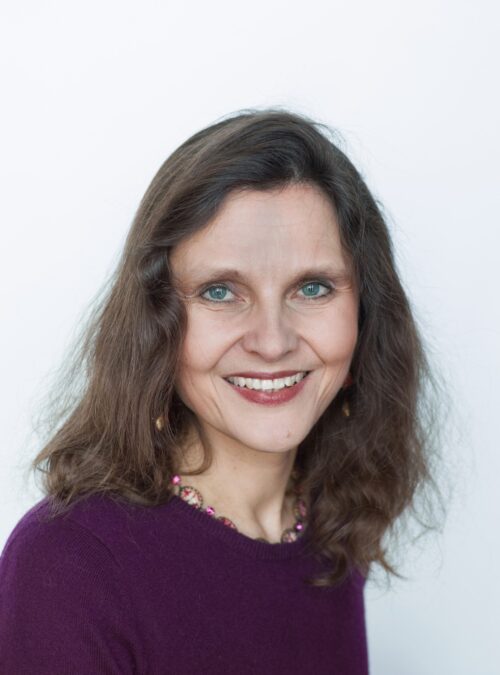
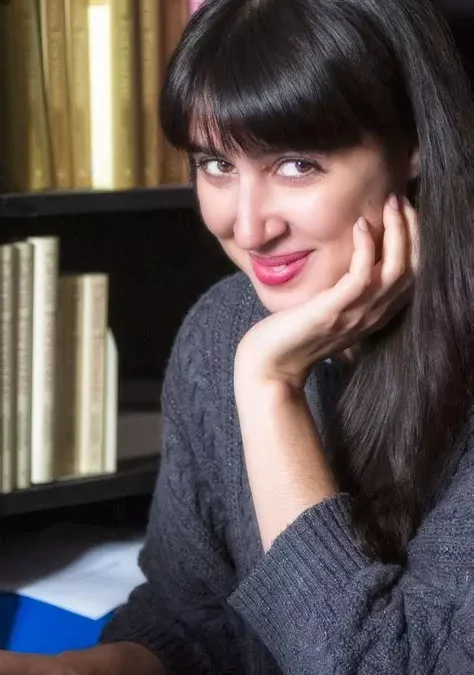
Interview with Silvia Contarini, Italianist and founder of the KC publishing house (Paris)
Author: Paolo Grossi
What led you to set up the KC publishing house in 2023 and where does its name come from?
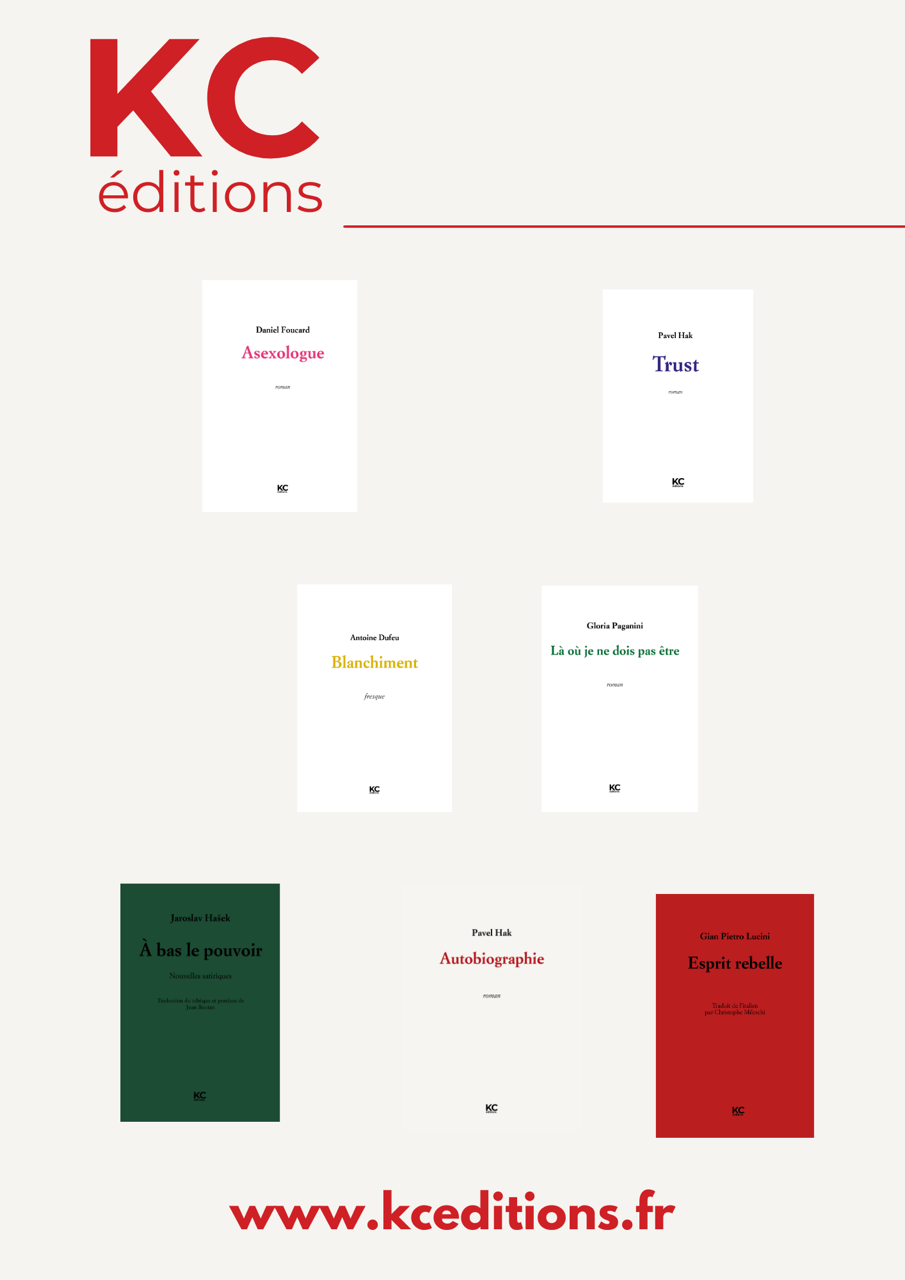
It is a project that has always been close to my heart, due to my passion for literature and books, but my academic work, which was very intense, meant that I had to put it aside for years. When I decided to make it a reality, I first explored the publishing sector, whose crisis is unfortunately well known, in its various aspects, including the concrete and material ones. I consulted with publishers, writers, translators, agents and potential collaborators in France and Italy; their advice and experience were invaluable. Above all, we wanted to ensure the new publishing house would be sustainable, or at least long-lived, and have its own editorial space. The most difficult part, but we succeeded, was finding a distributor who would accompany us from the beginning and give us their trust. We opted for a light, associative structure that guarantees us economic independence and freedom of choice. We carefully considered the graphic presentation, formats, etc., entrusting the production of the books to an excellent printer. With equal care, of course, we developed our programme along two main lines: the first, and most important, favours high-quality contemporary fiction that is in tune with the world, attentive to the present and to the future. The second revives unjustly forgotten, unpublished or out-of-print works, accompanying them with a light critical apparatus. This is the case, for example, with the beautiful short novel by Gian Pietro Lucini, Spirito ribelle/Esprit rebelle, translated by Christophe Mileschi, with an afterword by Andrea D’Urso; and it is the case with the collection of satirical stories À bas le pouvoir by Jaroslav Hašek, selected by Jan Šulc, translated and with an afterword by Jean Boutan.
These examples allow me to emphasise an important point, namely that we employ excellent collaborators at all stages, even the less visible ones. This is important in order to gain credibility with professionals, discerning readers and booksellers.
The reception has been good, I would say better than expected: we have organised some great presentations, and our books have been displayed in the windows or on the main shelves of prestigious bookshops, and they have received very positive reviews.
What titles are currently in your catalogue? What is in the pipeline?
The first book, a novel by Pavel Hak, Autobiographie, was published in October 2024. To date, we have published seven titles, five by French writers, including Antoine Dufeu and Daniel Foucard – and I include Gloria Paganini among the French – and the two books by Lucini and Hasek mentioned above.
In preparation for February is a book by the writer and poet Véronique Pittolo, Elle raconte toujours des histoires (de l’art), a fragmentary account of a journey through Italy to rediscover works such as Piero della Francesca’s Resurrection, which is, in fact, a meditation on the salvific value of art. In March, we will publish the translation of Nicoletta Vallorani‘s novel Avrai i miei occhi (Premio Italia, finalist for the Campiello Prize). This will be followed by a novel by Gerry Feehily, Now, set in the world of fashion, and a prose text, in an original, almost experimental format, by Patrick Bouvet. We are working on two books that we would like to publish in autumn 2026; two other titles are already planned for early 2027.
For detailed information, please visit our website: https://www.kceditions.fr/
On a positive note, we are receiving many manuscripts, about fifty in less than a year, and some of them are really interesting.
I would add that we are considering launching a non-fiction series in 2027. For now, we do not intend to exceed 6 or 7 books per year. How things evolve will depend on the results of the first two years of activity.
France ranks first in terms of the number of Italian books translated. How do you view the attention that French publishers give to Italian authors? In your opinion, are there any gaps to be filled? Are there any authors, whether fiction or non-fiction, who deserve more attention?
Indeed, there is a lot of interest in Italian books, you only have to go to a bookshop to realise this. And I must say that I have been surprised recently to see novels by debut Italian writers being published by major publishers. The problem, however, seems to me to be the medium and long-term support, because if a book does not immediately achieve the hoped-for success, interest quickly wanes. I also notice that sometimes, for established writers, only the best-known titles are published. In addition, inevitably following market trends, preference is given to works belonging to genres that are easier to sell (novels rather than short stories or short forms, non-fiction texts on current affairs, children’s literature, sagas and romance, etc.).
Based on these reflections, I believe that there is also an opportunity for a niche but high-quality publisher such as KC éditions to find Italian books to publish.
Personally, I would like to have writers such as Alba de Céspedes and Anna Banti in my catalogue, several of whose works remain unpublished or out of print despite renewed interest in Italy and France.
One last question… about the latest title published, Là où je ne dois pas être by Gloria Paganini.
It is a debut novel, released at the end of August, which is enjoying considerable success. Gloria Paganini, a philosophy graduate from Bologna, has been living in France for almost forty years and teaches at the University of Nantes, where she also directs an important Italian film festival. We know each other well. Somewhat by chance, we met during the period when KC éditions was being launched, and I told her about the new venture. She then revealed to me, almost confessed – because there can be a lot of modesty surrounding writing – that she was writing a sort of memoir in French. I encouraged her to send me the fifty or so pages she had already written, and it was a revelation. Not only because of the originality of the writing, poetic and raw at the same time, and her extraordinary command of French, not only because of the rhythm (the narrative proceeds in almost cinematic sequences), but above all because of the power of the universe she recreates, a rural Italy of the 1960s, reminiscent of Ghirri’s photographs, some of Antonioni’s landscapes, some pages of Pavese. Although I felt confident in my judgement, fearing that I might be influenced by friendship, I asked two trusted colleagues to read it, and they both enjoyed it very much. I am very proud to have published this book and hope that it will continue to be read and loved.
- SHARE ON:
-

-

-

-