
Idda
by Marzano, Michela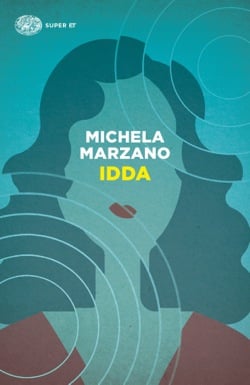
Idda
Un appassionato romanzo sull’identità, la memoria, la potenza carsica delle relazioni.
Annie è ricoverata in una residenza protetta, il suo mondo è ormai una stanza, la 315. Il passato sta scivolando via, mescola gli anni, i luoghi, le stagioni. Poco importa se sia Alzheimer o demenza senile, i ricordi stanno sparendo, sembra aver bisogno solo d’amore. Alessandra, compagna di suo figlio Pierre, la assiste, la ascolta. È professoressa universitaria di Biologia. Ha abbandonato a ventitré anni la Puglia, quando il suo mondo si era sbriciolato: era fuggita, dopo la morte della madre, per non tornare mai più. Ha chiuso la porta ai ricordi, ha costruito la sua vita professionale e affettiva a Parigi, «Punto e daccapo» come diceva sua madre. Si è sempre detta che l’importante è il presente ma, mentre cala il sipario nei ricordi di Annie, mentre con Pierre riordina la sua casa tra oggetti da buttare e altri da conservare, sente riemergere parole e memorie che, né la lingua francese, né il lavoro e l’amore per Pierre sono riusciti a cancellare.
Michela Marzano ci consegna il ritratto indimenticabile di due donne che trovano inaspettatamente l’una nell’altra ciò che avevano perduto, «e poco importa che il racconto contenga spunti autobiografici perché poi diventa storia universale che evoca il male di tutti» Simonetta Fiori, «la Repubblica».
In modo toccante l’autrice offre al lettore una storia intensa, affronta il tema della perdita, della rielaborazione dei nostri lutti, del bisogno di portare alla luce ciò che si pensava di aver sepolto per sempre; ma torna ad affrontare anche il tema dell’amore, «fil rouge che lega tutti i miei libri. Perché, se è vero che ognuno di noi è caratterizzato dalle fragilità e dal vuoto, è anche vero che ognuno di noi riesce a sopravvivere grazie alla forza dell’amore. Per me l’amore è il reciproco riconoscimento. Essere riconosciuti dagli altri per quello che siamo e riconoscere gli altri per quello che sono. Così si creano dei legami capaci di darci la forza di attraversare i vuoti della nostra esistenza e curare le ferite che la vita ci infligge» Michela Marzano intervistata da Brunella Schisa, «il venerdì – la Repubblica».
«Trovare le parole per l’amore, nominare i sentimenti, è la specialità di Michela Marzano […] è quello che fa, testardamente, da anni, nei libri e sui giornali ed è diventata bravissima proprio perché l’amore è una cosa che si impara provando e riprovando, finché non si trova il tono giusto per dire il legame misterioso che unisce uomini e donne o quello profondo, unico e totale che lega madri e figli», Raffaella Silipo, «La Stampa».
Michela Marzano (Roma, 1970) è docente di filosofia morale all’Università Paris Descartes, editorialista de la Repubblica e autrice di numerosi libri tradotti in molte lingue. Con Einaudi “Stile Libero” ha pubblicato il romanzo L’amore che mi resta (2017). Tra i suoi libri ricordiamo Volevo essere una farfalla (2011), L’amore è tutto: è tutto ciò che so dell’amore (Premio Bancarella 2014), Papà, mamma e gender (2015).
Idda
Two women who belong to very different and distant worlds: unexpectedly, one finds in the other something she had lost, while the other finds the strength to try to regain it. Marzano returns to the topics which informed her most successful books: identity, family, and love, the sentiment which most consumes us and the only one which can save us.
What remains of us when entire pieces of our existence have disappeared? A woman who has severed the ties with her past finds herself reflected in another, older, woman, who instead has lost all recollection of her past. By retracing the elderly woman’s story, for the first time she feels the need to recover her own, painful past, in order to discover who she is, and who she has become.
Alessandra is a plant biologist; she teaches in Paris, where she lives with Pierre. It has been years since she returned to Salento, where she was born and which she left after her mother died because she was unable to come to terms with the shadows of her own family. When Annie, Pierre’s elderly mother, is taken to a clinic because she is progressively losing her memory, Alessandra cares for her home, which must be put up for sale. Thus, as she opens drawers and closets, she discovers the universe of this woman – familiar and yet unknown – and is so fascinated by her that she begins to reconstruct her life, in part through her imagination, as though it were the only way to safeguard the woman’s identity now that she is lost in her oblivion. Or maybe Alessandra only wants to understand where the man she loves comes from. She never wanted to have children with Pierre, despite his insistence, and suddenly she is afraid that if she, too, were to lose her memory, no one would be able to remember it for her. As her relationship with Annie becomes increasingly intimate and almost filial, the words from her childhood resurface in her, along with all the memories she has been unable to cancel. It is time to come to terms with them, and in order to do so she must go back to where it all began.
Michela Marzano gives us an unforgettable portrait of two women who unexpectedly find in each other what they had lost, “and it matters little that the story contains autobiographical elements because it then becomes a universal story that evokes the pain of everyone” Simonetta Fiori, la Repubblica.
In a touching way, the author offers the reader an intense story, addressing the theme of loss, the reworking of our grief, the need to bring to light what we thought we had buried forever; but she also returns to the theme of love, ‘fil rouge that links all my books. Because, if it is true that each of us is characterised by fragility and emptiness, it is also true that each of us manages to survive thanks to the power of love. For me, love is mutual recognition. Being recognised by others for who we are and recognising others for who they are. This is how we create bonds that give us the strength to cross the voids of our existence and heal the wounds that life inflicts on us’. Michela Marzano interviewed by Brunella Schisa, il venerdì – la Repubblica.
‘Finding the words for love, naming feelings, is Michela Marzano’s speciality […] It is what she has been doing, stubbornly, for years, in books and newspapers, and she has become very good at it precisely because love is something you learn by trying and trying again, until you find the right tone to express the mysterious bond that unites men and women or the deep, unique and total bond that ties mothers and children, Raffaella Silipo, La Stampa.
Michela Marzano (Rome, 1970) is a professor of Moral Philosophy at Paris Descartes University, an editorialist for la Repubblica, and the author of numerous books which have been translated into many languages. With Einaudi “Stile Libero” she has published the novel L’amore che mi resta (2017). Her books include Volevo essere una farfalla (2011), L’amore è tutto: è tutto ciò che so dell’amore (2014 Bancarella Prize), Papà, mamma e gender (2015).
Idda
Un roman passionnant sur l’identité, la mémoire et la puissance érosive des relations.
Annie est hospitalisée dans une résidence protégée, son monde se résume désormais à une chambre, la 315. Le passé s’efface, mélangeant les années, les lieux, les saisons. Peu importe qu’il s’agisse d’Alzheimer ou de démence sénile, ses souvenirs disparaissent, elle semble n’avoir besoin que d’amour. Alessandra, la compagne de son fils Pierre, l’assiste, l’écoute. Elle est professeure de biologie à l’université. À vingt-trois ans, elle a quitté les Pouilles, lorsque son monde s’est effondré : après la mort de sa mère, elle s’est enfuie pour ne plus jamais revenir. Elle a fermé la porte à ses souvenirs, elle a construit sa vie professionnelle et affective à Paris, « Point à la ligne » comme disait sa mère. Elle s’est toujours dit que l’important était le présent, mais alors que le rideau tombe sur les souvenirs d’Annie, alors qu’avec Pierre, elle range sa maison en triant les objets à jeter et ceux à conserver, elle sent resurgir des mots et des souvenirs que ni la langue française, ni le travail, ni l’amour pour Pierre n’ont réussi à effacer.
« Peu importe que le récit contienne des éléments autobiographiques, car il devient alors une histoire universelle qui évoque le mal de tous. » Simonetta Fiori, « la Repubblica »
De manière touchante, l’autrice offre au lecteur une histoire intense, aborde le thème de la perte, du travail de deuil, du besoin de mettre au jour ce que l’on pensait avoir enterré pour toujours ; mais elle revient également sur le thème de l’amour, «fil rouge qui relie tous mes livres. Car s’il est vrai que chacun de nous est caractérisé par la fragilité et le vide, il est également vrai que chacun de nous parvient à survivre grâce à la force de l’amour. Pour moi, l’amour est une reconnaissance mutuelle. Être reconnu par les autres pour ce que nous sommes et reconnaître les autres pour ce qu’ils sont. C’est ainsi que se créent des liens capables de nous donner la force de traverser les vides de notre existence et de soigner les blessures que la vie nous inflige » Michela Marzano interviewée par Brunella Schisa, il Venerdì – la Repubblica.
« Trouver les mots pour l’amour, nommer les sentiments, c’est la spécialité de Michela Marzano […] c’est ce qu’elle fait, obstinément, depuis des années, dans ses livres et dans les journaux, et elle est devenue très douée précisément parce que l’amour est une chose qui s’apprend en essayant et en réessayant, jusqu’à trouver le ton juste pour exprimer le lien mystérieux qui unit les hommes et les femmes ou celui, profond, unique et total, qui lie les mères et leurs enfants » Raffaella Silipo, La Stampa.
Michela Marzano (Rome, 1970) est professeure de philosophie morale à l’université Paris Descartes, chroniqueuse pour la Repubblica et autrice de nombreux livres traduits dans plusieurs langues. Elle a publié le roman L’amore che mi resta (2017) chez Einaudi « Stile Libero ». Parmi ses livres, citons Volevo essere una farfalla (2011), L’amore è tutto: è tutto ciò che so dell’amore (Prix Bancarella 2014) et Papà, mamma e gender (2015).
-
Casa editrice Publisher / ÉditeurEinaudi
-
Anno di pubblicazione Year of publication / Année de publication2020
-
Numero di pagine Number of pages / ÉNombre de pagesr240
-
ISBN9788806243418
-
Prezzo Price / Prix12€
-
Responsabile dei diritti
Copyright Manager / Responsable des droits
Valeria Zito valeria.zito@einaudi.it
-

Text sample
View PDF
- SHARE ON:
-

-

-

-

