
Topografie interculturali. Come le migrazioni trasformano le città e ne diventano parte
by Ricucci, Roberta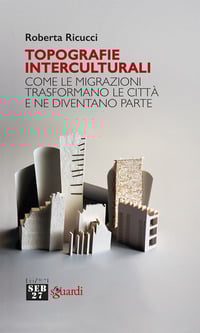
Signs, languages, scents… these are some of the clues left behind by migration in large cities, as well as in small and remote towns, both in the present and in the past. If in the past these traces were gradually erased or covered over by a progressive standardization of tastes, commercial preferences, and a kind of camouflage to appear like the local population, today differences are enhanced by the laws of the economy and by widespread cultural pluralism.
Thus, places shaped by immigration are transformed through the contribution of those who arrive from elsewhere. Nothing is any longer (or perhaps never really was) confined to the outskirts or to so-called “ethnic” neighborhoods, and those “Little Italies” or “Chinatowns” now remain only as tourist attractions, caricatures of a past best left behind.
Diversity reshapes cities, and it is something tangible in everyday life for everyone: critics and supporters of the right to mobility, long-standing and new migrants, citizens of different generations. No one, in fact, can any longer consider as foreign those who contribute to collective life through commercial and cultural activities, through educational and community initiatives where traditions, accents, cultures, and practices intertwine.
- Publishing house Seb27
- Year of publication 2026
- Number of pages 120
- ISBN 9788898670888
- Foreign Rights edizioni@seb27.it
- Price 15.00
Ricucci, Roberta
Roberta Ricucci teaches Sociology of International Mobility and Sociology of Islam at the University of Turin and is a member of the International and European Forum on Migration Research (FIERI). An expert on migration issues in Mediterranean Europe, she focuses in particular on the dynamics of youth inclusion, coordinating prestigious international projects.
- SHARE ON:
-

-

-

-

