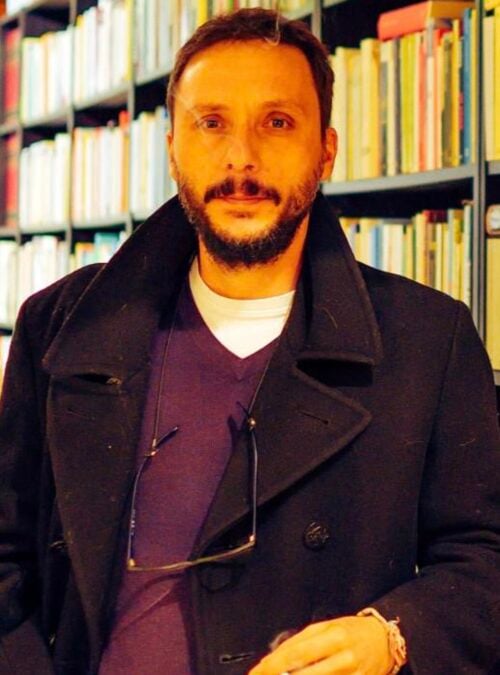
Interview with Cristina Palomba and Vincenzo Ostuni, editorial directors at Ponte alle Grazie.
Author: Laura Pugno
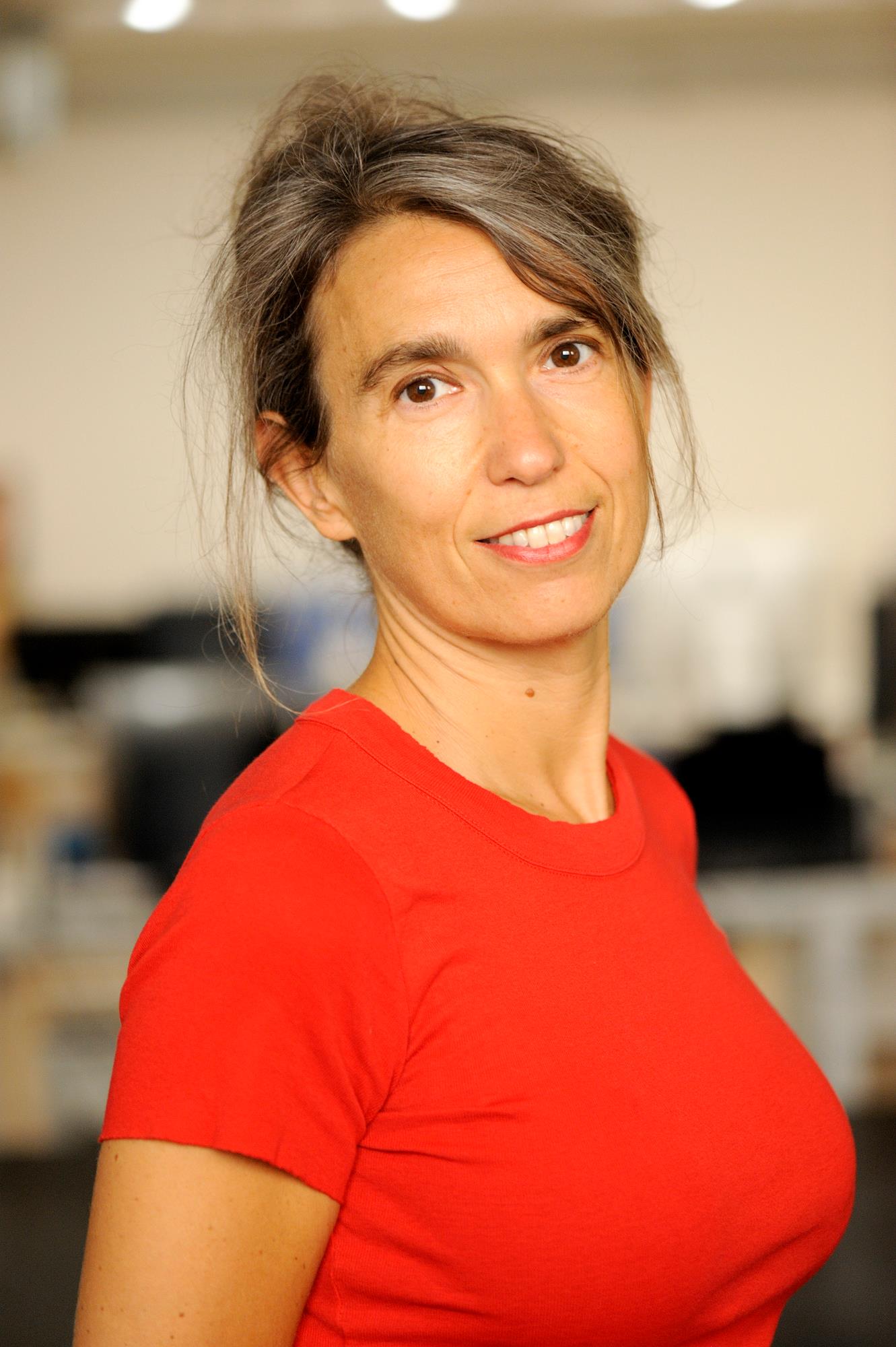
For newitalianbooks’s series of interviews on Italian publishing houses, we hear from Cristina Palomba and Vincenzo Ostuni, editorial directors at Ponte alle Grazie.
How would you describe the identity of Ponte alle Grazie to international readers of newitalianbooks? What are its characteristics and strengths?
Which literary and non-literary ventures have been most successful in Italy and, if applicable, in other countries, and why, in your opinion?
Often, when describing Ponte alle Grazie, we’ve found it helpful to start with our motto, which is written beneath the small bridge in our logo: Books to Change Your Mind. It has a fairly recent history: we came up with it in 2020 when, while redesigning the website, we felt the need to say “a few words” about our identity. We had just celebrated the publishing house’s thirtieth anniversary with a big party and special editions: the brief motto defined us in hindsight, after so many years of research and work, but it also pointed the way forward. It effectively describes who we are and, consequently, what we do: we seek voices capable of charting new horizons, that do not tread paths already trodden by others, words that are worn out and overused, that challenge stereotypes through analysis, even sharp criticism, but also through paradox. It is no coincidence that one of the oldest titles in our catalogue is The Art of Change, by Giorgio Nardone and Paul Watzlawick: it describes a psychotherapeutic intervention technique that helps one perceive reality in a completely new way and, consequently, act in an unconventional manner.
Over the past twenty-six years for Cristina Palomba and eighteen for Vincenzo Ostuni—years largely shared with our late and “great leader,” Luigi Spagnol—we have strived to keep this torch burning as we sought out authors, both Italian and international, to publish in our series: one titled Inchieste, to offer unconventional perspectives on current events, politics, history, and recent news; a small and precious poetry series, featuring classics translated and edited by poets; a series titled Terapia in tempi brevi, directed by Giorgio Nardone himself; Passi, in collaboration with the Italian Alpine Club, which explores the mountains through the voices of great storytellers; the literary fiction series Scrittori, a creative breeding ground for styles, experiments, and innovation (the “mystery series” within this collection focuses on crime fiction and related genres, always keeping literary quality in mind); the extensive flagship non-fiction series, an eccentric and original collection that encompasses a wide range of topics: from philosophy to gardening, from politics to mathematics, physics, music, neuroscience, language, psychoanalysis, nature, and art. We publish between fifty and sixty titles a year and can count on a solid catalogue, with a substantial number of titles always available in bookstores.
It may be worth mentioning a few of our authors to vividly sketch our identity and, at the same time, answer the question of what has “worked” for us: Margaret Atwood, a Canadian and two-time Booker Prize winner, author of The Handmaid’s Tale, one of the most original and transgressive voices in contemporary literature; Slavoj Žižek, a Slovenian philosopher and psychoanalyst, among the most discussed, original, and courageous thinkers in the world; Emanuele Trevi, whose “live portraits” published by our press form the backbone of his beloved literary output; Pia Pera, whose tenth anniversary of her death falls in these days, an author who transformed the chronicle of the garden and vegetable patch into literature; Ritanna Armeni, journalist and feminist, who brought the women’s revolution into the novel, rewriting history from the perspective of women; Rebecca Solnit, activist, writer, art critic, and a sharp and refined thinker; Noam Chomsky, one of the foremost linguists and sharpest political observers; Daniela Ranieri, a rare literary talent in both style and substance, as well as a keen political observer; Francesco Pecoraro, an author who has now firmly and deservedly entered the contemporary canon; Ann Patchett, an American bookseller and writer, a chronicler of family and the power of relationships; Norman Doidge, a science journalist among the first to explore the brain’s neuroplasticity. Their books, and those of many other authors, encourage us to interpret the flow of the present in a progressive, innovative, and unyielding way—to nourish all our facets, to understand and feel, to denounce and discover: this is our quest, for ourselves and for our readers.
As for our international audience, several of our authors have seen their works translated into numerous languages: Emanuele Trevi above all, but also Francesco Pecoraro, Pia Pera, Ritanna Armeni, and various others. The translations of Giorgio Nardone’s books—now an international benchmark for brief strategic therapy—are also of significant importance. We have perhaps noticed less difficulty, over the last ten or fifteen years, in finding publishers interested in our work, but it seems to us that popular fiction—as is perhaps partly inevitable—is by far the preferred choice. In short, literary merit is not always adequately rewarded by publishers in other countries, even when our sales figures are promising or even excellent. (After all, the same likely applies to translations into Italian, with many commendable exceptions.) For this reason, any initiative, such as yours, that aims to promote and support our literature cannot but be welcomed and encouraged.
- SHARE ON:
-

-

-

-