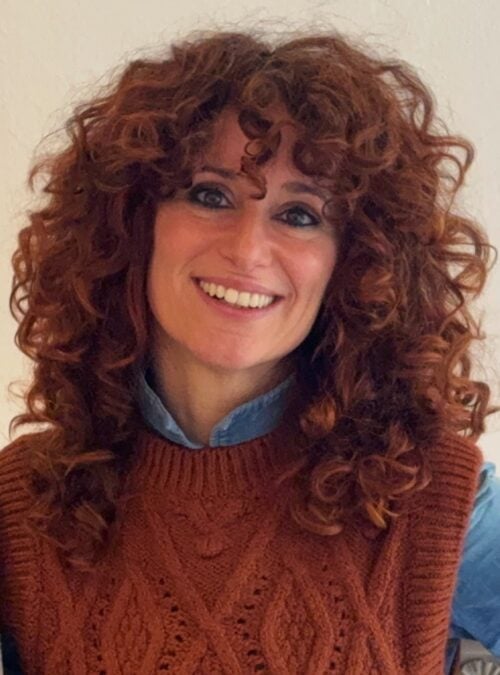
Interview with Sophie Royère, publisher and founder of Ada Parme publishing house
Author: Paolo Grossi
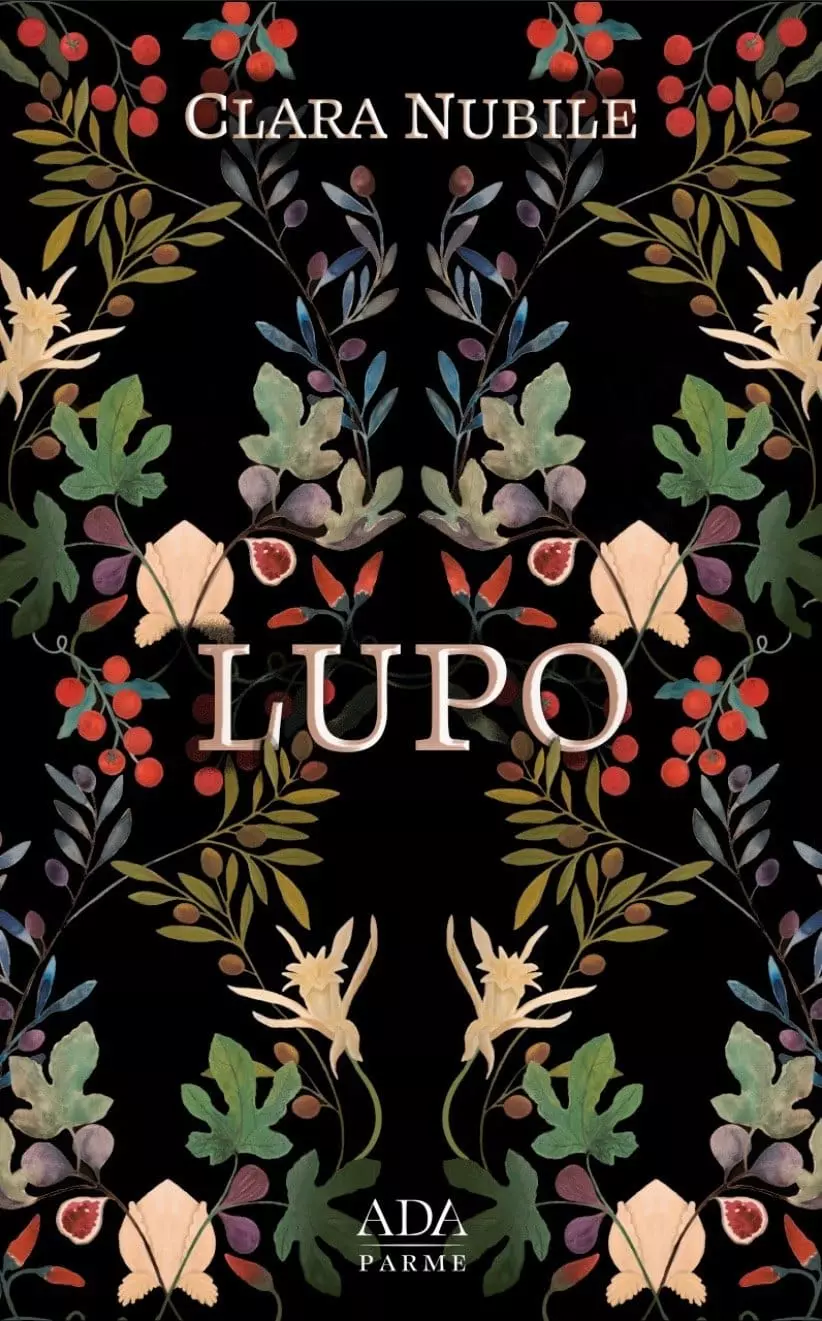
You founded Ada Parme publishing house in Paris in 2023. What led you to decide to start your own publishing house, and where did the name come from?
As a literary translator for many years, I experienced the joy of seeing authors I love get published, and the frustration of not being able to place others that I had discovered and who I thought were very important (I had proposed Antonio Moresco to several publishing houses, which did not see his potential, a few years before he was published, with the recognition we know, by the fine publishing house Verdier). .
Furthermore, it is very rare for a translator to be fully involved by their publisher in the entire process of creating a book: they do not choose the publication date, they are not consulted on the production stage (which layout for the text, which cover, which format), they are not directly involved in marketing (although they are free to communicate on their own social networks), and, finally, they are rarely asked to talk about the book, particularly in the media (a book they surely know better than anyone else… this has improved somewhat in recent years, perhaps).
I emphasise all this to show how much I have long wanted to run a literature collection or an editorial label, in order to see projects through from start to finish, according to a comprehensive vision that takes into account the universe of the work: a wonderful opportunity to collaborate with artists (for illustrations and covers), printers and manufacturers, and layout artists, with whom dialogue can be direct and artistic direction complete and total. In short, I no longer wanted to ask for permission for a text to be published. For the second book I edited, Contes et Féeries by Jean Lorrain, I also called on the writer Benjamin Berton, winner of the 2000 Goncourt Prize for his novel Sauvageons, who wrote the preface.
I wanted my publishing house to bear the first and last name of a woman. Ada is the unforgettable heroine of Vladimir Nabokov’s extraordinary novel of the same name, which I think is my favourite. Passionate, prodigious and dazzling, a ‘hunter of butterflies and rare words’, her desire and appetite for life are an inexhaustible source of inspiration. Parma, the pearl of the Renaissance and the art of living, is the Italian city of my ancestors, which I discovered when I rediscovered my family and my roots during a magnificent summer of my youth.
Ada Parme is therefore a female avatar onto whom readers can project their unmentionable literary fantasies (!).
The attention paid to the quality of the printing, binding and illustrations plays a major role in Ada Parme’s publications. How have your publications and stationery products been received by bookshops?
Ada Parme’s aesthetic universe appeals and attracts, as I have seen at trade fairs in particular. The refined book covers I offer convince customers in bookshops and at book fairs, as it is not very common to find them in these places. As for the books, it depends on the bookshops, their readership, and the work that is done with the bookseller. I would say it’s on a case-by-case basis. For example, although my books were available at the famous Écume des Pages bookshop in Saint-Germain-des-Prés, not a single copy was sold there! On the other hand, in seemingly more niche bookshops, such as the Librairie italienne in Paris, they immediately reach their readership. I am also active on social media, which is like a virtual book fair or bookshop, where I reach people I would not otherwise meet: some have been following me since the beginning and have become loyal ‘fans’ who have been there for every publication. Ultimately, the texts I choose, which are powerful and demanding, will, like any other book, find readers who want to enjoy an intense reading experience. I want to continue to promote these beautiful texts in their solid and refined setting, as a way of showing that literature is eternal, that it can be treasured or passed on, without being damaged as can be the case with books that are hastily glued and inked, which are all too common today.
You are a translator of Italian. Where did your interest in Italian language and culture come from, and what place does Italian literature occupy in your catalogue and future plans?
Translating Italian came naturally as an extension of a quest to discover my family roots, rediscovering a family whose older members were eager to establish a rich written correspondence with my parents and me. I had always loved books more than anything else, I didn’t want to teach or do research, so translating Italian into French seemed like the ideal profession for immersing myself in texts on my own, with the selfish delight of an avid reader. It was a way of connecting with my own history, but also of having fun with this language that is so deceptively similar, a real challenge for the translator. Of course, over the years, this fantasy of solitude has fortunately been shattered: several residencies in places such as the CITL in Arles or the Villa Garbald in Italian-speaking Switzerland have shown me that creating a network of translators is the greatest asset a professional can have to nourish and breathe life into their own work. The first book published by Ada Parme, Lupo, by Clara Nubile, is an Italian novel (translated, but I wanted to keep the original title): it is an extension of my work as a translator, a hunter of texts to be revealed, as translators generally are. Italian literature will not occupy a ‘special’ place in my home: I consider each work to be unique, regardless of the language it belongs to. If another Italian book seems essential to French readers, it will of course have its place in my catalogue.
My last question is about the book you recently translated and published: Lupo by Clara Nubile. Why did you choose it?
This book sat on my shelves for years, with its woman dancing in the fire on the cover – I admit that it was borrowed from the Italian Cultural Centre in Paris, which I always forgot to return, for which I apologise. The fact that it was never claimed spoke volumes about how certain texts can be forgotten, before resurfacing, through the magic of circumstances. I hesitated for a long time before submitting it to publishers, as if its time had not yet come. When I created Ada Parme, its cover came back to me. It seemed to me to be the ideal book to launch my collection: it is a text that is incandescent, feverish, fiery and pure, as only youth can be, and was therefore perfect to embody the nascent soul of a “young” publishing house! Clara Nubile is an author and poet, and she has a quality that I always look for in writers: showing us the world in its most inaccessible and mysterious corners, through the grace of style. This text, which tells the story of two women linked by a tormented history, who experience an emotional reunion in the middle of a scorching summer in the Salento hinterland, is a gem of concentrated poetry, contained violence and raw emotions.
- SHARE ON:
-

-

-

-