Camillo Sbarbaro: a French edition of his prose
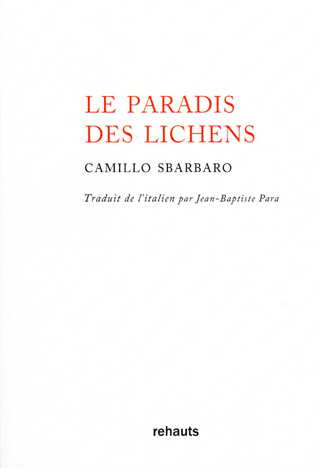
Camillo Sbarbaro (1888–1967) is one of the leading figures in 20th-century Italian literature. His most important collection of poetry, Pianissimo, was published in 1914 and bears witness to a state of existential bewilderment in the face of the inanity of reality: “Disoriented and dumbfounded, Sbarbaro moves amongst men he does not understand, amongst a life that overwhelms him and eludes him” (Eugenio Montale). He produced numerous collections of prose, notably Trucioli (1920, 1948), Liquidazione (1928), Fuochi fatui (1954), Scampoli (1960), Gocce (1963), Quisquilie (1967), in which we find “the bitter poet of the man alien to things, incapable of recognising in existence anything but pain, hostility, negation” (Giorgio Barberi Squarotti). A world-renowned specialist in mosses and lichens, he bequeathed his collection of lichens to the Natural History Museum of Genoa. In France, his most faithful translator is Jean-Baptiste Para, who, after editing—together with Bernard Vargaftig and Bruna Zanchi—a wide selection of poems taken from Pianissimo and Rimanenze (Hiver, 1992) and, in the same year, with the same publishing house, a collection of prose (Trucioli), is now releasing Le paradis des lichens with Rehauts, which includes a selection of prose pieces taken from Trucioli and Fuochi fatui.
- SHARE ON:
-

-

-

-