
La ricreazione è finita
par Ferrari, Dario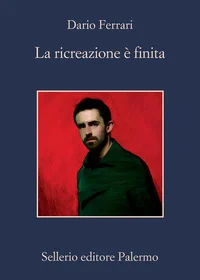
La ricreazione è finita
Marcello è un trentenne senza un vero lavoro, resiste ai tentativi della fidanzata di rinsaldare il legame e cerca di prolungare ad libitum la sua condizione di post-adolescente fuori tempo massimo. La sua sola certezza è che vuole dirazzare, cioè non finire come suo padre a occuparsi del bar di famiglia. Per spirito di contraddizione, partecipa a un concorso di dottorato in Lettere, e imprevedibilmente vince la borsa. Entra così nel mondo accademico e il suo professore, un barone di nome Sacrosanti, gli affida come tesi un lavoro sul viareggino Tito Sella, un terrorista finito presto in galera e morto in carcere, dove però ha potuto completare alcuni scritti tra cui le Agiografie infami, e dove si dice abbia scritto La Fantasima, la presunta autobiografia mai ritrovata. Lo studio della vita e delle opere di Sella sviluppa in lui una specie di identificazione, una profonda empatia con il terrorista-scrittore: lo colpisce il carattere personale, più che sociale, della sua disperazione. Contemporaneamente sperimenta dal di dentro l’università: gli intrighi, le lotte di potere tra cordate e le pretestuose contrapposizioni ideologiche, come funziona una carriera nell’università, perfino come si scrive un articolo «scientifico» e come viene valutato. Si moltiplicano così i riferimenti alla vita e alla letteratura di Tito Sella, inventate ma ironicamente ricostruite nei minimi dettagli; e mentre prosegue la sarcastica descrizione della vita universitaria, il racconto entra nella vita quotidiana di Marcello e nelle sue vitellonesche amicizie viareggine. Realtà sovrapposte, in cui si rivelano come colpi di scena delle verità sospese. Che cosa contiene l’archivio Sella, conservato nella Biblioteca Nazionale di Parigi? Perché il vecchio luminare Sacrosanti ha interesse per un terrorista e oscuro scrittore? E che cosa racconta, se esiste, La Fantasima, l’autobiografia perduta? La ricreazione è finita è un’opera che si presta a significati e interpretazioni molteplici. Un narrato in cui si stratificano il genere del romanzo universitario – imperniato dentro l’artificioso e ossimorico mondo dell’accademia -, con il romanzo di formazione; il divertimento divagante sui giorni perduti di una generazione di provincia, con la riflessione, audace e penetrante, sulla figura del terrorista; e il romanzo nel romanzo, dove l’autore cede la parola all’autobiografia del suo personaggio. Questo libro racconta la storia di due giovinezze incompiute, diversissime eppure con una loro sghemba simmetria.
«… un capolavoro. Tra noir epico e commedia caustica, Ferrari coinvolge Borges, Pasolini, Plutarco e Foucault (senza appesantirlo), ma soprattutto il più grande, Louis-Ferdinand Céline». Antonio D’Orrico, « La Lettura – Corriere della Sera »
« … un romanzo vivido e modulato sul dolore di vivere, sui compromessi, sui ricordi – privati e sociali – e sulle contraddizioni quotidiane – e spesso definitive – che alla fine chiamiamo vita». Sergio Pent, « TTL – La Stampa »
Premi:
Vincitore del Premio Flaiano Fiction, del Premio Satira 2023, del Premio Mastercard per la Letteratura 2023 e del Libro dell’Anno per Fahrenheit Radio 3
Oltre 95.000 copie vendute.
Il testo campione allegato è stato tradotto da Edward Williams.
Dario Ferrari è nato a Viareggio, ha studiato filosofia a Pisa dove ha conseguito un dottorato di ricerca. Ha esordito nella narrativa con La quarta versione di Giuda (2020). Con Sellerio ha pubblicato La ricreazione è finita (2023), premiato come Fahrenheit Radio3 Libro dell’anno e vincitore del Premio Flaiano 2023 per la narrativa, del Premio Satira 2023 e del Premio Mastercard 2023 per la letteratura.
Break is over
A compelling, bitter portrait of an Italian university, packed with the suspense of a crime novel. An aspiring university researcher, awkward and inconclusive, becomes a symbol for an entire humiliated, hurt generation. A generation without a future that doesn’t know what they want, whose vocation is not self-realization, but to chase a ghost. Marcello’s life is unsatisfying: he is 30 and still living with his mother in Viareggio. He finally has a degree in literature after taking too many years off and has no concrete plans for his future. His father loathes the fact that he chose to study something so useless and feigns that he is an intellectual. Then, to get back at him and show he is up to the challenge, Marcello decides to try and get his PhD. Everybody has known who would get a spot in the PhD program for a while, but Marcello decides to take the written test anyway. Thanks to an incredible stroke of luck, he manages to officially become a doctoral student of the illustrious Professor Sacrosanti, one of the foremost professors of Italian studies. Professor Sacrosanti has very specific ideas about what his new protégé will study: the endeavors of Tito Sella, the «Italian terrorist», who Marcello knows nothing about. Marcello begins a long study to reconstruct Sella’s life and the activities of the Red Brigades in Viareggio. Along the way, he begins to identify more and more with this terrorist as he continues to bump up against life’s absurdity, the tug-of-war of power and the ways of an unfamiliar world, the world of academia, which both humiliates and constantly challenges him, changing Marcello deeper and deeper. Break is over is the bitter, sarcastic story of life in an Italian university, of students’ and researchers’ constant submission and humiliation that drives them to the point of tragic folly. This is also a novel about historical memory and the Red Brigades and ’70s Italy. It provides an ironic account of the atmosphere of the era, the dreams of those youth who believed a different future was possible yet were overwhelmed by History. However, it is mainly a novel about one of today’s young people and how difficult is it for him to imagine plans and make them happen.
«This is a masterpiece. Between epic noir and gall comedy, Ferrari engages Borges, Pasolini, Plutarch and Foucault (without making him heavy-handed), but, above all, the greatest, Louis-Ferdinand Céline». Antonio D’Orrico, La Lettura – Corriere della Sera
«It is a vivid and modulated novel about the pain of living, compromises, memories – private and social – and the daily – and then often final – contradictions that at the end of the day we call life». Sergio Pent, TTL – La Stampa
Prizes:
Winner of Flaiano Fiction prize, Satira Prize 2023, Mastercard Prize for Literature 2023 and Book of the Year for Fahrenheit Radio 3.
More than 95.000 copies sold
The attached sample has been translated by Edward Williams
Dario Ferrari (Viareggio, 1975) is a translator and teacher. He made his narrative debut with La quarta versione di Giuda (2020). With Sellerio he has published La ricreazione è finita (2023), awarded Fahrenheit Radio3 Book of the Year and winner of the 2023 Flaiano Prize for Fiction, the 2023 Satira Prize, and the 2023 Mastercard Prize for Literature.
-
Casa editrice PublisherSellerio
-
Anno di pubblicazione Year of publication2023
-
Numero di pagine Number of pages480
-
ISBN9788838944703
-
Prezzo Price16€
-
Responsabile dei diritti
Copyright Manager
Silvia Zamperini - Sellerio silvia.zamperini@sellerio.it
-
Diritti venduti
Rights sold
Rights sold in: Czech Republic, Meridione; France, Editions du Sous-Sol; Germany, Verlag Klaus Wagenbach; Greece, Polis; Spain, Libros del Asteroide; Turkey, Eriken
Movie/tv rights: Sellerio editore – Optioned by Fandango
-

Text sample
Voir le PDF
- SHARE ON:
-

-

-

-

