
L’architettrice
par Mazzucco, Melania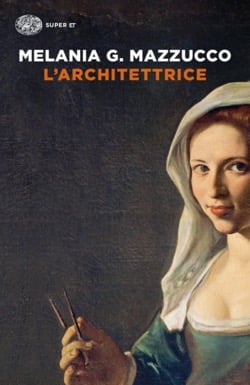
L'architettrice
Nel maggio del 1624 un uomo accompagna la figlia sulla spiaggia di Santa Severa, dove si è arenata una creatura chimerica. Una balena. Esiste anche ciò che è al di là del nostro orizzonte, è questo che il padre insegna a Plautilla. Una visione che contribuirà a fare di quella bambina un’artista, misteriosa pittrice e architettrice nel torbido splendore della Roma barocca. Mentre racconta fasti, intrighi, violenze e miserie della città dei papi, e il fervore di un secolo insieme bigotto e libertino, Melania G. Mazzucco ci regala il ritratto di una straordinaria donna del Seicento, abilissima a non far parlare di sé e a celare audacia e sogni per poter realizzare l’impresa in grado di riscattare una vita intera.
Con oltre 100.000 copie vendute in edizione cartonata, tascabile, e-book e audiolibro, L’architettrice è diventato un longseller.
Premi:
Premio John Fante alla carriera Premio Capalbio
Premio Alassio
Premio Alvaro Bigiaretti Premio Dessì
Premio Io Donna Premio Stresa Premio Mastercard Premio Manzoni Premio Righetto
Premio Friuli Venezia Giulia Premio Silvia Dell’Orso
«Mazzucco raggiunge qui una vetta per la ricchezza inesauribile dei particolari e al tempo stesso per la tenuta trascinante dell’insieme». Alberto Asor Rosa
«La verità dell’Architettrice è la forza della letteratura. È la straordinaria penna di Melania Mazzucco». Angelo Guglielmi
Melania G. Mazzucco è autrice di Il bacio della Medusa (1996), La camera di Baltus (1998), Lei cosí amata (2000, Premio Napoli), Vita (2003, Premio Strega), Un giorno perfetto (2005), La lunga attesa dell’angelo (2008, Premio Bagutta). Nel gennaio 2011 riceve il Premio letterario Viareggio-Tobino come Autore dell’Anno, nel 2020 il Premio John Fante alla carriera e nel 2023 il Premio Matilde Serao alla carriera. Per Einaudi ha inoltre pubblicato: Limbo (2012, Premio Bottari Lattes Grinzane, Premio Elsa Morante, Premio Giacomo Matteotti); Il bassotto e la Regina (2012, Premio Frignano Ragazzi 2013); Sei come sei (2013); Il museo del mondo (2014); Io sono con te (2016, Libro dell’anno di Fahrenheit, Radio 3), L’architettrice (2019, Premio Capalbio, Premio Alassio, Premio Dessí, Premio Alvaro Bigiaretti, Premio Mastercard, Premio Stresa, Premio Io Donna – Eroine d’oggi, Premio Manzoni, Premio Righetto, Premio Silvia Dell’Orso), Self-Portrait (2022, Premio I fiori blu), la pièce teatrale Dulhan – La sposa (2023) e Silenzio. Le sette vite di Diana Karenne (2024). A Tintoretto, Melania Mazzucco ha dedicato, oltre al romanzo La lunga attesa dell’angelo, il docufilm Tintoretto. Un ribelle a Venezia (2019), da lei ideato e scritto per Sky Arte, e Jacomo Tintoretto & i suoi figli. Storia di una famiglia veneziana (Einaudi 2023) che nella sua prima edizione del 2009 vinse il Premio Comisso.
L'architettrice
Melania Mazzucco’s sweeping historical novel L’architettrice tells the extraordinary story of Plautilla Briccia (1616-1705), a poor, narcoleptic girl from Rome who becomes the first female architect in modern history. The bulk of the novel unfolds in the first-person voice of Plautilla, who, from the solitude of her room in the years before her death, records her long and eventful life. Ferrante fans will appreciate the intimate narrative style as well as the unusual education of the protagonist, whom we follow from childhood to old age. Her vivid recollections about seventeenth-century Rome are one of the joys of the book: Plautilla portrays the city in all its splendor and squalor. Nearly a century of Rome’s tumultuous history is seen through her eyes: papal processions and the plague; the flooding of the Tiber and the death of a whale; humble funerals and the extravagant Jubilee celebrations of 1650; dark alleys and the dramatic illumination of St Peter’s dome; the successes — and failures —of Gian Lorenzo Bernini, the era’s greatest artist, as well as the machinations of the popes who commission his work. Bernini’s celebrated creations, along with those of Francesco Borromini, Pietro da Cortona, and Artemisia Gentileschi figure prominently in the narrative and provide a colorful backdrop to Plautilla’s own artistic endeavors. In addition to her architectural accomplishments, she becomes a talented painter and a member of the Accademia of Saint Luca, the first artistic association of its kind to enroll women. Plautilla’s life is powerfully shaped by two men. The first is her father Giovanni, the son of a mattress maker who becomes a painter, playwright, actor, musician, collector of odd artefacts and scientific specimens. A restless, eclectic dilettante who repeatedly moves his family (Plautilla’s mother, sister and brother also figure large in the narrative) from one cramped apartment to the next, Giovanni seems more interested in his own career than in his children. Yet he recognizes Plautilla’s unique talents, which seem somehow related to the strange sleeping fits that set her apart from other children. He decides to teach her everything he knows—to make her, in other words, into his greatest creation. The possibilities her education provides are circumscribed, however, by the myth he creates about her. When Plautilla struggles to finish a painting, he claims that a miracle occurred— that it was completed by the Virgin Mary herself. This captivating story launches her career as an art- ist, but it also seals her fate as a woman. Rather than marry like her sister, Plautilla will remain a virgin. Spared the burden of childbirth, she is also deprived of the pleasure of marriage. But not, it turns out, of love. The other dominant figure in her life is an aspiring writer named Elpidio Benedetti, an ambiguous and ambitious character who is bound to celibacy by the religious vows he takes for his own career enhancement. Plautilla and Elpidio are literally thrown together during a boating mishap as they cross the Tiber River—the murky, serpentine waterway that flows through the heart of Rome will unite and divide them in other ways throughout their lives. Elpidio, a protégé of Cardinal Barberini, becomes the primary art agent in Rome of one of the era’s most powerful men: Cardinal Mazarin (Giulio Raimondo Mazzarino). Mazarin is cleric, diplomat, and politician who serves Pope Urban VIII, Cardinal Richelieu, and the Kings of France Louis XIII and XIV. Though Plautilla only leaves Rome once in her life, and then only to go see a whale beached on the nearby shore, this Rome-centered novel expands well beyond the Aurelian Walls thanks to Elpidio’s travels. The love story—never public, always fraught—between Plautilla and Elpidio draws her, and the reader, into the fascinating political intrigues and intellectual debates, both secular and ecclesiastical, of her day. A vast array of other characters is woven into Plautilla’s narrative, including Popes Urban VIII, Innocent X, and Alexander VII, and Christina, Queen of Sweden, who comes to Rome after her abdication in 1654. The shadowy presence of this remarkable woman, who renounces her throne for her faith, illuminates Plautilla’s own choices as a woman and an artist. Epic in scale—and nearly 560 pages in length—the novel nevertheless maintains a striking intimacy, largely through Plautilla’s relationships with other women. Mazzucco traces the tragic yet all too common plight of Plautilla’s beloved sister Albina, who, after numerous pregnancies, dies in childbirth. In fact, none of her numerous children will survive—an erasure that will haunt Plautilla and drive her to make a lasting mark on the world. Another traditional female destiny is dramatized in Plautilla’s best friend Eufrasia, a cloistered nun and Elpidio’s sister. Always separated by an im- penetrable grate, these two virgins strive to understand themselves and each other through—and de- spite—their shared love for Elpidio. In these and other characters, all of whom actually existed, Mazzucco deftly paints myriad shades of sacrifice and fulfillment available to women and men in seventeenth-century Rome.
At the heart of this engaging narrative stands the villa that Plautilla designs: Villa Benedetti, which was built between 1663 and 1665. Better known as il Vascello al Gianicolo (the Vessel on the Janiculum Hill, so named for its resemblance to a ship), it is the architectural offspring of Plautilla and Elpidio, who, in Mazzucco’s account, together create the only sort of child that their highly reg- imented world will allow them. Unlike some of Plautilla’s paintings, which are still visible in Rome, this extraordinary architectural accomplishment—for which Plautilla invents the term “Architec- tress” or Lady Architect, and which becomes the title of her memoir—alas no longer stands. Mazzucco recounts the destruction of Villa Benedetti in a series of Intermezzi or Interludes—a strategy that casts the whole novel as a sort of Baroque theatrical spectacle. In contrast to the main narrative, which spans nearly a century, these shorter, interlude chapters all unfold in the summer of 1849, during the final months of the short-lived Roman Republic. A fascinating and bold step in the long- er journey toward Italian unification and an attempt to liberate Rome from papal and foreign powers, the Republic was defeated by French and Spanish forces aligned with the papacy. We witness the final fighting through the eyes of another artist, the painter Leone Paladini. (Paladini’s painting of the Defense of Rome, with Plautilla’s villa in the background, as well as works by Plautilla and her father are included in the novel.) Paladini is one of the many idealistic youths who fight alongside the famous Risorgimento heroes Garibaldi and Mazzini. As fate would have it, Paladini and his com- rades make their last, heroic stand on the Janiculum Hill. They take shelter in the Villa Benedetti, which as a result, is largely destroyed by French artillery. Plautilla’s creation dies together with the Roman Republic, its massive structure decomposing along with the dead soldiers’ bodies—like the body of the beached whale in the first chapter. Thus the novel moves in two directions simultane- ously: the remarkable path that leads to the construction of the architectress’s villa intersects with that which brings about its destruction. Yet both paths chart daring attempts at liberation and the forging of new identities. It is fitting that Plautilla, whose accomplishments challenge and unsettle the norms of her day, lived at the same time as Galileo, whose theory that the earth moves around the sun was, as Mazzucco notes, so recent and so controversial that the Church had prohibited all discussion of it (p. 94). Plautilla’s father is fascinated by Galileo’s ideas, and he imagines the earth moving through space, like a man walking down the street. “If not even the earth is fixed, then nothing is…If everything moves, everything can change.” His observation encapsulates the daring energy of Mazzucco’s novel, which, through the author’s diligent research and powerful imagination, retrieves the forgotten story of wom- an who sought to change herself and her world.
With more than 100.000 copies sold in hardcover, paperback, e-book and audiobook L’architettrice has become a longseller.
Prizes:
Premio John Fante alla carriera Premio Capalbio
Premio Alassio
Premio Alvaro Bigiaretti Premio Dessì
Premio Io Donna Premio Stresa Premio Mastercard Premio Manzoni Premio Righetto
Premio Friuli Venezia Giulia Premio Silvia Dell’Orso
***
“An extraordinary novel.” Tuttolibri
“Necessary and important.” La Lettura
“An incredible Rome in the Seventeenth century: alive and overflowing, stimulating and corrupt, cheerful and sad.” la Repubblica
“A journey through Rome, the journey of a free woman: this book has everything.” Il Foglio
“This book makes you want to walk around Rome and see Plautilla’s work.” Internazionale “Mazzucco has the great ability to explore history.” L’Espresso
“Melania Mazzucco is the great architect of contemporary Italian literature.” Doppiozero
“Mazzucco doesn’t remind you of anyone else.” The Art Newspaper
Appreciated for her novels and commitment to the theme of migrants and refugees, Melania Mazzucco is also known as a storyteller and art writer. She has written Il museo del mondo, recounting 52 paintings over the course of as many weeks for the newspaper La Repubblica, to which she contributes about art and culture. She was instrumental in the reevaluation of Venetian painter Tintoretto and his daughter, Tintoretta, also a painter, with a novel (The Angel’s Long Wait translated into French, Spanish, German, Finnish, Danish, Bulgarian) and a fundamental biography (Jacomo Tintoretto & His Sons: the History of a Venetian family), followed by the Tintoretto exhibition at the Scuderie del Quirinale (2011) and the documentary film Tintoretto: a Rebel in Venice (2019), produced by Sky and distributed by Nexo worldwide. With L’architettrice she has launched the rediscovery of Plautilla Briccia. Forgotten for centuries from the annals of official culture, she recently aroused the interest of restorers, art historians, and historians of society. Various conferences have been dedicated to her. Due to the exceptionality of her case, she will increasingly become the subject of international attention.
-
Casa editrice PublisherEinaudi
-
Anno di pubblicazione Year of publication2019
-
Numero di pagine Number of pages568
-
ISBN9788806249397
-
Prezzo Price16,50€
-
Responsabile dei diritti
Copyright Manager
Rosaria Carpinelli rosaria.carpinelli@consulenzeditoriali.it
-
Diritti venduti
Rights sold
Foreign rights sold in:
Albania: Dituria; Denmark: Palomar; France: Calmann-Levy; Germany: Folio Verlag; Hungary: Jelenkor; Portugal: Book Cover; Russia: Alpina; Spain and Latin America: Anagrama; Sweden: Palaver Press; Ukraine: Pinzel.
- SHARE ON:
-

-

-

-

