
L’isola dove volano le femmine
par Lamalfa, Marta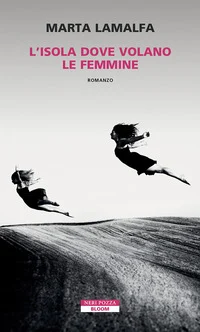
L'isola dove volano le femmine
Uno straordinario esordio che riporta alla luce un fatto storico di grande originalità e fascino avvenuto sull’isola di Alicudi: l’allucinazione collettiva dovuta a un fungo parassita in cui è presente l’ingrediente base dell’LSD.
Marta Lamalfa, con una lingua affilata e antica, ci trasporta con maestria in una terra battuta dal vento, minuscola, perché oltre il mare non si può concepire di andare, eppure straordinariamente ampia e universale.
Alicudi, 1903. Caterina guarda il corpo gelido e duro come una crosta di pane di Maria, la sua gemella, e pensa che da quel momento la sua vita cambierà per sempre. Se l’è portata via un male cattivo e tutti nella sua famiglia – dalla granvecchia, la bisnonna che non ci vede più bene ma capisce tutto, a Palmira, la madre che ha per la quarta volta un bambino in pancia ma ha perso la testa per il dolore – pensano sia colpa di Salvatore, un giovane che sconta il confino politico al Castello di Lipari, e vuole fare la rivoluzione. Ora che Maria non c’è più, anche se la stanza di Caterina si è allargata, la vita è diventata molto più stretta: lavora nei campi di don Nino fino al tramonto, consegna le acciughe sotto sale con l’asino e aiuta la mamma con le fatiche di casa, aspettando il giorno in cui tutte le femmine della famiglia si riuniscono per impastare il pane, l’unico momento che le piace davvero. Da qualche tempo, però, dalla segale dell’isola sono spuntati dei piccoli corni neri come il carbone, la tizzonara la chiamano in paese. All’inizio non s’erano fidati a mangiarla, ma adesso non è rimasto altro, così anche Caterina butta giù quei morsi duri e dall’odore di morte. Forse però in quei bocconi dolorosi c’è la chiave per scappare da un presente sempre più solitario, e raggiungere le majare, le streghe che volano nude fino a Palermo, ridendo sguaiate, nell’estrema libertà della notte. Non capita solo a lei di vedere cose che al risveglio sono sparite, ma anche al resto della famiglia e ai settecentotredici arcudari che vivono sull’isola. Ma per tutti verrà il momento di tornare alla realtà.
Il testo campione allegato è stato tradotto da Laura Masini e Linda Worrell.
Linda e Laura si sono conosciute al British Centre for Literary Translation nel 2019 e hanno iniziato a lavorare insieme poco dopo. Le loro traduzioni di opere di Calaciura, Carati, Fingerle, Houbabi, Milone, Salvioni e Uyangoda sono apparse su The Common, The Geogia Review, The Southern Review e Visible. Art As Policies for Care. Nell’ottobre 2025, Amazon Crossing ha pubblicato la loro traduzione del romanzo d’esordio di Carati, Once We Are Safe.
Linda ha lavorato per molti decenni come avvocato fiscalista internazionale a New York, Hong Kong e nel Regno Unito, prima di intraprendere una seconda carriera come traduttrice letteraria. La sua traduzione di Pontiggia è apparsa su The Southern Review. È membro dell’American Literary Translators Association e fa parte del suo comitato finanziario. Attualmente vive nel Kent.
Laura è un’ex insegnante di inglese come lingua straniera e letteratura inglese. Anche durante i suoi anni di insegnamento, è stata attiva come traduttrice, traducendo il romanzo di M. Lipman Mark per Liguori Editore e diversi saggi curatoriali. I suoi racconti brevi sono apparsi in antologie letterarie e ha contribuito con un articolo a un volume pedagogico. Divide il suo tempo tra la Toscana e Cambridge, nel Regno Unito.
Marta Lamalfa è nata a Palmi, in Calabria, nel 1990. Vive a Roma, dove lavora nell’ufficio stampa di un’organizzazione umanitaria. Si è laureata in lingue mediorientali, specializzandosi in editoria e scrittura, e ha studiato pianoforte. Ha frequentato il workshop annuale della Bottega di Narrazione, una scuola di scrittura creativa diretta da Giulio Mozzi e Giorgia Tribuiani. Il suo romanzo L’isola dove volano le femmine è stato tra i finalisti della 36ª edizione del Premio Italo Calvino.
The island where women fly
A novel made of flesh and blood, of bodies, but also of dreams and yearnings for freedom.
An extraordinary debut that brings to light a historical fact of great originality
and fascination that occurred on the island of Alicudi: the collective
hallucination caused by a parasitic mushroom containing the basic ingredient
of LSD.
Alicudi, 1903. Caterina looks at the cold, hard as a crust of bread body of Maria, her twin sister, and thinks that from that moment on, her life will change forever. An evil illness has taken her away and everyone in her family – from the great-grandmother who can no longer see well but understands everything, to Palmira, the mother who has a baby in her belly for the fourth time but has lost her mind in grief – thinks it is the fault of Salvatore a young man serving political exile in Lipari Castle, who wants to start a revolution. Now that Maria is no longer there, even though Caterina’s room has expanded, life has become much tighter: she works in Don Nino’s fields until sunset, delivers salted anchovies with her donkey and helps her mother with the housework, waiting for the day when all the females in the family get together to knead bread, the only time she enjoys it. For some time, small, coal-black horns have sprouted from the island’s rye, in the village they call it tizzonara. At first, they didn’t trust themselves to eat it, but now that’s all that’s left, so Catherine too throws down those hard, death-smelling bites. Perhaps, however, in those painful morsels lies the key to escape from an increasingly lonely present, and reach the majare, the witches who fly naked to Palermo, laughing loudly in the extreme freedom of the night. It is not only Caterina who sees things that have disappeared when she wakes up, but also the rest of the family and the seven hundred and thirteen people who live on the island. But for everyone, the time will come to return to reality. An original and powerful new voice, echoing the pens of successful writers with a unique world view. A story based on an event that really happened in Alicudi at the beginning of the 20th century, extraordinary and yet took place in the smallest and most forgotten of the Aeolian Islands. Marta Lamalfa, with a sharp and antique language, masterfully transports us to a windswept land, tiny, because beyond the sea one cannot conceive of going, and yet extraordinarily wide and universal.
The attached sample has been translated by Laura Masini and Linda Worrell.
Linda and Laura met at the British Centre for Literary Translation in 2019 and began working together soon thereafter. Their translations of works by Calaciura, Carati, Fingerle, Houbabi, Milone, Salvioni and Uyangoda have appeared in The Common, The Geogia Review, The Southern Review and Visible. Art As Policies for Care. In October 2025, Amazon Crossing published their translation of Carati’s debut novel, Once We Are Safe.
Linda worked for many decades as an international tax lawyer, in New York, Hong Kong and the United Kingdom, before starting a second career as a literary translator. Her translation of Pontiggia appeared in The Southern Review. She is a member of the American Literary Translators Association and serves on its Finance Committee. She now lives in Kent.
Laura is a former teacher of EFL and English Literature. Even during her years in education, she was active as a translator, translating M. Lipman’s novel Mark for Liguori Editore and several curatorial essays. Her short fiction has appeared in literary anthologies, and she has contributed an article to a pedagogical volume. She divides her time between Tuscany and Cambridge, UK.
Marta Lamalfa was born in Palmi, Calabria, in 1990. She lives in Rome, where she works in the press office of a humanitarian organisation. She graduated in Middle Eastern Languages, specialised in Publishing and Writing and studied piano at an academic level. She attended the annual workshop of Bottega di Narrazione, a creative writing school directed by Giulio Mozzi and Giorgia Tribuiani. Her novel L’isola dove volano le femmine was among the commended entries in the 36th edition of the Italo Calvino Prize.
-
Casa editrice PublisherNeri Pozza
-
Anno di pubblicazione Year of publication2024
-
Numero di pagine Number of pages224
-
ISBN9788854529816
-
Prezzo Price18€
-
Responsabile dei diritti
Copyright Manager
Laura Ceccacci Agency servizieditoriali@lauraceccacciagency.com
-
Diritti venduti
Rights sold
France (Editions Phébus)
Portugal (Alma Dos Livros)
Poland (Wydawnictwo Poznaskie)Bulgary (Znaci Publishing House)
-

Text sample
Voir le PDF
- SHARE ON:
-

-

-

-

