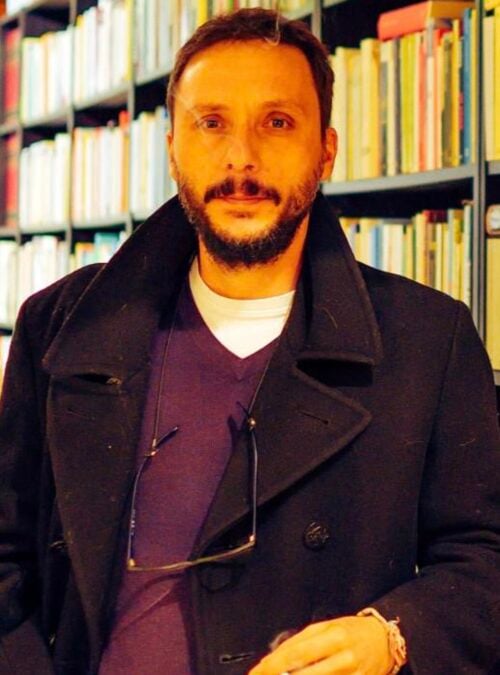
Interview with Gerardo Masuccio, founder and director of the Utopia publishing house
Author: Laura Pugno
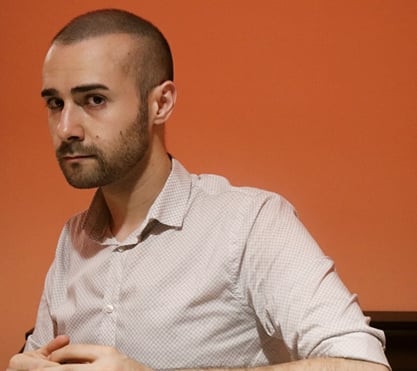
As part of the series of interviews that newitalianbooks is dedicating to the heads of Italian publishing houses, today we hear from Gerardo Masuccio, founder and director of Utopia.
How would you describe Utopia’s identity to the readers of newitalianbooks abroad? What are its characteristics and strengths?
Utopia is a young independent publishing house that I founded in Milan in 2020, in the midst of the pandemic. From the very beginning, the project has been based on a very simple principle: to publish a small number of books – a dozen a year – and to select them carefully, with the aim of building, over time, a catalogue capable of standing the test of time, far removed from the more immediate logic of the market.
Utopia’s focus is primarily on fiction and literary non-fiction, and it follows two main strands. On the one hand, the rediscovery of Italian works and authors who have remained on the margins of bookshops for years, such as Massimo Bontempelli, Grazia Deledda, Ottiero Ottieri and Piero Scanziani. On the other, the search for contemporary voices, often from the geographical and cultural peripheries of the world, with a particular focus on writing that experiments with form. Utopia translates from Tamil, Persian, Indonesian, Uzbek and Thai, as well as from lingua francas.
The publishing house’s visual identity is also designed to be instantly recognisable. The covers follow a grid based on the golden ratio: a structure composed of squares within which the book’s editorial elements are arranged. A system that combines rigour and flexibility, helping to make the catalogue visually coherent.
The ambition is for Utopia to maintain a strong cultural coherence over time, building a recognisable and distinctive editorial path. I would like to continue to reach readers interested in demanding literature, rooted in tradition yet at the same time open to international dialogue.
Which ventures, literary and otherwise, have worked best in Italy and possibly in other countries, and in your opinion, why?
Undoubtedly the classics, which have found thousands of new readers. The rediscovery of Massimo Bontempelli, Grazia Deledda, Ottiero Ottieri and Piero Scanziani aims to showcase the richness and diversity of the Italian literary tradition between the nineteenth and twentieth centuries, particularly the non-canonical strand, which has been absent from academic curricula and, until a few years ago, from bookshops.
Massimo Bontempelli was one of the most original intellectuals of the first half of the twentieth century. A novelist, playwright, journalist and cultural figure, he was the leading theorist of magical realism, a movement that sought to restore a sense of wonder and estrangement to everyday reality. His work contributed to a profound renewal of Italian fiction (Pirandello regarded him as a key figure), paving the way for a form of literary modernity capable of engaging with the European avant-garde. No one was publishing him anymore. Now he has thousands of admirers, hundreds of booksellers and reviewers who have promoted his works, and constant attention from younger readers on social media. Utopia is publishing his complete works.
And Grazia Deledda? She certainly occupies a central place in the history of Italian literature; hers is a voice deeply rooted in a specific geographical and cultural context: Sardinia.
Yet within that periphery, the author was able to find the universal. Through novels and short stories of great psychological intensity, she succeeded in transforming the stories of her island into a representation of universal value, addressing themes such as fate, guilt, religiosity and the relationship between the individual and the community. International recognition culminated in the Nobel Prize, which definitively established her place on the European literary scene. Yet in Italy, many had never read her…
Ottiero Ottieri, on the other hand, was a restless soul, a visionary with a hybrid writing style, perpetually torn between society and the search for meaning in life. He was able to depict the transformations of work and industry in post-war Italy. In his novels, the experience of the factory, of staff selection and of corporate life becomes narrative material and an opportunity for reflection on alienation, individual identity and the new social relationships produced by industrial modernity. And then depression, disenchantment. The second phase of his fiction reminds me of Svevo, Gadda and Berto.
Finally, Piero Scanziani, an Italian-speaking Swiss author and a writer I adore. In his novels and essays, a spiritual and philosophical quest emerges that spans diverse cultures and traditions, with a broad and cosmopolitan perspective. His work represents one of the most original expressions of Italian-language literature beyond national borders. Where do we come from, where are we going, why are we in the world? What is the meaning of life? Every time I read him, I am reminded of who I am and why I chose the path of literature. Life, without the impetus of art, has always seemed to me to be rather meagre.
- SHARE ON:
-

-

-

-