Italian books translated into German in the two-year period 2024–2025
Author: Susanne Danz, The Catholic University of Eichstätt-Ingolstadt
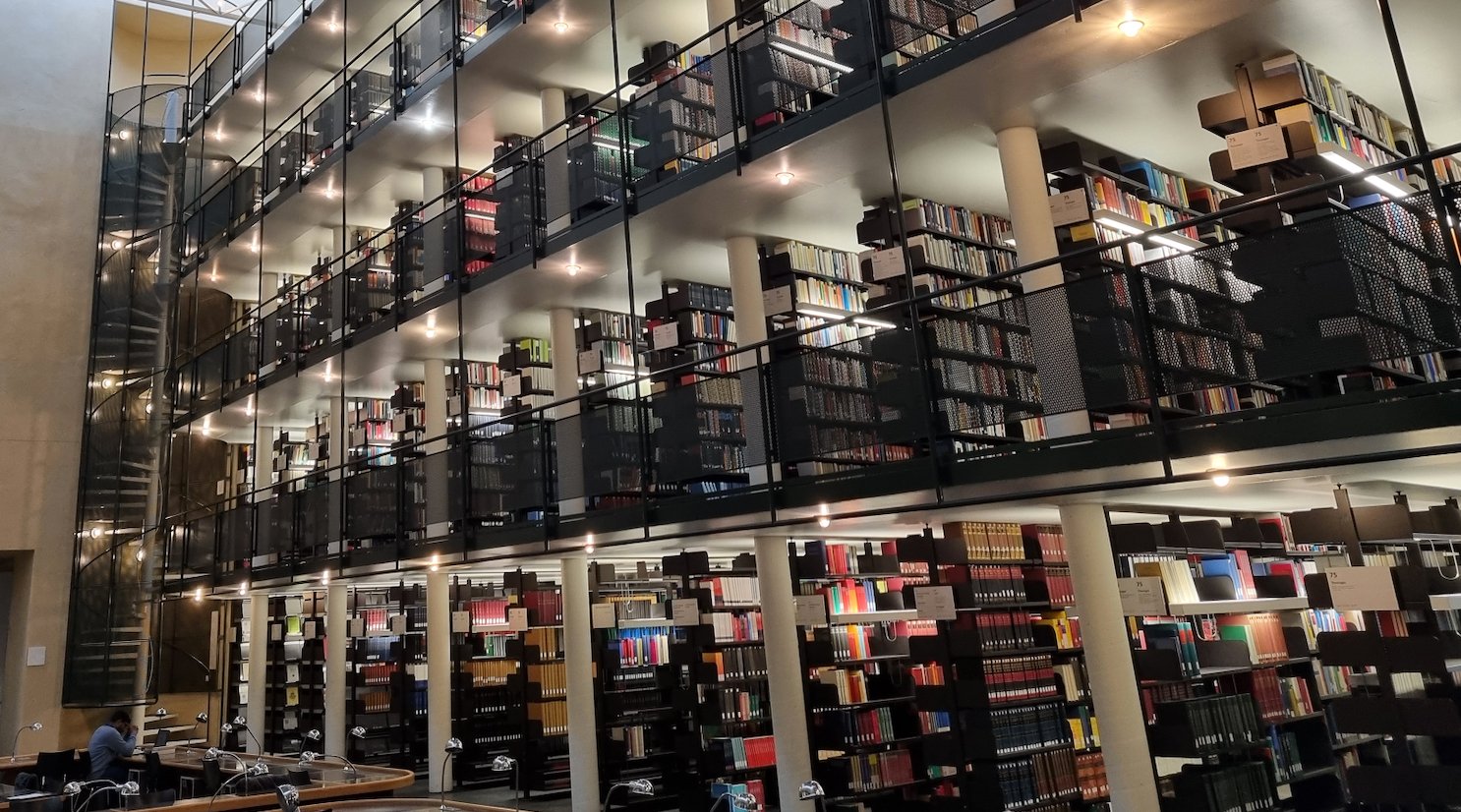 Eichstätt University Library
Susanne Danz is a professor of mathematics. Since 2015 she has held the chair of algebra at the Catholic University of Eichstätt-Ingolstadt. She is also passionate about Italian literature and has been studying Italian studies in Eichstätt since 2023.
If a traveller were to visit German bookshops on a winter’s day, which works by Italian authors would they find on the shelves? According to data from the “Statista” portal, in 2024, as many as 250 Italian titles were translated into German, representing an extremely wide and varied selection. Inevitably, therefore, our overview of Italian books retranslated or translated for the first time into German and published in the last two years cannot be exhaustive.
In 2024, Italy was the guest of honour at the Frankfurt Book Fair, an event that had a favourable impact on the reception of Italian literature in Germany. Among the books by the dozens of authors present at the fair are, for example, Il vento soffia dove vuole (2023) by Susanna Tamaro (Der Wind weht, wohin er will, trans.: Thomas Stauder, Nagel & Kimche, 2024) and Cassandra a Mogadiscio (2023) by Igiaba Scego (Kassandra in Mogadischu, trans.: Verena von Kosche, Nagel & Kimche, 2024), Il cuore non si vede (2019) by Chiara Valerio (Kein Herz, nirgends, trans.: Christiane Burkhardt, nonsolo, 2024), Il colibrì (2019) by Sandro Veronesi (Der Kolibri, trans.: Michael von Killisch-Horn, Zsolnay, 2024), Giù nella valle (2023) by Paolo Cognetti (Unten im Tal, trans.: Christiane Burkhardt, Penguin, 2024), Café Royal (2023) by Marco Balzano (Café Royal, trans.: Peter Klöss, Diogenes, 2024), Piedi freddi (2024) by Francesca Melandri (Kalte Füße, trans.: Esther Hansen, Wagenbach, 2024), Pudore (2024) by Maddalena Fingerle (Mit deinen Augen, trans.: Viktoria von Schirach, Luchterhand, 2025) and the historical novel about judge Giovanni Falcone Solo è il coraggio (2022) by Roberto Saviano (Falcone, trans. Annette Kopetzki, Hanser, 2024).
Since the 1960s, literary prizes in Italy have become a key tool for promoting books, including internationally. For example, the books by Valerio and Veronesi mentioned above were nominated for the 2020 Strega Prize, which Veronesi went on to win. In addition to these two titles, there is Come d’aria (Premio Strega 2023) by Ada d’Adamo (Brief an mein Kind, trans. Karin Krieger, Eisele, 2024), Nessuna parola dice di noi (nominated for the 2022 Strega Prize) by Gaia Manzini (Für uns gibt es keinen Namen, trans.: Barbara Kleiner, nonsolo, 2024), Due vite (2021 Strega Prize) by Emanuele Trevi (Zwei Leben, trans.: Christiane Burkhardt and Janine Malz, Freies Geistesleben, 2024), L’età fragile (Premio Strega 2024) by Donatella Di Pietrantonio (Die zerbrechliche Zeit, trans.: Maja Pflug, Kunstmann, 2024) and L’anniversario (Premio Strega 2025) by Andrea Bajani (Der Jahrestag, trans.: Maja Pflug, Nagel & Kimche, 2025).
It is noteworthy that all the translations listed above were published within a few months, or at most a few years, of the release of their respective Italian editions, proving that the German-speaking market is extremely attentive to contemporary Italian literature. Among the publishing houses, plays an important role, founded in 2017 with the specific aim of promoting Italian books in Germany. The independent publisher Wagenbach has been a veritable institution in the field of Italian, Spanish and French literature in Germany for over sixty years.
While it is true that contemporary Italian literature, especially fiction, is very well received by German-speaking audiences, there is just as much interest in the great classics. One of the publishing houses specialising in this field is Manesse, founded in 1944 in Zurich and now part of the Penguin Random House publishing group, based in Munich. Manesse recently reissued the classic par excellence, Dante‘s Commedia, in a prose translation (Die göttliche Komödie. Neuübersetzung in Prosa, translation, commentary and afterword: Rudolf Georg Adam, 2024). In addition, on the 650th anniversary of the death of Giovanni Boccaccio, Manesse published the Elegia di Madonna Fiammetta (Die Klage der Madonna Fiammetta, translation: Franziska Meier and Jochen Reichel, 2025) and the Decameron (translation and commentary: Luis Ruby, with an afterword by Ijoma Mangold, 2025); a special edition of only 500 copies of the latter was also published for collectors. A bilingual collection of 54 sonnets by Boccaccio, selected and translated by Christoph Ferber, can be found in the catalogue of Dieterich’sche Verlagsbuchhandlung (Auf einer Wiese, rings um eine Quelle. Sonette Italienisch-Deutsch, afterword by Franziska Meier, 2025). Finally, there is Il Filocolo, often considered the first novel written in Italian vernacular (Filocolo oder Die verschlungenen Wege der Liebe, trans.: Moritz Rauchhaus, Die Andere Bibliothek, 2025). Also noteworthy are the translations of Niccolò Machiavelli‘s comedy La Mandragola (Mandragola, trans. Ludger Scherer, Reclam, 2024) and the first complete German edition of Giacomo Leopardi‘s Zibaldone di pensieri, the first volume of which was published in 2024 (Zibaldone. Die Gesamtausgabe I, trans. Daniel Creutz, afterword and commentary by Franco D’Intino, Matthes & Seitz).
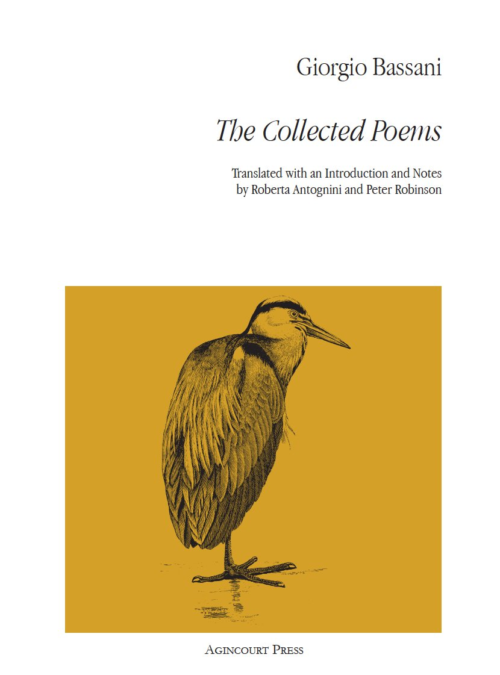
As for poetry, which always poses a particular challenge for translation, noteworthy are the bilingual editions of selected works by Giovanni Pascoli (Nester. Gedichte. Italienisch-Deutsch, trans.: Theresa Prammer, Wallstein, 2024), Alda Merini (Die schönsten Gedichte schreibt man auf Steine. Lyrik 1947–2009. Italienisch-Deutsch, trans.: Christoph Ferber, Dieterich’sche Verlagsbuchhandlung, 2024) and Alfonso Gatto (Gedichte. Italian/German, trans.: Gino Chiellino, Thelem, 2024). On the other hand, there is a bilingual edition of Rime by Vittorio Alfieri (Sonette. Italian-German, trans.: Christoph Ferber, Elfenbein, 2024), a collection of all the poems by Cesare Pavese (Klar und verlassen gehen die Morgen dahin, trans.: Dagmar Leupold, Atlantis, 2024) and the poetry collection La carne degli angeli (2003) by Alda Merini (Das Fleisch der Engel. Meine Männer, trans.: Ulrike Schimming, matrix, 2024).
Although Merini is primarily remembered for her poetry, her first work of prose should not be forgotten: in her diary L’altra verità. Diario di una diversa (1986), the author recounts her long stay in a mental hospital for bipolar disorder. It is therefore not surprising that the translation was proposed by a publishing house specialising in psychiatry and history (Die andere Wahrheit. Tagebuch einer Andersartigen, trans.: Marco Grosse, Verlag Psychiatrie u. Geschichte, 2024). Pavese’s famous diary, Il mestiere di vivere (1952), was published by Rotpunkt in a completely revised edition (Das Handwerk des Lebens. Tagebuch 1935–1950, trans. Maja Pflug, 2024).
While Boccaccio was honoured in 2025, neither the 50th anniversary of the death of Pier Paolo Pasolini nor the 30th anniversary of that of Hugo Pratt, the virtuoso cartoonist and creator of the adventures of the sailor Corto Maltese, were forgotten. Some of Pasolini’s previously translated works have been reprinted, mainly by Wagenbach. In addition, a new collection of the Dialogues published in the 1970s in the weekly magazine Vie nuove has been edited by Cornelia Wild (Dialoge mit Pasolini, trans. Fabien Vitali, preface by Cornelia Wild, Wagenbach, 2025). For example, Pratt’s comic book El Gaucho (1996), created in collaboration with Milo Manara, is now available (El Gaucho, trans.: Michael Leimer and Resel Rebiersch, Splitter, 2025).
From a historical point of view, 2025 was a particularly significant year, as it marked the 80th anniversary of the end of the Second World War and the liberation of the Auschwitz concentration camp. These historical events are echoed in publications dealing with fascism, the Shoah, the war or the post-war years. Among these, we would like to mention, in particular, the novel Il bibliotecario di Auschwitz (2020) by the historical writer Andrea Frediani (Endstation Hoffnung. Il bibliotecario di Auschwitz, trans.: Sandra Hubmann, Salon, 2024), La storia (1974) by Elsa Morante (La Storia, trans.: Maja Pflug and Klaudia Ruschkowski, Wagenbach, 2024) and the then scandalous autobiographical novel La pelle (1949) by Curzio Malaparte (Die Haut, trans.: Frank Heibert, Rowohlt, 2024). Carlo Levi, in Doppia notte dei tigli (1959), recounts his journey to Germany in the 1950s, a Germany that appears to him to be full of contradictions. Thanks to Martin Hallmannsecker’s translation (Die doppelte Nacht. Eine Deutschlandreise im Jahr 1958, afterword: Bernd Roeck, Beck, 2024), the German public now has the opportunity to look with new eyes not only at the author of Cristo si è fermato a Eboli, but also at its own past. La memoria rende liberi. La vita interrotta di una bambina della Shoah (2015), written by Liliana Segre in collaboration with journalist Enrico Mentana, recalls the traumas experienced by Segre in the Auschwitz concentration camp (Erinnern macht frei. Das unterbrochene Leben eines Mädchens in der Shoah, trans.: Ulrike Schimming, Neofelis, 2024), while in Vita mia (2023), Dacia Mariani tells the story of her family’s internment in Japan (Ein halber Löffel Reis. Kindheit in einem japanischen Internierungslager, trans.: Ingrid Ickler, folio, 2025). It should be noted that folio, an independent South Tyrolean publishing house based in Bolzano and Vienna, has become a key point of reference for the enhancement and promotion of Italian literature in German-speaking countries. Of course, the prolific output of books on fascism and war includes non-fiction works such as La difficile giustizia (2016) by Marco De Paolis and Paolo Pezzino (Schwierige Justiz. Die Prozesse wegen deutscher Kriegsverbrechen in Italien 1943–2013, trans.: Walter Kögler, Wallstein, 2025), Il fascismo non è mai morto (2024) by Luciano Canfora (Der untote Faschismus. Mussolini und der fruchtbare Schoß der »freien Welt«, trans.: Christel Buchinger and Thomas Hohnerlein, PapyRossa, 2025) and Fascismo e populismo (2023) by Antonio Scurati (Faschismus und Populismus, trans.: Enrico Heinemann, Klett-Cotta, 2024). Scurati’s M. L’ora del destino (2024), the third volume of the saga on Mussolini and fascism (M. Das Buch des Krieges, trans.: Verena von Koskull and Michael von Killisch-Horn, Klett-Cotta, 2024), has also been translated.
As for crime novels and thrillers, we will limit ourselves here to mentioning the bestseller Il cuoco dell’Alcyon (2019) by Andrea Camilleri (Die Mission des Kochs. Commissario Montalbano träumt vom Duft des Meeres, trans.: Rita Seuß and Walter Kögler, Lübbe, 2024) and Requiem di provincia (2023) by Davide Longo (Ländliches Requiem, trans.: Barbara Kleiner and Felix Mayer, Rowohlt, 2025).
Before concluding, two names and two books that have been little known, if not completely overlooked, in Germany deserve to be highlighted. First, La vigna di uve nere (1953), the debut work by Palermo-based author Livia De Stefani (Trauben schwarz wie Blut, trans.: Klaudia Ruschkowski, Converso, 2025). Forgotten for many years in Italy until its recent rediscovery, it is considered the first novel by an Italian author to denounce organised crime in Sicily, a full eight years before Sciascia‘s Il giorno della civetta. Converso is another German publishing house committed to promoting Mediterranean literature. Secondly, Giornale di guerra e di prigionia by Carlo Emilio Gadda (Im grausamen Pandämonium der Geschichte. Tagebuch aus Krieg und Gefangenschaft 1915–1919, translation, commentary and afterword: Katharina List, Matthes & Seitz, 2025). The diary has an eventful history behind it, and the first (presumably) complete edition was only published in 2023 by Adelphi, edited by Paola Italia. Gadda is an author who is almost unknown to the German public, even though he is one of the greatest Italian prose writers of the 20th century and his imprisonment tragically linked him to Germany. Thanks to this extensively annotated edition, it will finally be possible to get to know him. Also from Matthes & Seitz, a Berlin-based publishing house known for its high-quality cultural catalogue, Corpo celeste by Anna Maria Ortese, translated by Werner Waas, is about to be published.
From classics to the latest releases, from fiction to non-fiction, Italian literature is very much alive in Germany. For the sake of brevity, this article has omitted various works by authors, especially female authors such as Alba De Céspedes, Sibilla Aleramo, Matilde Serao and Grazia Deledda, who deserve to be remembered. It is up to the traveller to discover them on the shelves.
I would like to thank Walter Kögler for providing me with a list of Italian books published in German in 2024 and 2025, and Katharina List for her many useful suggestions.
- SHARE ON:
-

-

-

-