Judaism and Italian culture: a special issue of the magazine L’Arche is published in Paris
Author: Paolo Grossi
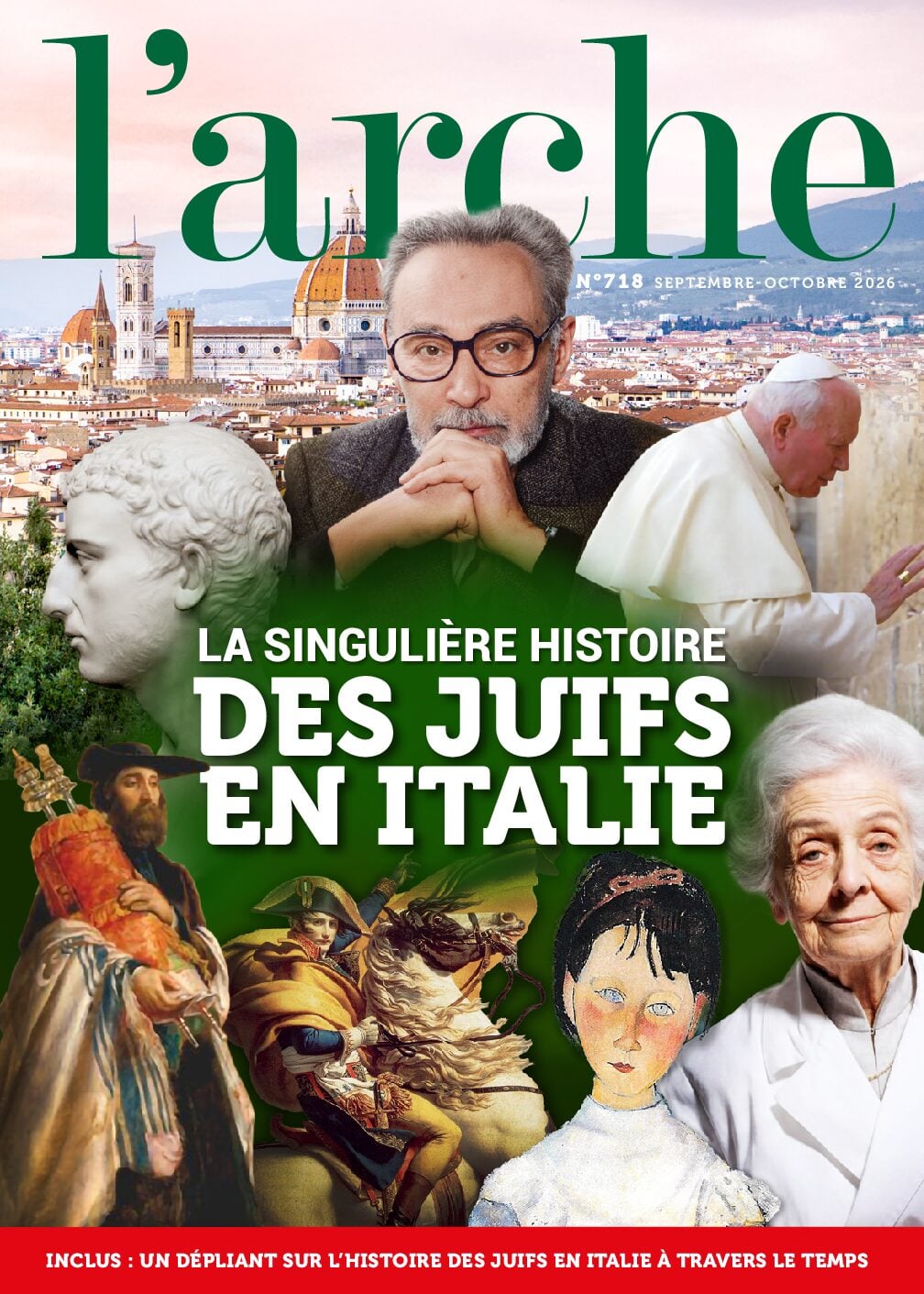
Founded seventy years ago, L’Arche is the most important journal of the Jewish community in France. It publishes six issues a year, comprising four quarterly issues and two special issues. At the beginning of September, a monographic issue was published, entirely devoted to the history and geography of Italian Judaism, as well as to the key events and most emblematic figures of Jewish culture in Italy.
Edited by the historian Pierre Savy, a specialist in Jewish-Christian relations during the Italian Renaissance, this issue of L’Arche is organised into chronological sections — Antiquity, the Middle Ages, the Renaissance, the modern era and the contemporary era — and thematic sections, supplemented by interviews with leading figures from the Italian Jewish community.
In this overview of Italian Judaism, readers with a particular interest in literature and publishing cannot fail to be struck by the large number of figures of Jewish origin, a fact all the more remarkable when compared with the modest size of the Italian Jewish community relative to the peninsula’s total population.
It is particularly in the 20th century that poets, novelists and literary critics of Jewish origin emerged, destined to exert a lasting influence on Italian literary history.
In a context such as Italy’s, historically characterised by a strong polycentrism, geography plays a particularly important role in shaping the historical narrative. This also holds true for the history of the Jewish presence in 20th century literature, the trajectory of which winds its way along a route marked by certain cities distinguished by an exceptional concentration of experiences. Among these are, above all, Trieste, Turin, Rome and Ferrara.
Trieste, a frontier city and major commercial port on the Adriatic, a melting pot of diverse languages and cultures – where the Italian irredentist tradition, the Habsburg legacy and contributions from the Slavic world coexist, not to mention other minor cultural elements – experienced, between the late nineteenth and early twentieth centuries, an exceptional cultural flourishing, featuring poets and writers of Jewish origin such as Carlo Michelstaedter, Italo Svevo, Umberto Saba, Carlo and Giani Stuparich, right up to Roberto (Bobi) Bazlen, one of the leading figures in Italian publishing. As Michel Valensi recalls in his article on Trieste, Bazlen was responsible for ‘introducing to Italy many of the most important authors of the 20th century, such as Robert Musil, Franz Kafka, Witold Gombrowicz, or, in the field of the humanities, Georg Groddeck, Marshall McLuhan, Bruno Bettelheim, etc.’.
In Turin, on the other hand, the ethical and political dimension of intellectual engagement prevails, particularly in the work of men such as Leone Ginzburg, one of the founders of the Einaudi publishing house, who was murdered by the Nazis in 1944, Carlo Levi, whose works, from Christ Stopped at Eboli to The Watch, are fuelled by a lucid and passionate analysis of Italian society, or Primo Levi, not only a witness to the Holocaust but also a writer of exceptional stature, whom critics today regard as one of the most original voices in Italian literature of the second half of the 20th century.
Whilst Alberto Moravia and Elsa Morante are primarily associated with the Rome area, the career of Giacomo Debenedetti—a literary critic open to the ideas of psychoanalysis, the man who introduced Proust to Italy and the author of two of the most significant accounts of Nazi persecution in Italy: October 16, 1943 and Eight Jews — spans Turin and Rome.
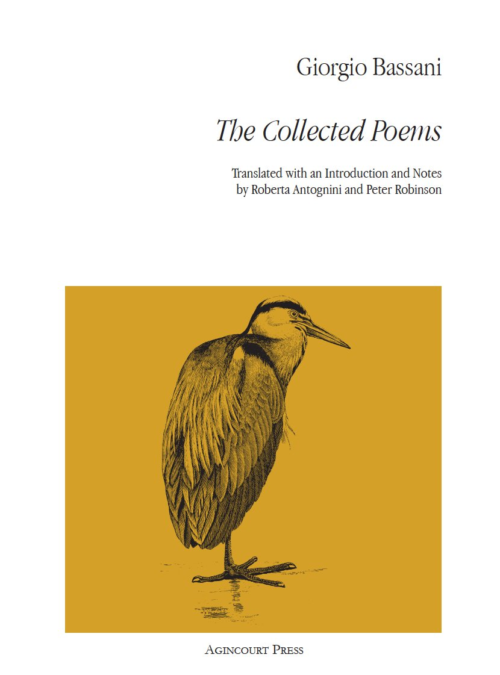
The tragedy of Italian Jewry in the face of fascism lies at the heart of the work of Giorgio Bassani, author of a great narrative epic, The Novel of Ferrara, which the general public has also come to know through the film adaptations of The Garden of the Finzi-Continis and The Gold-Rimmed Spectacles.
Of all these authors, and many others whose names we can only mention here (Natalia Ginzburg, Edith Bruck, etc.), the articles in L’Arche offer original profiles precisely because they aim to highlight the significance, to a greater or lesser extent, of their Jewish identity in their works.
Finally, the interview with Daniel Vogelmann, founder of the Giuntina publishing house in Florence – which, almost uniquely in Europe, is dedicated exclusively to publishing books on Jewish culture – brings us back to the world of publishing, familiar to readers of newitalianbooks. The account of its origins is exemplary in more ways than one: on the one hand, it offers us a glimpse into the history of Italian publishing – particularly in Florence – between the late 19th century and the first half of the 20th century; on the other, it seems to encapsulate, through the multitude of elements that contribute to it, the distinctive features of Italian Judaism, where loyalty to a centuries-old cultural heritage and participation in national history coexist in a constantly renegotiated balance.
- SHARE ON:
-

-

-

-