
La gioia di ieri
par Stancanelli, Elena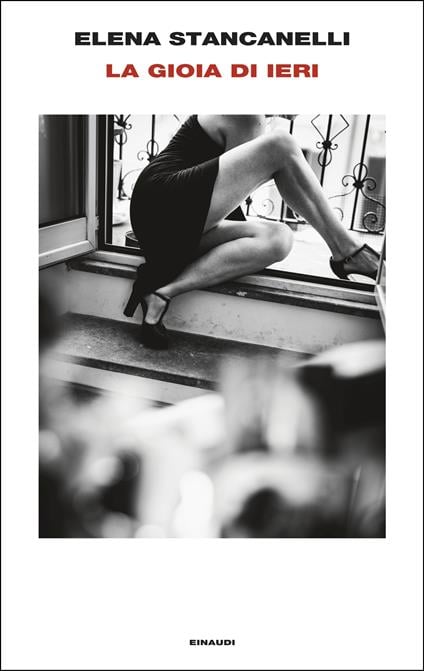
La gioia di ieri
La solitudine di Anna è una casa sempre aperta e piuttosto affollata. C’è la coinquilina Micol, vent’anni piú giovane di lei, irresistibile, votata all’artificio, dotata di un’intelligenza da volpe e di una fiducia entusiasta nella monogamia. E poi gli amanti e le amanti, gli indispensabili amici, una specie di foresta che resiste a tutte le tempeste. Ma soprattutto i cani: la sua adorata Mina, sdegnosa e vibrante, sette cuccioli rosa, i cani incontrati per strada e nei parchi, e un certo Frodo, dallo sguardo troppo umano, che un giorno d’inverno si lancia da una terrazza. È un prodigio? Un messaggio? Forse è solo il modo in cui un tempo nuovo si manifesta. Un tempo sfocato nel quale regna l’irrazionale, e le regole del desiderio, che hanno sempre salvato Anna dalla tristezza, non valgono piú. Proprio quando gli eventi del mondo impongono l’isolamento, a cinquant’anni Anna si trasforma. E si inoltra in questa sua nuova condizione, passeggiando con Mina nella città semideserta, schivando gli agguati della nostalgia, salutando chi ci lascia e aspettando chi torna sempre. Perché anche quando la vita sembra secca e immobile, è ancora possibile che qualcosa, qualcuno, accada. Con La gioia di ieri, Elena Stancanelli dà voce a una donna irriverente, autoironica, che si sforza di accogliere tutto quello che c’è. E racconta dell’età adulta una versione affettuosa e strampalata.
«Il nuovo libro di Elena Stancanelli racconta la traiettoria di una trasformazione personale, e lo fa con lo humor sottile, il garbo e la libertà che sono tipici dell’autrice […] Ad anticipare e a dare senso al tema di fondo del libro è la citazione in epigrafe tratta da Vita immaginaria di Natalia Ginzburg: “A me non importa nulla dei miracoli… Quello che amo è la realtà”». Silvia Bencivelli, « D – la Repubblica »
Elena Stancanelli (Firenze, 1965) ha esordito nel 1998 con il romanzo Benzina (Einaudi Stile Libero, Premio Giuseppe Berto), da cui è tratto l’omonimo film del 2001, diretto da Monica Stambrini. Ha poi pubblicato: Le attrici (Einaudi 2001), Firenze da piccola (Laterza 2006), Mamma o non mamma con Carola Susani (Feltrinelli 2009; Marsilio 2025), Un uomo giusto (Einaudi 2011), La femmina nuda (La nave di Teseo 2016, finalista al Premio Strega), Il tuffatore (La nave di Teseo 2022, finalista al Premio Campiello), La gioia di ieri (Einaudi 2025). Collabora con «la Repubblica» e Rai Radio 3. Con Emma Dante e Giorgio Vasta ha scritto la sceneggiatura dei film Le sorelle Macaluso e Misericordia.
The joy of yesterday
Who says the happiness we know is the only kind available? After a breakup, Anna is not ready to give up on love – but she does want to leave behind the tired scripts of romantic relationships: monogamy, betrayal, jealousy. She dreams of something different. Could happiness exist outside the traditional couple? Could love thrive where everyone is free to come and go, without exclusions? And if so, would it be enough to keep pain at bay? In this sensual and ironic three-act novel, La gioia di ieri explores a radical emotional shift. Anna, fifty years old, lives in a lively, messy household with her much younger roommate Micol – a clever, glamorous believer in monogamy – and a rotating cast of friends and lovers. As the world outside closes down in isolation, Anna finds herself on a more intimate, inner journey. Anna’s solitude takes the shape of a house that’s always open – and fairly crowded. There’s her roommate Micol, twenty years her junior, irresistible, devoted to artifice, slyly intelligent, and brimming with enthusiastic faith in monogamy. Then there’s the chaotic but essential group of friends with whom Anna dreams of starting a commune, along with lovers of all genders. And then, there are the dogs: her beloved Mina – aloof and vibrant –, pink puppies that look like fish, other people’s dogs she meets in the street and in parks, and a certain Frodo, with a gaze too human and too wise, who one winter day, instead of mating with Mina, decides (decides?) to leap from a terrace. In that jump, he carries Anna with him – or at least the life she’s known until that moment. Is it a miracle? An earthquake that reveals stars in place of the ceiling? Perhaps it’s none of that. Perhaps it’s just the way a new time makes itself known – a blurred and baffling time, where irrationality rules and the familiar rules of desire, which once saved her from sadness, no longer apply. Just as the events of the world force isolation on everyone and the lack of physical contact becomes an illness, Anna – now fifty – transforms. She enters this new phase of life while walking Mina through a half-empty city, dodging – or maybe embracing – the ambushes of nostalgia, bidding farewell to those who leave and waiting for those who always return. Because even when life feels dry and still, something – or someone – might still happen.
«Elena Stancanelli’s new book recounts the trajectory of a personal transformation, and does so with the subtle humour, grace and freedom that are typical of the author […] Anticipating and giving meaning to the underlying theme of the book is the epigraph taken from Natalia Ginzburg’s Vita immaginaria: ‘I don’t care about miracles… What I love is reality’». Silvia Bencivelli, D – la Repubblica
Elena Stancanelli (Florence 1965) is one of Italy’s most original and acclaimed voices. She debuted with Benzina (Einaudi 1998, Giuseppe Berto Prize), later adapted into a feature film. She later published: Le attrici (Einaudi 2001), Firenze da piccola (Laterza 2006), Mamma o non Mamma with Carola Susani (Feltrinelli 2009), Un uomo giusto (Einaudi 2011). Her novel La femmina nuda (La Nave di Teseo 2016) was a finalist for the Strega Prize, and Il tuffatore (La Nave di Teseo 2022) for the Campiello Prize. A contributor to la Repubblica and Rai Radio 3, she also writes for film, including Le sorelle Macaluso and Misericordia, in collaboration with Emma Dante and Giorgio Vasta.
La joie d'hier
La solitude d’Anna est une maison toujours ouverte et plutôt animée. Il y a sa colocataire Micol, de vingt ans plus jeune qu’elle, irrésistible, vouée à l’artifice, dotée d’une intelligence rusée et d’une confiance enthousiaste dans la monogamie. Et puis il y a ses amants et ses maîtresses, ses amis indispensables, une sorte de forêt qui résiste à toutes les tempêtes. Mais surtout les chiens : sa chère Mina, hautaine et vibrante, sept chiots roses, les chiens rencontrés dans la rue et dans les parcs, et un certain Frodo, au regard trop humain, qui un jour d’hiver se jette d’une terrasse. Est-ce un prodige ? Un message ? C’est peut-être simplement la manière dont se manifeste un temps nouveau. Un temps flou où règne l’irrationnel, et où les règles du désir, qui ont toujours sauvé Anna de la tristesse, ne valent plus. Alors que les événements mondiaux imposent l’isolement, Anna, à cinquante ans, se transforme. Et elle s’aventure dans cette nouvelle condition, se promenant avec Mina dans la ville semi-déserte, esquivant les embûches de la nostalgie, saluant ceux qui nous quittent et attendant ceux qui reviennent toujours. Car même lorsque la vie semble aride et immobile, il est encore possible que quelque chose, quelqu’un, arrive. Avec La gioia di ieri, Elena Stancanelli donne la parole à une femme irrévérencieuse, auto-ironique, qui s’efforce d’accepter tout ce qui est. Et elle raconte une version affectueuse et farfelue de l’âge adulte.
« Le nouveau livre d’Elena Stancanelli raconte le parcours d’une transformation personnelle, avec l’humour subtil, la délicatesse et la liberté qui caractérisent l’auteure […] La citation en épigraphe, tirée de Vita immaginaria de Natalia Ginzburg, anticipe et donne tout son sens au thème fondamental du livre : “Je me fiche des miracles… Ce que j’aime, c’est la réalité” ». Silvia Bencivelli, D – la Repubblica
Elena Stancanelli (Florence, 1965) a fait ses débuts en 1998 avec le roman Benzina (Einaudi Stile Libero, Prix Giuseppe Berto), dont est tiré le film du même nom de 2001, réalisé par Monica Stambrini. Elle a ensuite publié : Le attrici (Einaudi 2001), Firenze da piccola (Laterza 2006), Mamma o non mamma avec Carola Susani (Feltrinelli 2009 ; Marsilio 2025), Un uomo giusto (Einaudi 2011), La femmina nuda (La nave di Teseo 2016, finaliste du Prix Strega), Il tuffatore (La nave di Teseo 2022, finaliste du Prix Campiello), La gioia di ieri (Einaudi 2025). Elle collabore avec « la Repubblica » et Rai Radio 3. Avec Emma Dante et Giorgio Vasta, elle a écrit le scénario des films Le sorelle Macaluso et Misericordia.
-
Casa editrice Publisher / ÉditeurEinaudi
-
Anno di pubblicazione Year of publication / Année de publication2025
-
Numero di pagine Number of pages / ÉNombre de pagesr184
-
ISBN978880626962-3
-
Prezzo Price / Prix18€
-
Responsabile dei diritti
Copyright Manager / Responsable des droits
Valeria Zito valeria.zito@einaudi.it
-

Text sample
Voir le PDF
- SHARE ON:
-

-

-

-

