A Soft Music Growing Louder: Rediscovering Giovanni Pascoli in English Translation
Author: Elena Borelli, King's College London
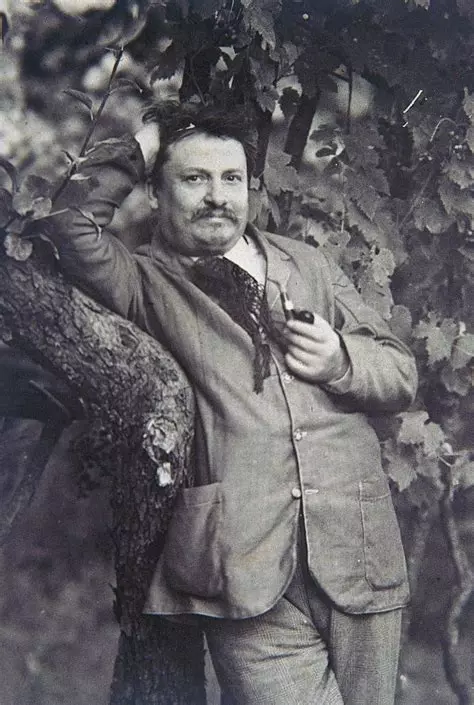
Elena Borelli teaches Italian at King’s College London, specializing in nineteenth-century literature and the fin de siècle, with a particular focus on the works of Giovanni Pascoli. After co-translating Poemi Conviviali, she is currently producing the first complete English translation of Pascoli’s Canti di Castelvecchio.
“I do not know how highly all these poets, Valéry, Verhaeren, Rilke, Pascoli, Francis Jammes, are still regarded today, how much they mean to a generation that has been deafened for years by the clattering millwheel of propaganda mill and twice by the thunder of cannon, instead of hearing this soft music. All I know, and I feel it my duty to say so gratefully, is what a lesson and a delight the presence of such poets was to us, artists sworn to the sacred cause of perfection in a world already becoming mechanised.”
Stefan Zweig, The World of Yesterday
In The World of Yesterday, Stefan Zweig includes Giovanni Pascoli among the wisest poets of the European fin de siècle. Zweig’s words ring even truer today, in a world far less inclined to listen to the wisdom of poets than the postwar era in which most of us grew up. In Italy, Pascoli’s presence remains enduring, yet his reputation is often constrained by a reductive mainstream narrative that casts him as merely “the poet of small things,” perpetually haunted by personal loss and trauma. Beyond Italy, his reception has been more limited, but within the Anglophone world a renewed interest has emerged in recent decades. This revival is evident both in new translations and in critical approaches that move beyond strictly biographical or philological readings, instead recognising Pascoli as a European poet of the fin de siècle, deeply engaged with the cultural currents, anxieties, and intellectual dilemmas of his time.
English translations of Pascoli’s work began during the poet’s own lifetime. In 1893, metrical versions of “Nozze,” “Il Convito,” and “Il Poeta” appeared in Italian Lyrists of Today, edited and translated by Arthur George Greene. Pascoli was later discussed in The Yale Review (1913) and the North American Review (1916) as a representative voice of fin-de-siècle spiritualism. In 1923, Yale University Press published a selection of forty-three poems (mostly from Myricae ) translated by Evaleen Stein, issuing the first substantial Anglophone volume devoted to Pascoli.
Of particular interest is the 1928 anthology Poems of Giovanni Pascoli, published by Harold Vinal in New York and edited and translated by Arletta Abbott. Dedicated to Maria Pascoli, the poet’s sister, who endorsed and supported the project, the volume aspired to reproduce the original metrical schemes “in order to give at least a vague idea of the beauty of the original.” Contemporary critics, however, noted that the results were uneven and often unsatisfactory. Possibly because of this lukewarm response, Pascoli’s presence in the Anglophone literary landscape declined for several decades. An exception to this long hiatus is George Purkis’s Selected Poems of Giovanni Pascoli (Macmillan, 1938), which, while offering no translations, presented the original Italian texts accompanied by a substantial introductory essay situating Pascoli within the Romantic tradition. Further exceptions include the 1979 translation of Poemi Conviviali by Egidio Lunardi and Robert Nugent (Lake Erie Press), as well as Pascoli’s inclusion in major anthologies such as The Penguin Book of Italian Verse (edited by George Kay, 1969) and Twentieth-Century Italian Poets (edited by John Picchione and Lawrence Smith, 1993). Although Poemi Conviviali was Pascoli’s most internationally visible work during his lifetime, praised and translated by figures such as Benno Geiger and Albert Valentin, it achieved little recognition in the English-speaking world prior to Lunardi and Nugent’s translation, apart from the inclusion of two poems in Abbott’s anthology.
Interest in Pascoli appears to revive toward the end of the twentieth century, possibly owing to Rosa Maria LaValva’s translation of the prose work Il Fanciullino (The Little Child ) (Annali di Italianistica, 1999), which introduced the core principles of Pascoli’s poetics to an English-speaking scholarly audience. A series of translations followed in the subsequent decade. The anthology The Last Voyage (Red Hen Press, 2010) presents a selection of Pascoli’s poems translated by Deborah Brown, Richard Jackson, and Susan Thomas. Notably, the volume draws from two distinct strands of Pascoli’s œuvre: the long narrative poems that rework history and myth, and the shorter lyric poems centred on nature, characterised by an impressionistic style and depictions of rural Italy on the cusp of the Industrial Revolution. Pascoli’s acute awareness of the effects of industrialisation on Italy’s agricultural society and landscape led Anna Re and Patrick Barron to include him among the earliest Italian writers to articulate environmental concerns in their pioneering anthology Italian Environmental Literature (Italica Press, 2003). In this respect, Pascoli has been compared to Victorian authors such as John Ruskin and William Morris, who were among the first to envisage the devastating consequences of unchecked modernisation for the natural world.
In 2012 Geoffrey Brock included a selection of Pascoli’s poems in The Farrar, Straus and Giroux Book of Twentieth-Century Italian Poetry, an anthology that effectively canonised a group of Italian poets deemed essential for the understanding of Italian poetry in the United States. The decisive turning point in Pascoli’s Anglophone reception, however, came earlier, when Seamus Heaney encountered Pascoli’s work through the Italian linguist Gabriella Morisco in 2001. Heaney first produced a creative reworking of “L’Aquilone” as “A Kite for Aibhín” (Faber & Faber, 2010), and subsequently translated the poems from the Myricae section “L’Ultima Passeggiata” as The Last Walk (The Gallery Books, 2013), as well as the poem “La Cavallina Storna” as “The Dapple-Grey Mare” (in Peter Fallon: Poet, Publisher, Editor and Translator, edited by Richard Rankin Russell, Dublin, Irish Academic Press, 2013). Owing to the international stature of this Nobel Prize–winning poet, these publications (some of which released posthumously) generated significant interest in Pascoli. Moreover, in the reflections accompanying his translations, Heaney articulates what he identifies as the defining features of Pascoli’s poetry: its metrical discipline, close attention to landscape, poems conceived as “books of hours,” and precision of imagery. Heaney draws parallels with poets and movements in the Anglophone tradition, such as the Imagists. These reflections proved highly influential, shaping both the thematic emphases and the translational approaches of subsequent translators engaging with Pascoli’s work. This momentum culminated in 2019, when no fewer than four volumes of Pascoli translations appeared, including Selected Poems of Giovanni Pascoli, translated by Taije Silverman and Marina della Putta Johnston (Princeton University Press); Last Dream by Geoffrey Brock (World Poetry Books); John Martone’s O Little One and Selected Poems (Laertes Press); and Danielle Hope’s The Last Walk of Giovanni Pascoli (Rockingham Press).
Silverman’s Selected Poems, Hope’s The Last Walk of Giovanni Pascoli, and Brock’s The Last Dream are particularly praiseworthy, not least because these translators are accomplished poets in their own right. They succeed in reproducing what might be described as the “genetic code” of Pascoli’s poetry: a traditional and predictable metrical framework that is subtly fractured from within by uncanny imagery and innovative lexical choices: phono-symbolism, onomatopoeia, synaesthesia, and plurilingualism. Brock and Silverman frequently employ iambic pentameter and regular rhyme schemes strongly reminiscent of Robert Frost, while fully exploiting the onomatopoetic resources of English, its syntactic flexibility, and its extensive, multilingual lexicon. At the same time, both translators make a deliberate selection within Pascoli’s oeuvre (“my Pascoli,” as Brock puts it in his Foreword) privileging nature sketches and poems of loss and pain rooted in an uncanny perception of landscape, with only occasional forays into the “historical” or “political” Pascoli, who tends to emerge in longer, more narrative or prose-like poems.
The “greatest-hits” approach to Pascoli that characterises many of the anthologies discussed above ultimately fails to do justice to a poet who, over the course of his career, experimented with an extraordinary range of themes, styles, and metrical forms. Significant portions of his oeuvre remain untranslated, including the more overtly political poems of Odi e Inni, the medieval-style poems of Canzoni di Re Enzio, Poemi Italici, Poemi del Risorgimento, most of his poetry in Latin, and his substantial body of scholarly and philosophical writings. More recently, however, two complete book-length translations have appeared: Poemi Conviviali, translated as Convivial Poems by Elena Borelli and James Ackhurst (Italica Press, 2022), and Myricae, translated as Tamarisks by Piero Garofalo (Italica Press, 2024). These two volumes adopt markedly different translational strategies. Convivial Poems renders Pascoli’s retellings of classical myth in a highly accessible English, employing a fluid language that preserves the flavour of ancient literature and the Homeric loanwords while remaining approachable for modern Anglophone readers. By contrast, in Tamarisks, Piero Garofalo offers a translation that closely respects the archaisms, syntactic idiosyncrasies, and rhyme schemes of late nineteenth-century literary Italian, achieving a version that is at once rigorous in its fidelity and notable for its aesthetic refinement. This trend toward comprehensive engagement with Pascoli’s major collections is set to continue with the forthcoming publication of Songs of Castelvecchio (Italica Press, 2026), a complete translation of Canti di Castelvecchio, Pascoli’s second and most celebrated poetic book, by Elena Borelli in collaboration with US poet Stephen Campiglio.
Taken together, this history of translation and reception reveals a poet whose significance exceeds the frames through which he has often been read. Pascoli’s uneven fortune abroad was shaped less by any intrinsic limitation of his work than by contingent editorial choices and the difficulty of translating a poetry so densely patterned at the levels of sound, rhythm, and image. The renewed attention of the past two decades suggests that Anglophone readers are now better equipped, both aesthetically and critically, to engage with Pascoli in his full complexity: as a poet of modernity as much as of memory, of ecological unease as much as intimate lyricism, and of formal discipline continually strained from within. The recent move toward complete, book-length translations marks a decisive departure from the selective anthologising of the past, opening Pascoli’s oeuvre to more sustained and historically grounded readings. In this light, Pascoli emerges not as a marginal or belated figure, but as a central European voice negotiating the fractures of the fin de siècle. His growing presence in English is therefore not merely a recovery, but a recalibration of modern poetry’s transnational canon.
- SHARE ON:
-

-

-

-