Translation and Artificial Intelligence: a conference in Venice
Author: Luigi Visconti
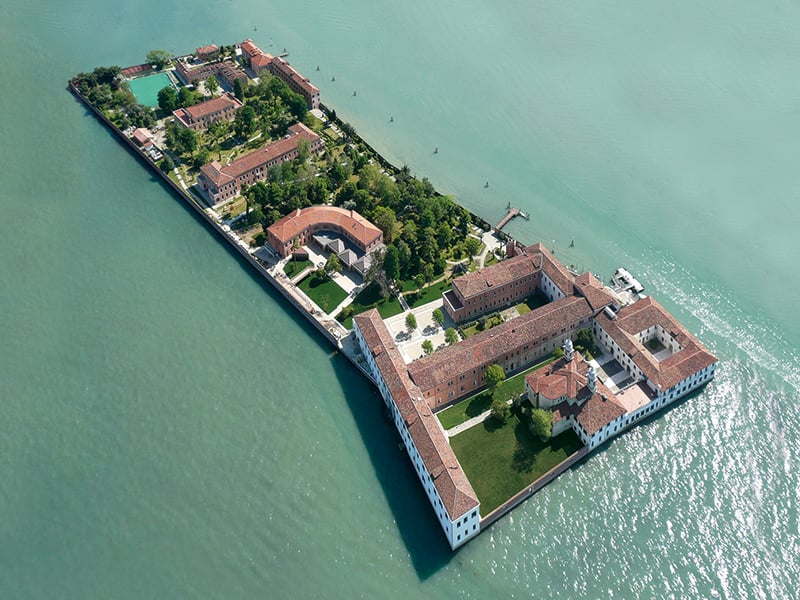
On 31 July 2026 in Venice, at the Venice International University (Island of San Servolo), a conference was held on the theme ‘Translation, Culture and AI: New Frontiers for the Promotion of Italian Culture Abroad’.
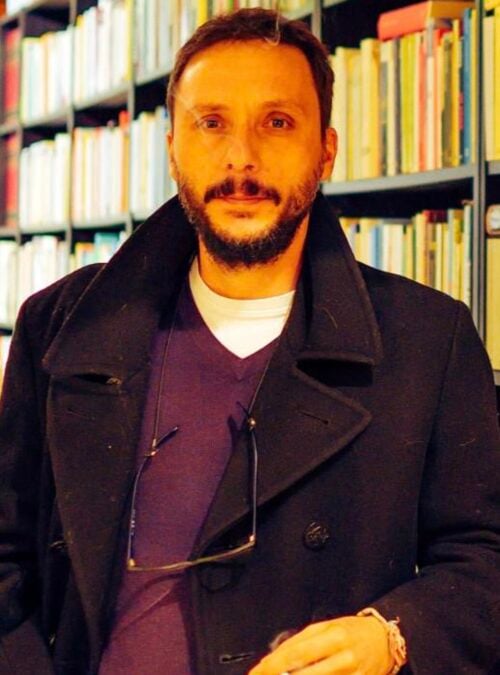
We spoke about it with one of the organisers, Giovanni Sciola, a scholar and researcher in contemporary history. He has published extensively on the methodology of historical research, on Italy during the Second World War, and has contributed articles and reflections on the promotion of Italian culture abroad. From 1995 to 2001, he served as a lecturer in Italian, seconded by the Ministry of Foreign Affairs and International Cooperation, at Beijing Foreign Studies University and the Université de Provence (Aix-Marseille). From 2001 to 2019, he was Acting Cultural Attaché and Director of the Italian Cultural Institutes in Kraków, Helsinki and Prague. From April 2021 to April 2026, he directed the ‘Luigi Micheletti’ Foundation in Brescia.
How did this conference come about, why was it held in San Servolo, and which institutions organised it?
The conference forms part of a wider project: a residency held in July and August 2026 for foreign translators of Italian books – both fiction and non-fiction – into German, English, French, Spanish, Chinese, Japanese and Arabic. The project was organised by Venice International University (www.univiu.org) and the Centre for Books and Reading (https://cepell.it/), an autonomous institute of the Ministry of Culture, and took place on the university campus on the island of San Servolo. A location and a venue – I would like to emphasise – that were perfectly suited to the needs and objectives of the initiative. The project itself forms part, as a standalone initiative, of VIU’s academic activities, external collaborations and international initiatives. It was also organised in anticipation of the international book fairs in which Italy is participating this year and in the coming years.
During the residency period – in which eight qualified foreign translators, selected as winners of the call for applications, took part – alongside the conference on ‘Translation, Culture and AI: New Frontiers for the Promotion of Italian Culture Abroad’, a series of professional seminars was organised with writers, journalists, university lecturers, translators, publishers and publishing house managers. In addition to this, there were several events linked to the presentation of literary festivals, such as the one with the founder and organiser of ‘Pordenonelegge’, the ‘Festivaletteratura’ in Mantua, and a presentation of the 2026 edition of the Campiello Prize with its Director.
How were the proceedings structured across the two sessions, morning and afternoon?
We sought, in both organisational and thematic terms, to give the conference a dual focus and depth: a morning session on ‘Translation, Culture and AI: New Frontiers for the Promotion of Italy Abroad’, featuring significant representation from institutions, public and private bodies, and key strategic organisations.
These included, amongst others: Ca’ Foscari University; the Directorate-General for Growth and the Promotion of Exports at the Ministry of Foreign Affairs and International Cooperation, which ensured, through the network of Italian Cultural Institutes abroad, the dissemination of the call for applications in their respective areas and countries of accreditation and jurisdiction; the contribution of an authoritative director of an Italian Cultural Institute; the experience and new promotional initiatives of ‘newitalianbooks – Italian books around the world (Treccani)’; examples of the activities of the IILA (International Italo-Latin American Organisation) with regard to Italian publishing (with a focus on the forthcoming edition of the ‘Feria Internacional del Libro de Guadalajara’ in Mexico, where Italy is this year’s guest of honour); a contribution from the Italian Publishers’ Association regarding the promotion and dissemination of Italian books abroad.
Furthermore, highly significant – also in terms of future prospects and broadening the scope of potential collaborations – were the presence and address by the Head of Translation and Multilingualism at the European Commission’s Representation in Italy.
During the afternoon session, centred on ‘Artificial Intelligence and Literature: new scenarios for authors, publishers, readers … and for translators’, the discussion delved into one of the key issues relating to literary translation in the age of artificial intelligence.
The panellists invited to discuss the topic spanned a broad professional and ‘political-cultural’ spectrum: from representatives of the Italian Translators’ Association and StradeLab to university lecturers who, working at the ‘interface’ between their professional practice and engagement with foreign languages, examined the effects of artificial intelligence specifically within the field of literary translation; from managers and editorial directors of various publishing houses (Morcelliana – Scholé, Mimesis) to writers who have grappled with the dual challenges of the translation process itself, as well as with the publication (and therefore, naturally, the translation) of their works abroad.
What are the key themes of the debate on translation and artificial intelligence?
It is no easy task to summarise the positions that emerged from the various presentations and during the debate. To draw on the terms of a debate that captivated critics, literary historians and the authors themselves alike, I would say that no polarisation has emerged between the ‘doomsayers’ – those convinced of the risk that the translator’s role will disappear within a few years – and the ‘integrators’ – advocates of the widespread use of technology applied to the translation of any foreign language and any type of text. The conference further highlighted the translator’s role as an interpreter and mediator between cultures (the ‘fault lines’ I referred to earlier), as well as the need to integrate the possibilities offered by technology with sensitivity, linguistic and cultural competence in the broadest sense, and with the critical faculties inherent to human work.
Will this initiative be followed up?
It is not within my institutional remit to provide an answer on this matter. I do, however, note with satisfaction the success of the initiative. I am referring, of course, to the conference itself, to the activities and – let us call them – ancillary seminars I mentioned, and above all to the focus and the true objective of the project, which is and remains the residency programme and the relationship with the translators we hosted in Venice on the basis of the important projects involving the translation of Italian works on which they have been and continue to be engaged.
To date, we have received flattering feedback and positive evaluations from all the organisations, individuals and stakeholders in the publishing industry and the academic world whom we have involved in the initiative.
The hope is certainly to be able to continue in the years to come with the project we launched this year in San Servolo, and to receive the same level of attention from institutions, organisations, market operators and individual experts who work in various capacities to promote Italian culture abroad and to support the publishing industry and ‘book-related professions’.
This is a very personal reflection of mine; it stems not only from the experience I have just concluded with the Venice International University and the Centre for Books and Reading, but above all from my many years abroad as a lecturer and later as director of several Italian Cultural Institutes. There are undoubtedly all the prerequisites and conditions in place for our country to have a permanent centre dedicated to translators of our language.
The impact of such an initiative, if sustained over time, would act as a powerful catalyst in terms of promoting Italian books worldwide and strengthening the presence of our literary heritage abroad.
- SHARE ON:
-

-

-

-