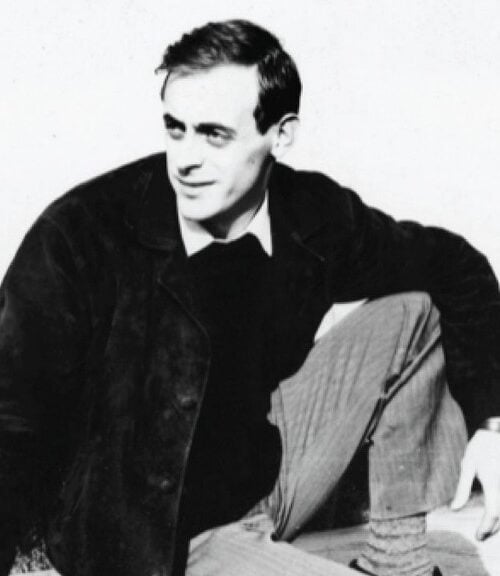
Mario Capello (Einaudi Stile Libero) at the Paris Book Market
Author: Paolo Grossi
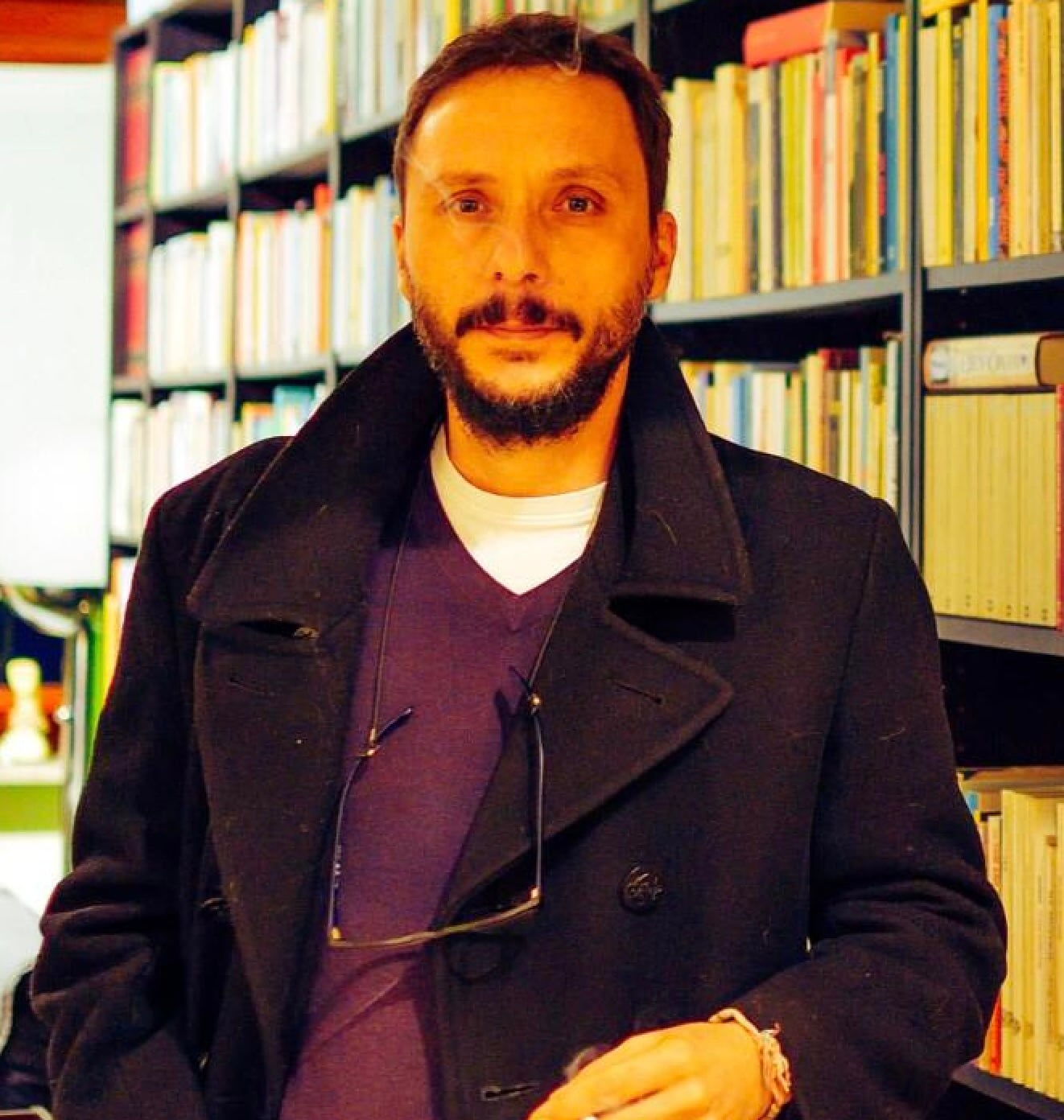
The fifth edition of the Paris Book Market, France’s only international and general-interest professional publishing market, was recently held in Paris. The event was attended by foreign rights managers from French publishing houses and hundreds of foreign editors from all over the world. Among the editors present was Mario Capello (editor at Einaudi Stile Libero), to whom we put a few questions.
Situated in the international publishing calendar between the London Book Fair (March) and the Frankfurt Book Fair (October), the Paris Book Market aims to establish itself as a third major hub in the global book rights market.
What do you think of this initiative which, as it is not linked to any trade fair aimed at the general public, has no exact equivalent in Italy?
My view of the Paris Book Market, and of France Livre’s events in general (an organisation capable of truly uniting the sector and projecting a nuanced yet cohesive image of French publishing), is very positive.
The fact that it is a low-key event, without a large public, allows for greater focus, and its timing means that we can discuss the books of the Rentrée, which remains the most important event of the publishing year across the Alps.
What distinctive features (if any…) do you think the French publishing landscape has compared to the Italian one?
This question really deserves a lot of space. I shall try to summarise, though I must emphasise that this is, in any case, a subjective impression. For many years, the French market has been of such a scale, compared to the Italian one, as to allow for the vitality of voices and genres that in Italy can only be niche and therefore often struggle to survive. This has fostered a different relationship between authors and their writing, altering their perspective and their approach. If we add to this the particular prestige and unique allure conferred upon books and writing in France (think of institutions such as the Académie française), it is easy to see why there is such a considerable degree of freedom and courage amongst French authors and their publishers. Not that there is any lack of conformism or trends there either, mind you. And from time to time, when one has to draw on them, one gets the impression that some French writers write more for their peers than for the general public, with all that this entails. For some years now, the French publishing industry has also been experiencing a downturn, and so the market – and the cultural landscape – is changing too, incidentally. We shall see in what direction.
How significant is your relationship with the French publishing industry in the context of your work?
From the very beginning, Stile Libero has focused on American and Anglophone literature, but French literature has always been present (we are the publishers of Fred Vargas, for example). I’d say the French market is an area we monitor with interest, seeking out books of merit there on a regular basis.
Can you already give the readers of newitalianbooks any indication of the acquisitions you’ve been able to line up for this edition of the Paris Book Market?
Not yet. Publishing deadlines don’t allow for that just yet.
Finally, we’d like to take the opportunity of this interview to ask you how ‘Stile Libero’ is organised internally, given that it has long since ceased to be merely a series but has become a fully-fledged ‘autonomous division’ within the Einaudi publishing house?
Ever since its foundation, Stile Libero has always had a distinctive structure – a ‘freer’ one, if you like – in which all the editors participate in devising and drafting the editorial plan, for example, and where there is a constant exchange of ideas. This is also due to the hybrid nature of the series, which encompasses fiction – both Italian and foreign – as well as non-fiction and miscellaneous works. In short, Stile Libero was born this way and continues to be just that: a little anarchic, but very efficient.
- SHARE ON:
-

-

-

-