Antonio Tabucchi’s early works: an interview with Thea Rimini
Author: Paolo Grossi
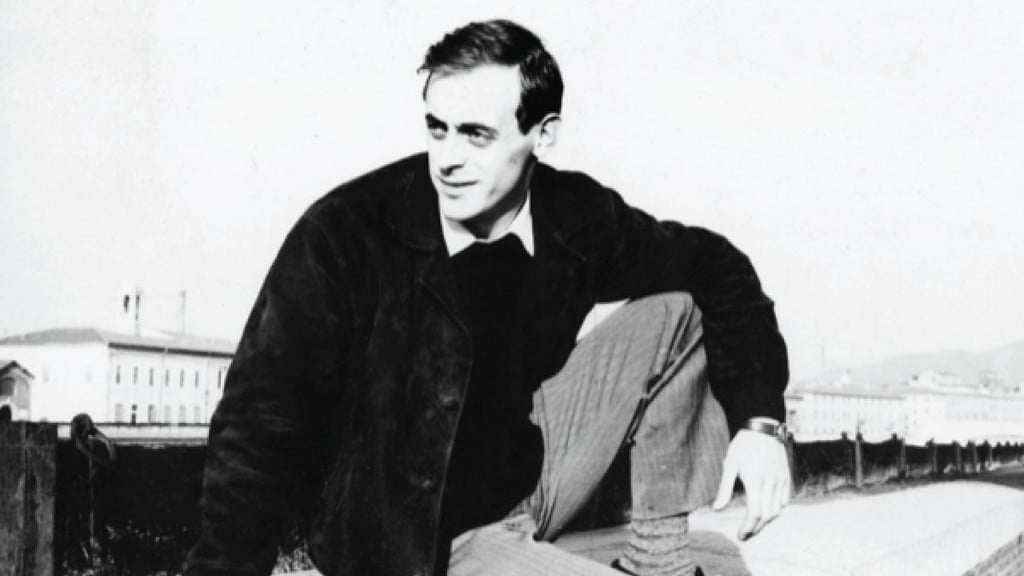
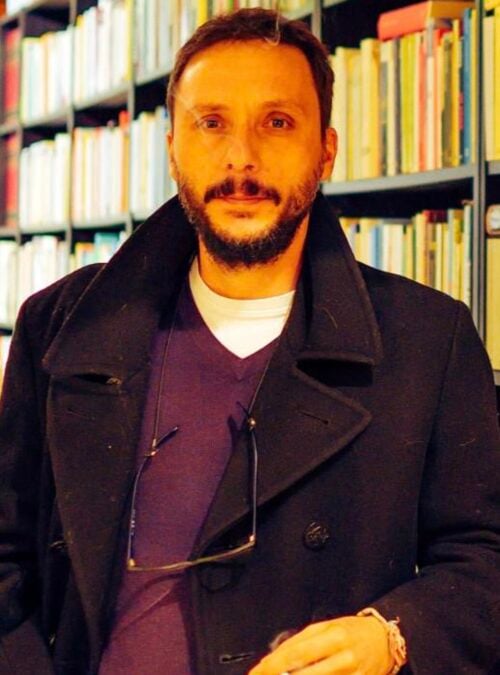
An international conference dedicated to “Antonio Tabucchi’s early works” took place from 24 to 25 March 2026 in Liège, attended by numerous Italian and international scholars. We discuss this with the organiser, Thea Rimini, a lecturer at the University of Liège and a scholar of Tabucchi’s work, having co-edited the Meridiani edition of his writings.
Why organise a conference on Antonio Tabucchi’s early works?
Fourteen years after his death, Tabucchi’s early works – those written in the 1970s – have not yet been the subject of systematic critical attention, with the possible exception of his debut novel Piazza d’Italia (1975). Yet these are rich texts, by turns ironic and sombre, which contain in embryo many elements of the mature Tabucchi’s poetics.
Set in Tuscany – or rather, on the coast near the writer’s hometown of Vecchiano – these books interweave collective history with individual stories, and often adopt a child’s-eye view (think of Il piccolo naviglio (1978), for example).
Spanning short stories, novels and linguistic experiments (the eccentric texts of Macchine probabili published in the magazine Il Caffè between ’71 and ’72), these early works constitute an initial phase of great creative effervescence that might be said to culminate in the turning point marked by Gioco del rovescio (1981), albeit with the necessary flexibility inherent in any periodisation.
These are works that form part of the literary experimentation of the second half of the twentieth century and thus engage, perhaps obliquely or from a distance, with the works of Elsa Morante but also with the tradition of the Risorgimento novel. They take as their linguistic model the expressionism of an outsider to the tradition such as Enrico Pea and engage with Portuguese poetry (Pessoa, naturally, but also the linguistic ferment of Portuguese surrealism).
His early works are, moreover, works in progress, as Antonio Tabucchi’s archives – the one held at the BnF and his private archive in Lisbon – continue to yield surprises. And following the posthumous publication of his early novel, Lettere a Capitano Nemo – first published in the Meridiani series in 2018 and then reissued in 2022 in the ‘Oscar Cult’ series – the novel La bottega dei fischi, Tabucchi’s true debut novel, and his first four short stories dating from the mid-1960s will be published in 2027 by Feltrinelli, edited by myself. The chronology of his works will therefore need to be completely revised.
Which aspects of the writer’s early literary career were examined by the scholars who took part in the symposium in Liège?
To address his early works, it was decided to invite experts on Tabucchi’s oeuvre (from Anna Dolfi to Eleonora Conti, from Giorgio Luti to Riccardo Greco, from Paolo Di Paolo to Nicola Turi), as well as critics and historians of modern literature (Matteo Di Gesù, Martin Rueff, Carlo Tirinanzi De Medici, Tiziano Toracca) and young scholars (Gaia Paniati). The aim was to foster a multi-voiced dialogue that would situate Tabucchi’s work within a broader literary context—European rather than solely Italian—whilst preserving the distinctive nature of the writer’s poetics.
Tabucchi’s widow and curator of the archive, Maria José de Lancastre, did us the honour of opening the conference by reading some private letters in which the young writer spoke to her of his interest in poetry, both Italian and Portuguese. She also introduced us to an unpublished narrative poem, Il ferroviere Schicchi, in which Tabucchi already demonstrates his skill in condensing the meaning of a life into a few verses, sketching the portrait of a melancholic and eccentric character, defeated by society yet faithful to his dreamer’s soul.
The other contributions were diverse and varied. Some focused on themes present from the very beginning of the writer’s career, such as the ‘nostalgia for the possible’ — that is, the longing for what Italy might have become but never was (Di Paolo) — a feeling that would accompany Tabucchi right up to his final collection of short stories, Il tempo invecchia in fretta. Dolfi, on the other hand, identified experimental form as a defining element of Tabucchi’s writing, from Piazza d’Italia to Tristano muore, whilst highlighting the young writer’s distance from the neo-avant-garde, as demonstrated by his faith in the short story at a time when the novel was being declared dead.
Taking a more historical and sociological approach, Toracca and Tirinanzi De Medici sought to situate his early work within a broader context. Tirinanzi De Medici reconstructed the literary landscape of the 1970s, navigating between tradition and experimentation, between formal discontinuities and thematic continuities; whilst Toracca proposed the category of ‘neomodernism’ for these works, situating them amongst the experimental texts published between the crisis of neorealism in the 1950s and the emergence of postmodernism in the late 1970s.
Following the expanded geography of Tabucchi’s writing, Rueff highlighted how, within this Italian context, it is necessary to consider the contribution of Portuguese literature. Tabucchi’s early work is in fact marked by the anthology La parola interdetta. Poeti surrealisti portoghesi (1971): the author, Rueff emphasised, began writing from the perspective of the ‘other’.
Among the papers focusing on a single work, Piazza d’Italia was the subject of various critical perspectives: Di Gesù placed it within the tradition of the Risorgimento novel, from Pirandello to Banti via Maggiani; Greco and Luti examined its autobiographical dimension and the legacy of Tuscan anarchism.
Il piccolo naviglio was then analysed by Conti from the perspective of trauma studies and in terms of its surprising affinities with Morante’s La Storia, whilst Turi focused on the spectre of the father in Tabucchi’s works, paying particular attention to Lettere a Capitano Nemo and suggesting a psychoanalytic reading of it.
Finally, two papers presented unpublished texts, thus bringing the conference to a close whilst also opening up new possibilities. These were the novel La bottega dei fischi and the first four short stories written in 1966. The former was examined by the young scholar Gaia Paniati, who presented a comparison of the various typewritten versions held at the BnF. I, on the other hand, analysed the short stories, highlighting common features: reflection on language, the traumatic dimension and the choice of existentialism as a model.
Thanks to the variety and originality of the approaches, the Tabucchi conference in Liège was so intense and fruitful that the proceedings are already scheduled for publication in the journal Il romanzo in June 2027.
Are there still any important unpublished works amongst Tabucchi’s papers held in Lisbon? Do they relate to his early period or rather to his mature years? Are there any new publications of unpublished works planned for the near future? Are there any projects in the pipeline regarding the publication of his correspondence?
As already mentioned, 2027 will see the publication by Feltrinelli of Bottega dei fischi e altre storie, but the private archive in Lisbon continues to hold surprises, such as the poem (and it is not the only one) read by Maria José de Lancastre at the opening of the conference.
Work on the correspondence, held at the BnF, is also still very much a work in progress and would enable us to reconstruct a dense network of contacts and intermediaries through which Tabucchi engaged in dialogue with the leading intellectuals and publishers of the second half of the twentieth century (not only in Italy). In short, the Tabucchi project has only just begun.
- SHARE ON:
-

-

-

-