Interview with Maike Albath, literary critic and specialist in Italian literature
Author: Maria Carolina Foi,

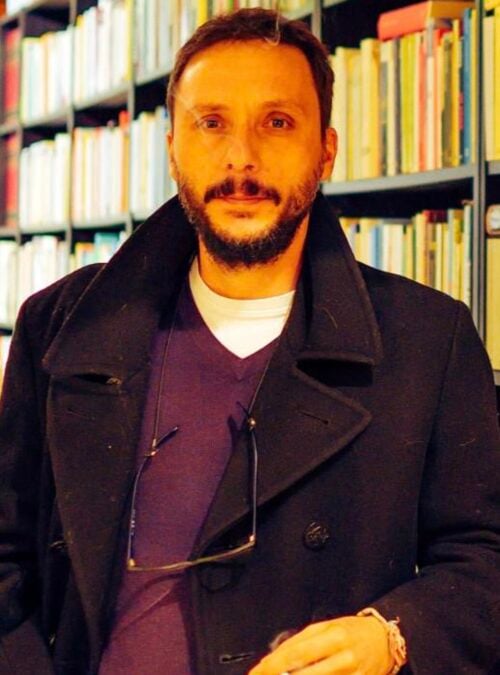
Literary critic, journalist, author: Maike Albath is one of the most highly regarded figures in the German cultural media. A long-standing contributor to the daily newspaper Süddeutsche Zeitung and the weekly Die Zeit, she is a presenter on Deutschlandfunk Kultur, the public radio channel. From the Deutscher Buchpreis to the Leipziger Buchpreis, she has served on the juries of the most prestigious literary prizes. She is a member of the jury for the Mazzucchetti-Gschwend Italian-German Prize for literary translation between the two languages. She is undoubtedly the most ‘Italian’ figure in German literary criticism, a highly attentive and engaged observer who has been showcasing our literature beyond the Alps for over thirty years. This is also evident in her essays on the literary landscapes of twentieth-century Italy. In 2024 at the Frankfurt Book Fair, Albath moderated numerous discussions featuring Italian writers. This is yet another reason why she is the ideal interlocutor for a wide-ranging conversation on the Italian novel in the German-speaking world during this first quarter of the 21st century.
I find it very interesting that there have always been breaks in the perception of Italian literature in Germany. I would place the first such break – which I was already aware of as a student – in the 1980s. Following the reception of Calvino, and even earlier that of Pavese and Moravia, the translation of Umberto Eco’s Il nome della rosa appeared in 1982, and that – I believe – marked a new beginning. Eco’s novel was published almost simultaneously with Claudio Magris’s Danubio, which in turn sparked interest in new styles of writing. In the wake of this, works by Daniele Del Giudice, Antonio Tabucchi and Andrea de Carlo were subsequently translated, all to great acclaim. In 1988, the Frankfurt Book Fair introduced the ‘Guest of Honour’ format by inviting Italy, which at that time not only became all the rage but also came to occupy a place of great prominence on the literary scene in general. That role subsequently diminished – so it seems to me – only to resurface later with the novels of Elena Ferrante. Perhaps as early as the 1970s, 1980s and 1990s, a trend towards female authors was already emerging; I am thinking of the successes of Susanna Tamaro, Dacia Maraini and Fabrizia Ramondino. Ramondino’s books sold in numbers that would be unimaginable today. Not to mention Natalia Ginzburg, who has always remained a constant presence, unlike Ramondino, who is now completely forgotten. But in more recent years, following a cyclical pattern, the Ferrante phenomenon has been decisive. Having arrived in Germany belatedly via the United States in 2016, Ferrante’s huge success has rekindled curiosity about Italy and paved the way for the reception of very different female authors such as Francesca Melandri and Giulia Caminito. In 2024, Italy’s participation as guest of honour at the Frankfurt Book Fair therefore provided an opportunity to introduce an entire new generation of writers to the German public. The groundwork had already been laid, and German publishers set about seeking out new and interesting titles, as Piper Verlag did, for example, with Ginevra Lamberti’s debut novel.
How do you explain the case of Melandri, whose Sangue giusto spent many weeks on the classic bestseller list and sold over 100,000 copies in Germany?
A fascinating case in the wake of the Ferrante phenomenon: I get the impression that Melandri, as an Italian voice, is actually more prominent here in Germany than she is in her home country. Her latest novel, Piedi freddi, has also been very well received. This success can probably also be explained by German readers’ keen interest in history. When it comes to Italian literature – and literature in general – the German public harbours a keen interest in the Second World War, in the upheavals and catastrophes that occurred in other countries as well. Perhaps this is because it can provide a certain sense of relief to view German history within a broader context, to see that horrific atrocities were committed elsewhere too.
Speaking of the intertwining of German and Italian destinies in the twentieth century, how were Antonio Scurati’s novels centred on Mussolini received in Germany?
With great interest, though not on a par with that shown for Melandri. I think Melandri enjoyed such extraordinary success because she wrote a proper novel, with some autobiographical elements, but fictional. Sangue giusto (Alle außer mir, German translation by E. Hansen, Wagenbach, 2018) is a magnificent story about contemporary Italy and how to come to terms with the past, including through engagement with one’s own parents. The void, the gap in one’s family history, and the difficulty of tracing the past and seeking clarity are themes that resonate deeply in Germany too – I’m thinking of Judith Hermann’s very recent novel (Ich möchte zurückgehen in der Zeit, S. Fischer, 2026). These are central issues for Melandri, but not for Scurati, who focuses instead on a reworking of history that is undoubtedly well-founded and necessary. In his case, however, it seems to me that the details take precedence, and that the work as a whole is simply too monumental to engage the German public. All five of Scurati’s M novels have been translated and reviewed, but with the exception of a few readers with a specific interest in those events, I do not think one can speak of a publishing success.
Women’s writing and an interest in history: are these the themes that now define the ‘Italian canon’ for the German public?
Some publishing houses are working hard to propose a new canon. Wagenbach is resolutely pursuing this. In the early days, it promoted the avant-garde – works that were not exactly mainstream – by publishing Manganelli, the Gruppo ’63, Malerba and later Cavazzoni and Celati; it is admirable how steadfastly it has stuck to this line. In more recent years, Wagenbach has enjoyed enormous success with Michela Murgia. And here various factors come into play, such as a preference for certain regional phenomena in Italian literature that Germans are very fond of. Accabadora (German translation by J. Brandestini, Wagenbach, 2010) was very well received. A similar case is that of Donatella Di Pietrantonio: these are voices that hold great appeal because they represent an image of Italy that, in turn, may coincide with the particular German nostalgia for the Bel Paese. Personally, I am also very interested in novels that break with this mode of reception and reveal the dark, ruthless side – the social cost to be paid when semi-criminal structures infiltrate society. With Gli affamati (Die Hungrigen, German translation by M. Hallmannsecker, Rauch, 2022), Mattia Insolia has set a harrowing novel in his native Sicily, which also deals with domestic brutality. I also see Bambino by Marco Balzano (German translation by P. Klöss, Diogenes, 2026) as taking an original approach. In a recent radio programme on fascism in literature, I compared it to Scurati’s M . Set in Trieste, it is a novel about fascism that Balzano narrates from the perspective of the perpetrator. A lively book by a writer already acclaimed for his novel set in South Tyrol, Io resto qui (Ich bleibe hier, German translation by P. Klöss, Diogenes, 2024).
The term ‘regional’ often seems to refer solely to the South. The North – for example, the Veneto region, with an author such as Vitaliano Trevisan – remains largely overlooked.
It is true, there is a gap; I am also thinking of Michele Mari. This often happens with translated literature: the author and their work enter, as a secondary voice, into a different literary system which appropriates them according to its own expectations. In Germany, the Goethean nostalgia for the land where lemon trees flourish still holds sway. But publishers’ marketing strategies are also important. To establish figures such as Trevisan or Mari, the commitment of an established publishing house is required – one willing to invest heavily, starting with a good translation. And then the author must be promoted and supported over time. This is no easy task when, as is the case today, literary quality in itself seems to be less appreciated. And it is an even more arduous task when a book and its author do not live up to expectations which – to put it bluntly – revolve around folklore, the mandolin, pizza, sunshine and the South. This, too, explains Ferrante’s success: she does indeed tell the story of Italian society, but set in the South, and tackles themes such as the family and the problematic relationships within it, which continue to be linked to a certain image of Italy.
Any examples of notable Italian books published in German, but which are free from that typical German nostalgia?
I really enjoyed Chiara Valerio’s novel Chi dice e chi tace (Sellerio, 2024), but I fear that her other novels aren’t particularly well understood here. Il tempo materiale (Die Glasfresser, German translation by U. Hartmann, Deutsche Verlags-Anstalt, 2011) by Giorgio Vasta, a highly original book set in the 1970s, is another significant example. Three eleven-year-olds in Palermo set up a terrorist cell simply because terror – the Red Brigades and the Moro kidnapping – was in the air. It would have deserved a warm reception. I am also thinking of Domenico Starnone’s novels – Lacci is a true gift to the reader. These are highly refined books, with that certain something extra, which Wagenbach is now right to publish in Martin Hallmannsecker’s excellent translation. Classics such as Carlo Levi’s Cristo si è fermato a Eboli are also often successful. Also by Levi, the success of his account of his trip to Germany (Die doppelte Nacht. Eine Deutschlandreise im Jahr 1958, German translation by M. Hallmannsecker, Ch. Beck, 2025) was unimaginable: it made it onto the bestseller list after Gustav Seibt had named it among his favourite books at Christmas. The new translation of Elsa Morante’s La Storia (German translation by M. Pflug and K. Ruschkowski, Wagenbach, 2024) has also been well received. Sometimes, however, effort alone is not enough: despite the excellent edition and translation, the superb Dolores Prato’s Giù la piazza non c’è nessuno (Unten auf dem Platz ist niemand, German translation by A. Leube, Hanser, 2024) did not receive the reception it deserved. And yet it could well have been part of the rediscovery of 20th-century Italian women writers such as Goliarda Sapienza or Alba De Céspedes. De Céspedes’s Diario proibito (Das verbotene Notizbuch, German trans. by V.v. Koskull, Insel, 2021) is a beautiful novella. In the case of some of these rediscoveries, it is a trend originating in the United States, with Ann Goldstein – Ferrante’s English translator – always acting as the conduit. In Germany, Ortese and De Céspedes have never been entirely absent; for some publishers, it is simply a matter of bringing their works back into the spotlight.
Are there any affinities today between contemporary Italian and German fiction?
Autofiction is truly a cross-cutting trend, all the more so when one looks at Emmanuel Carrère in France. In Italy, I am thinking of Città sommersa (2020) (Als mein Vater in den Straßen von Turin verschwand, German translation by J. Schönherr, KiWi, 2024) by Marta Barone, who writes her own story and, at the same time, that of her father – a story that had been kept silent within the family. Here in Italy, Judith Hermann explores her grandfather’s past as an SS member in occupied Poland; Daniela Dröscher (Lügen über meine Mutter, KiWi, 2022) reflects on her relationship with her mother. Christian Baron, who may remind one of Édouard Louis, addresses his background in a working-class family, making social class a central theme. There are indeed many parallels in this kind of exploration and reflection on how such experiences can be recounted and the weight they carry in one’s life.
And what about the differences, the discontinuities?
I find that in Germany there is still a strong connection to tradition, an intense engagement with classical fiction – not only German but also international – one need only think of Ingo Schulze. In the case of Italy, I have the impression that among the younger generation the link with literary tradition has been severed, as if Ortese, Moravia or Calvino were no longer read, not even Primo Levi. Undoubtedly, novels written with modest literary means also appear in German. In Italy, there is a kind of naïve fiction in circulation – I would say simple, very likeable, but lacking any real literary significance, written without any connection to a tradition. At times, it reads like a television script.
In German-language publishing, what is striking is the number and quality of novels that find their raison d’être, their real or imaginary backdrop, in an ‘elsewhere’ – often Eastern Europe. These are novels that cannot be reduced to the – albeit much-discussed – category of post-migration literature.
It is true that this is a very significant phenomenon in Germany. A recent example: Sabrina Janesch (Sibir, Rowohlt, 2024) has told an extraordinary story: it is set in Celle in Lower Saxony, where she grew up, but at the same time in Siberia, where her father had been interned during the Second World War. And how can we fail to mention Emine Sevgi Özdamar and her latest, splendid novel Ein von Schatten begrenzter Raum (Suhrkamp, 2021)? Terézia Mora, too, is always magnificent; her Hungarian literary heritage resonates throughout her German writing. In this field, and increasingly so over the last ten years, I believe German-language literature has a great deal to say.
Dionisotti has shown us that Italian literature is polycentric and is best understood in terms of space rather than time. Albath’s essays focus on very specific topographies: Trauer und Licht. Lampedusa, Sciascia, Camilleri und die Literatur Siziliens (2019); Rom. Träume. Moravia, Pasolini, Gadda und die Zeit der dolce Vita (2013). The most recent, Bitteres Blau. Neapel und seine Gesichter (2024), has been shortlisted in the non-fiction category for the 2024 Leipzig Book Award. The first, in 2010, was Der Geist von Turin. Pavese, Ginzburg, Einaudi und die Wiedergeburt Italiens nach 1943. Why this choice?
For reasons that are almost entirely autobiographical: Turin was the first Italian city I got to know at the age of eighteen. I was deeply struck by the combination, in a single place, of industry and cultural avant-garde, of a working-class city and the publishing world, and by the mutual friction that this indirectly generates. And this has been a vision for the future, something that has always attracted me to Italy. Italy has its own very strong characteristics; it is a country made up of many different regions, each with its own distinct traditions – including literary ones – which is an enormous source of richness. And one always senses a particular interplay between a specific geographical context – shaped by social, political and historical experiences – and a supra-regional, so to speak ‘high’ literature. In Germany, for many reasons, no such phenomenon exists. This wealth of differences – and the way literature manages to express it – continues to fascinate me, even after having studied it for so long, and to continue to do so is always a great joy.
- SHARE ON:
-

-

-

-