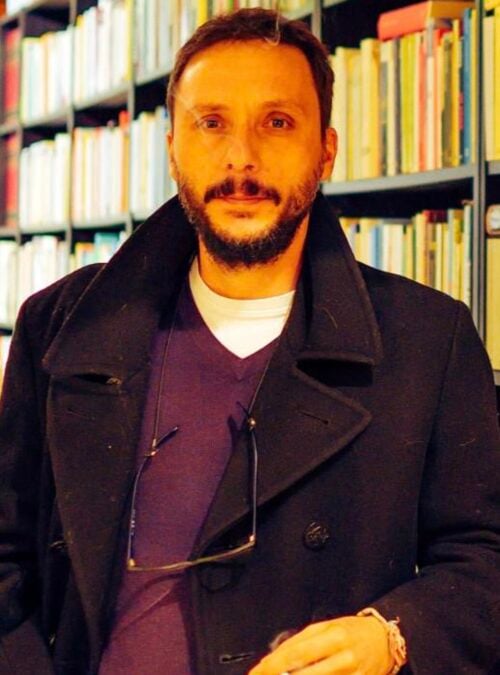
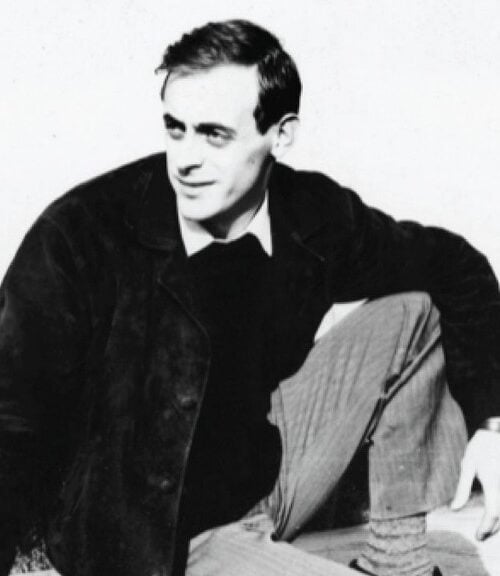
Interview with Lorenzo Flabbi and Marco Federici Solari, founders and directors of the publishing house L’orma.
Author: Laura Pugno
newitalianbooks continues its series of interviews dedicated to Italian publishing houses with L’orma. The founders and publishers, Lorenzo Flabbi, a specialist in French literature, and Marco Federici Solari, a specialist in German literature, answer our questions.
How would you describe L’orma’s identity to newitalianbooks readers abroad? What are its defining features and strengths?
Ever since its foundation in 2012, L’orma has conceived of itself as a publishing house with a European vocation. The phrase we have most often used to define ourselves is ‘we bring to Italy what is happening in Europe’, that is, that plurality of voices, forms and ideas which, through literature, convey to readers the complexity of reality and the human experience.
This focus has taken concrete shape in our catalogue, centred on two literary traditions that form its backbone: French and German literature. It is no coincidence that the two founders are a specialist in French literature and one in German literature, bound by a long-standing friendship and a shared background in comparative literature. L’orma was, in fact, born out of the need to transform into a shared project what had, until then, been for both of them research, teaching, the practice of translation and a life immersed in literature. Having lived for many years in Paris and Berlin, we found it natural to take these two great cultural hotbeds as a starting point: not to define a specialist field, but to attempt to describe the world through a direct experience of its languages and cultures.
Our inaugural series bears an emblematic name, ‘Kreuzville’, a portmanteau of Kreuzberg, a Berlin neighbourhood, and Belleville, a Parisian neighbourhood: two places symbolic of human diversity and contemporary cultural ferment, fused into a single ideal space with the ambition of hosting books capable of giving voice to the imagination of the new Europe.
A distinctive feature of our identity is the central role played by work on the text, and in particular by translation. L’orma is also a translation workshop: every book arises from a close engagement with language, rhythm and register, and from an acceptance of interpretative responsibility that we consider an integral part of the editorial process.
Over the years, the project has expanded. In 2019, we launched the Italian series ‘I Trabucchi’. The name refers to a fishing contraption commonly found along the Adriatic coast: a device that a single person cannot operate and which requires a hard-working community. We feel this is a fitting metaphor for editorial work, understood as a collective endeavour that casts nets into the waters of literature to gather voices and stories capable of capturing the world with a shifting gaze, always in dialogue with the European and international Republic of Letters. This series brings together books deeply rooted in the present and others that revive themes from the twentieth century, with the aim of viewing our own time as an open horizon. We do not deal in genre fiction. Our genre, if one may put it that way, is literature.
If we were to summarise our strengths, we would say: a European vocation built up book by book; editorial work focused on the text’s best interests; and the ambition to leave a mark – an ‘orma’, as it were – on the Italian cultural landscape.
Which ventures – literary and otherwise – have been most successful in Italy and, where applicable, in other countries, and why, in your view?
The case of Annie Ernaux was decisive for us. When Marco and Lorenzo first began planning L’orma, it seemed surprising that some of her most important books were missing from the Italian market. Publishing her work meant taking on a specific cultural responsibility. The success of titles such as Il posto, Gli anni, L’evento and others – to which the global recognition of the Nobel Prize was later added – has shown that pursuing the path of literature – even when it involves demanding and radical writing – can actually pay off in terms of sales (a phenomenon that is far from a given), especially when it touches on a key issue of the present.
Another major gamble was the ‘Pacchetti’ series. We approached the classics in a way that was anything but museum-like, inventing a new editorial format: that of the agile, iconoclastic and instantly recognisable collection of letters, with a dust jacket that makes the book foldable and postable. This solution, which combines the quality of the texts with innovation in the physical book, has enabled us to gain a foothold in bookshops across Italy right from the outset, and has demonstrated that even the literary canon can be reimagined in new forms without compromising on rigour.
When Éditions L’orma, our French branch, was founded in 2020, we continued this European mission within a different linguistic context, whilst maintaining full consistency with our project. In that new context, we introduced the ‘Pacchetti’ series to France, where it was rebranded as ‘Les Plis’. There, it enjoyed even greater publishing success than in Italy, thus confirming the fully European dimension of our cultural project. Since 2023, this journey has expanded with the creation of the ‘Plurabelle’ literature series, dedicated to fiction.
In recent years, a significant source of satisfaction has been Italian literature, to which we opened up – editorially speaking – only in a second phase, following years of engagement with international markets. We had, in truth, had an initial experience with the fifteen titles in the ‘fuoriformato’ series, but in some respects this was a project featuring uncompromising writing, inevitably aimed at libraries and the academic world. The ‘I Trabucchi’ series is certainly a research-oriented series, but it also seeks to engage with the contemporary literary scene. Although it is still very small in scale – nine titles by a total of six authors – it has already achieved prestigious results. In 2022, Marino Magliani’s Il cannocchiale del tenente Dumont made it onto the shortlist of the Premio Strega, and this year the same has happened with Elena Rui’s Vedove di Camus, which has just been nominated for the 80th edition of the prize. For such a young and selective series, this is a remarkable achievement. Beyond the results themselves, these developments confirm our deep conviction: there is a place for an Italian literary offering capable of combining formal quality, a powerful vision and the potential for international circulation, as seen in the cases of authors who symbolise our series, such as Gennaro Serio and Lucio Di Cicco.
In this sense, our work with Italian authors has become an integral part of the L’orma project.
If we were to identify a common thread running through these experiences, we would say it concerns time: we have sought to work on books that demand to be read over time, and which, precisely for this reason, sometimes manage to attract a larger and more loyal readership than one might expect.
- SHARE ON:
-

-

-

-