La Revue Dessinée Italia. Interview with Massimo Colella
Author: Federica Malinverno
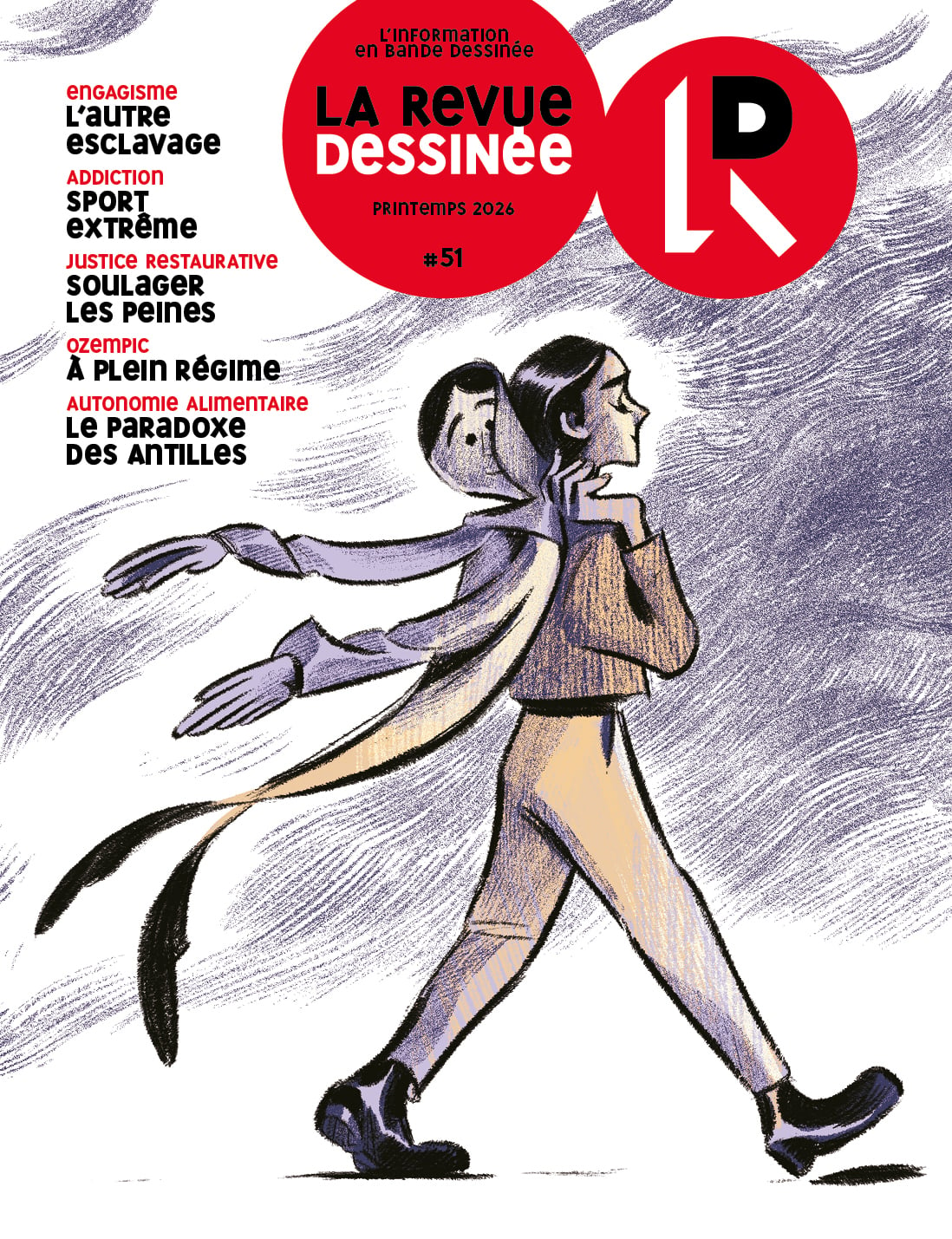
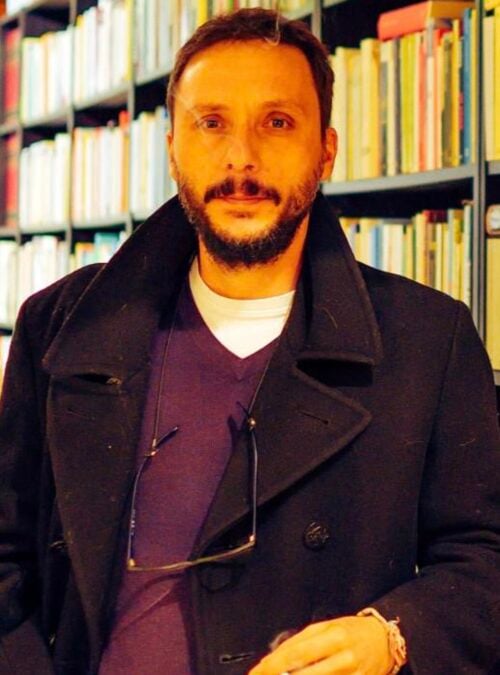
La Revue Dessinée Italia was created in 2021, inspired by the French quarterly La Revue Dessinée. Massimo Colella, a graduate of the Accademia di Comunicazione in Milan, is its president. He began working in advertising and in 2007 founded La Bande Destinée, a communications agency specialising in comics. Then, during the pandemic, he launched the La Revue Dessinée Italia project, convinced that Italy lacked a genuine offering in “graphic journalism”.
The creators of this project had to face several challenges, linked to the lack of “human capital”, which meant they were unable to participate in all the fairs and events in the sector, as well as the positioning in bookshops, which, as the magazine is a hybrid object, is rather unclear. “We are a comic book magazine,” explains Colella, “so we should be in the comic book section, but in Italy, apart from Linus and a few other magazines, there aren’t many comic book magazines.”
As for content, each issue of the magazine features at least one French story. “La Revue Dessinée (RD) is a model for us,” says Massimo Colella, even if the Italian project’s approach is “a little lighter, with less dense investigations” to better engage an audience less accustomed to this type of reading..
While the editorial line and editorial independence are praised by subscribers, Massimo Colella is aware that relying on a larger publisher would allow for better distribution. Among the project’s most courageous ethical choices, the magazine’s president points to the effort to ensure fair remuneration for authors and the fact that “we don’t have advertising and we’re not on Amazon”.
One of the magazine’s objectives is to increase its presence in schools and school libraries: “Ours is a bit of a mission: we are trying to contribute to the dissemination of comics as an educational tool”. But government support is not up to the task: “There is so much to do and the initiative will not come from above. It must certainly come from below.”
Analysing the two markets in parallel, Colella asserts that “the Italian comic book market is about twenty years behind the French market.” Indeed, in Italy there is no public funding, unlike the subsidies and schemes available in France, and there is a lack of cultural recognition, as comic books are still perceived as a product for children.
Furthermore, the comic book landscape in Italy is different from that in France. Graphic journalism is still underdeveloped in Italy, while market growth is mainly driven by manga. On the other hand, the best-selling French-language comics include many graphic journalism titles, such as Le Monde sans fin (Jean-Marc Jancovici and Christophe Blain, Dargaud, 2021) and Capital et Idéologie (Claire Alet and Benjamin Adam, Le Seuil, 2022), which have sold hundreds of thousands of copies.
In Italy, during the pandemic and the years that followed, there was an explosion in comic book sales. However, Colella does not believe that “the success of a few titles contributes to the growth of the sector as a whole”. He believes that, unlike in Italy, where the success of a comic book often relies on an iconic name (such as Gipi or Zerocalcare), in France, it is the story that counts. “In France, there are no Zerocalcare-type phenomena, but sometimes particular books emerge. For example, a few years ago, there was the success of Algues Vertes, L’histoire Interdite (Inès Léraud, Pierre Van Hove, La Revue Dessinée, Delcourt, 2019).” In other words, “the strength lies in the story, not so much in the authors’ names.”
This is an approach that Colella would like to replicate, at least in general terms, in Italy as well: “For me, the solution is to focus on stories, on powerful stories. Then we need to move towards investigative and topical themes.”
In short, “these stories must be conceived as Italian, on themes related to Italian culture, history and territory.”
For several years now, Italian authors such as Gipi, Manuele Fior, Lorenzo Mattotti and Piero Macola have been present on the French market, bringing a more varied aesthetic approach. Moreover, in most cases, they live in France. In general, Colella believes that Italian comics differ from French comics in that they offer greater stylistic freedom: “In my opinion, Italian comics are more varied in style and the author’s identity is more pronounced, whereas the French model seems more formulaic to me.”
In France, the larger market allows major publishers to invest more in new authors, thus attracting many Italian talents. But the flip side is that the success of certain comics, often in series, can hinder the careers of authors, locking them into a genre that sells well: “In France, as in Italy, when authors specialise in different types of comics, such as medieval or historical comics, they find it difficult to break away from this type of production and do something else. And since series sell better in France than in Italy, this phenomenon is more pronounced there.”
While in Italy the lack of resources hinders investment and young authors often accept very low pay and limited print runs, this precarious situation can also encourage them to experiment with different styles. But in general, “with the system at a standstill, many artists choose to move to France to make a living from their work.”
- SHARE ON:
-

-

-

-